
Game Type: Strategy
2 games in this type

Empire Builder
Empire Builder, first published in 1982 by Mayfair Games, is a classic railroad strategy game that introduced the “crayon rails” system. Designed by Darwin Bromley and Bill Fawcett, the game tasks players with building rail networks across the United States and Canada while delivering goods to meet demand cards. What set it apart was its innovative mechanic: players literally draw their tracks on the board with crayons or erasable markers, creating a personalized rail empire as the game unfolds. This tactile element gave Empire Builder a unique charm and replayability, as every session produced a different map of connections and strategies.
Gameplay revolves around balancing construction costs with the profits earned from delivering goods. Players begin with $40 million and must carefully allocate funds to lay track across varied terrain—ordinary dots cost $1 million, mountains $2 million, small cities $3 million, and major cities $5 million. Crossing rivers or ocean inlets adds further expense, forcing players to weigh efficiency against opportunity. Delivering goods to cities listed on demand cards earns revenue, while event cards introduce unexpected challenges such as disasters or economic shifts. The winner is the first player to amass $250 million and connect six of the seven major cities, making resource management and long-term planning essential.
Empire Builder’s success led to a long-running series of spin-offs and expansions, collectively known as the “Empire Builder series.” These included international versions like British Rails, Eurorails, and Australian Rails, as well as imaginative settings such as Iron Dragon (fantasy), Lunar Rails, and Martian Rails. The franchise became beloved among fans of economic and transportation-themed board games, praised for its strategic depth and high replay value despite its lengthy playtime of 60 to 240 minutes. Even decades later, Empire Builder remains a touchstone in board gaming history, remembered for blending economic simulation with creative map-building in a way that continues to inspire modern titles.
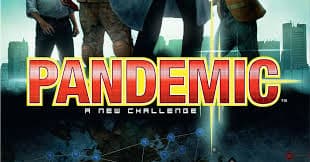
Pandemic
Pandemic is a cooperative board game where players work together to stop the spread of deadly diseases across the globe. Designed by Matt Leacock and first published by Z-Man Games in 2008, the game challenges two to four players (expandable with certain expansions) to take on specialized roles such as Medic, Scientist, or Dispatcher. The objective is to discover cures for four diseases before outbreaks spiral out of control. Unlike competitive games, Pandemic emphasizes teamwork, requiring players to coordinate their actions, share resources, and strategize collectively to win.
Gameplay unfolds on a world map featuring 48 interconnected cities, where disease cubes represent infections spreading across regions. Each turn, players travel between cities, treat infections, build research stations, and collect cards needed to cure diseases. Meanwhile, the game’s infection deck drives the spread of outbreaks, escalating tension as epidemics accelerate the pace of play. The balance between immediate crisis management and long-term planning makes Pandemic both accessible and deeply strategic. Its moderate complexity and 45-minute playtime have helped it reach mainstream popularity, appealing to casual players and dedicated hobbyists alike.
Pandemic has grown into a franchise with expansions and spin-offs that add new layers of challenge and narrative. Expansions like On the Brink, In the Lab, and State of Emergency introduce new roles, special events, and mechanics, while the acclaimed Pandemic Legacy series transforms the game into a campaign experience with evolving storylines and permanent changes to the board. Widely regarded as one of the most influential cooperative games, Pandemic has earned critical acclaim for blending tension, strategy, and collaboration, making it a staple in modern board gaming.