
Game Mechanic: Open Drafting
8 games with this mechanic
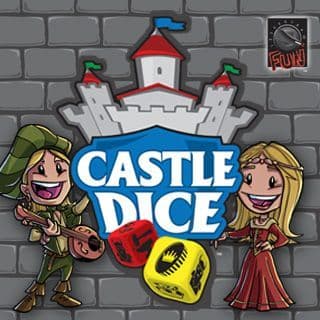
Castle Dice
Castle Dice is a light dice-drafting game in which the players have been ordered by the king to build castles along the borders of the kingdom. The player who can create the greatest castle will become the new heir to the throne. Players will explore the land by rolling the dice, and then take turns gathering resources from them. These resources are then used to hire workers and improve castles. Players must gather and spend wisely as the Barbarians from the neighboring lands will attack players and steal their resources throughout the game. At the end of seven turns, the player who has built the greatest castle (earned the most victory points) wins the game!
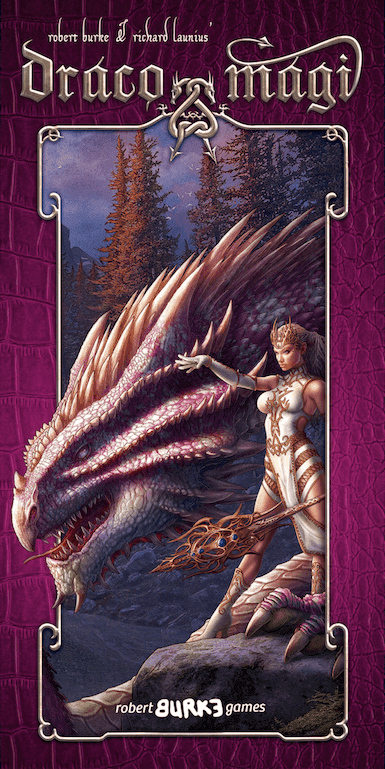
Draco Magi
Myrgos, the powerful and benevolent Dragon King has passed into the next world after an extended illness, and the land is now gripped with uncertainty. As the laws of succession dictate, only one of his remaining apprentices can rise to the position of "Draco Magi". With the death of the Draco Magi, the wizard-lock on the succession strongbox of each apprentice has completely dissipated. Inside each box, an apprentice will find a succession scroll. Contained on the scroll is the last piece of knowledge required to become the Drago Magi — but only one can claim the title. Each scroll holds a different "Spell of Succession" that may be executed only with the correct combination of rare gems. These magically imbued gems appear in sets of three only during times of succession and must be collected by dragons at the command of each apprentice. The competitor who is first to collect the gems needed to complete his Spell of Succession becomes the new Drago Magi. For the loser, the unofficial title whispered under the breath of the people is "Novitius Eterna" or "Forever a Novice". Be swift and remember, there is little room for error. Draco Magi is a card game designed by Richard Launius and Robert Burke. To start, each player selects an apprentice dragon mage he wishes to play. Each mage receives a deck of dragon cards that includes multiple copies of four different chromatic dragons (Green, Red, Black & Purple), four different metallic dragons (Gold, Silver, Brass & Bronze), and two special dragon cards (the Battle dragon and the Polar dragon). Each dragon has a different strength, weakness and special ability. Players will send their dragons, one at a time, to capture gems on different battlefields; each battlefield offers a different effect that may give an advantage or disadvantage to certain types of dragons. Players alternate playing dragon cards on battlefields until they have played all eight of their Dragon cards. Each player can play a maximum of three dragons on a single battlefield. When a dragon is placed, it may make a ranged attack. Not all dragons have a ranged attack breath weapon, but those that do have a breath weapon icon with a number. The number indicates the number of battle cards the player may reveal when attempting to hit with a ranged attack. A defender may defend with the number of cards equal to the dragon's shield value. A ranged attack can take place immediately only when the card is played against an opposing dragon. If a ranged attack is not used at this moment, the ranged attack is forfeited for the current round. After all dragon cards have been played, the melee phase of the battle begins. Each dragon has a "melee attack" value printed on its card which represents the number of battle cards the player can draw for the battle. The melee battle mechanism is a unique attack and counter system that provides opportunity for deduction, subtlety, and deadly combos. Players will also earn advance battle cards that build up their decks over the course of the game. The player with the most dragons present on a battlefield wins that gem. In the case of a tie, the dragons and gem remain for the next round. Draco Magi is a fast game heavily connected to its theme that incorporates area control, bluffing, hand management, deck building and deduction.
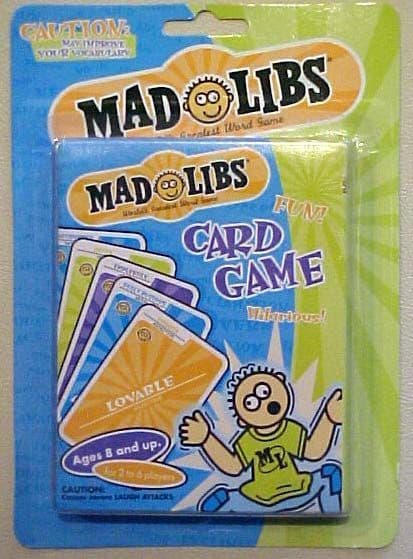
Mad Libs Card Game
Players draw 10 cards that have words written on them. Each card has either a noun, a verb, an adjective, an adverb, or is one of two sorts of "wild" cards. The players' object is to create grammatically correct sentences using the words on their cards. A gin-like mechanic has players discarding and drawing cards so they can create their sentences. The tin version has double the amount of nouns, verbs, adverbs, and adjectives. There is also one extra FIB card for each as well.
Matching Lions
How to Play: At the start of the game, deal each player 5 cards. At the start of your turn, draw a card. If at any time you run out of cards, replenish your hand by drawing five more cards from the deck. On your turn you may place one herd animal face up in front of you, either a zebra or an antelope. When you have 5 of one kind in front of you (5 zebras or 5 antelopes), you win the game. After you play your herd animal, you may play one action card from your hand. Lions, elephants and giraffes are your action cards. To play a lion, place it face up in front of you. When you have played a second lion, you now have Matching Lions. Your matching lions can be used to chase away two animals from one other player’s herds. They can chase away 2 zebras, 2 antelopes, or 1 zebra and 1 antelope. The animals all go into the discard pile. You may use your matching lions on the turn you play the 2nd lion, or you may wait and use them on another turn, after playing your action card for your turn. If you gather several pairs of matching lions in front of you, you may use them all on one turn to chase away other players’ herd animals if you choose. When you play an elephant, everyone, including you, must pick up their lions and put them back in their hand. The elephant then goes to the discard pile. When you play a giraffe, you may choose any other player and view all the cards in their hand. The giraffe then goes to the discard pile. Other animals: The hippopotamus is a defense card. Play the hippopotamus to block a pair of lions from chasing away any of your herd animals. The hippopotamus and the pair of lions all go to the discard pile. The hyena is automatically played when it is drawn. All herd animals migrate left, meaning your herds go to the player to your left, that person’s herds go to the player to their left, and so on until every herd has migrated. The hyena goes to the discard pile, and you get to draw again and start your turn. (If you choose, you may use the hyena as an action card instead.) When the last card from the deck is drawn, the discard pile is shuffled and replaced as the deck.
Micropolis
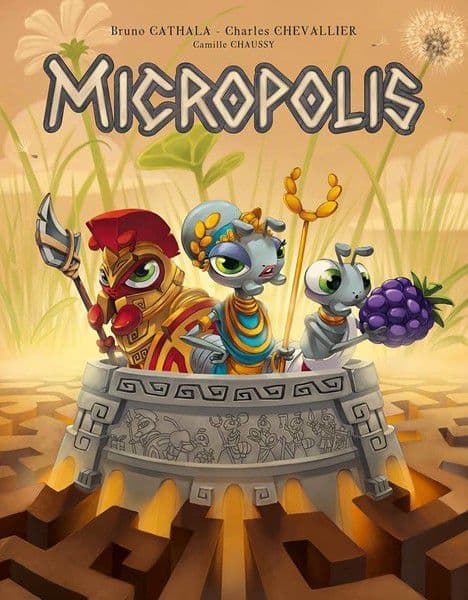
Gather your ants in Micropolis, and send them through the anthill to do your bidding. What do you want? Fruit? Warriors? A queen? Even more ants?! Each player starts with a central location that will be surrounded by ten tiles over the course of the game, with the tiles being connected by a series of tunnels. Over ten rounds, players draft tiles one at a time, with the player with the largest army going first. They can take the first tile in line, or place an ant on each tile they want to pass to get to something better. The tiles have various roles on them: Queens who if alone can improve their space; Nannies who give you extra ant soldiers; Architects who let you take any tile for free; Warriors who attack the first player; Generals who manage the movement of your ant soldiers; and Fruit gatherers who collect fruits, which score based on the variety you have. Ants at the end of the game are worth one point each, and whoever has the largest army earns an additional 5 points.
Small Railroad Empires
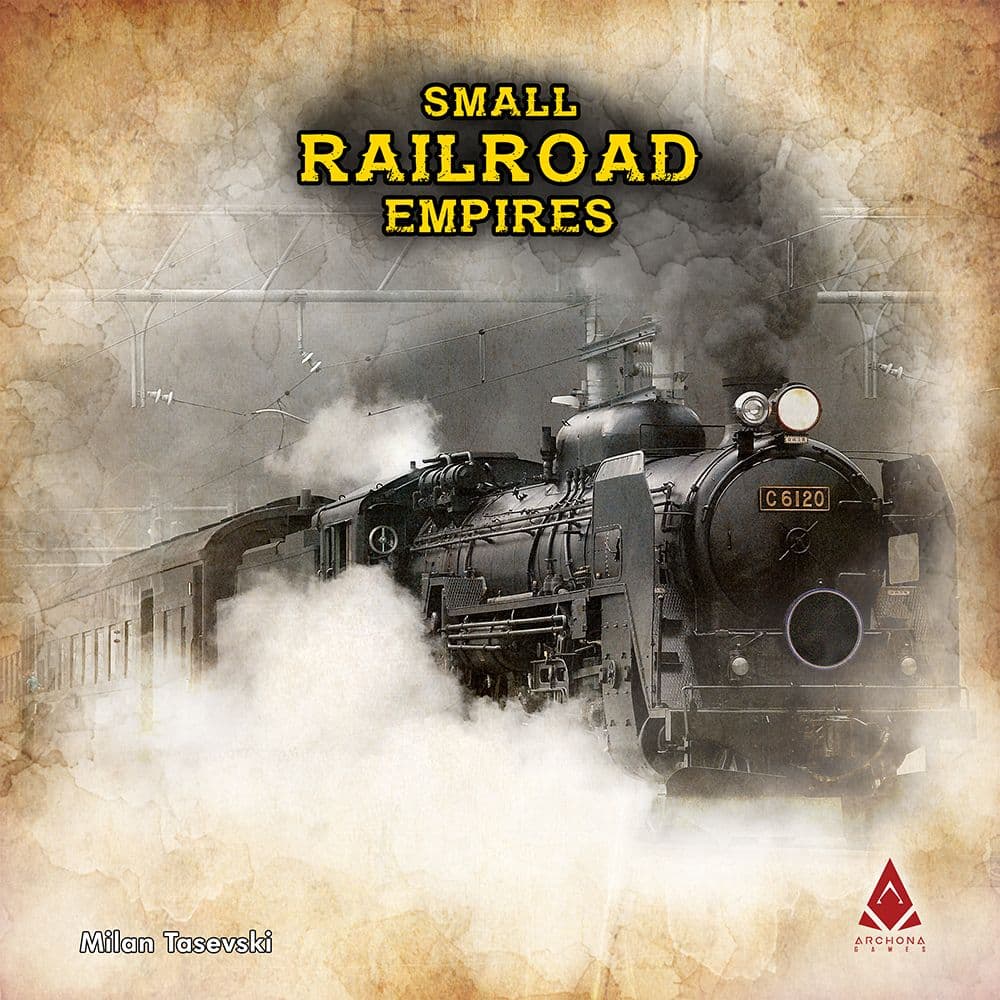
Small Railroad Empires is a pickup and deliver, track-laying and set-collection board game for 2-4 players, where players build railroad tracks, send trains with goods from industries to cities, and complete achievements to earn prestige! During their turn, players will build their tracks by placing 2 trains on the modular board. When building tracks, players must pay the gold costs for the different terrain that the track passes through. Once a track connects an industry that produces a good with a city that demands that certain good, the player may send a train to complete the delivery and earn gold depending on the track length. Players will also race to complete achievements such as: "Be first to make 4 deliveries" or "Be first to build 3 Tunnels" for which they will earn extra prestige. Finally, when all players run out of tracks to lay down, the game ends. Player calculate the final prestige points they have from the achievements and the player with the most prestige is the winner! —description from the designer
Trekking the National Parks
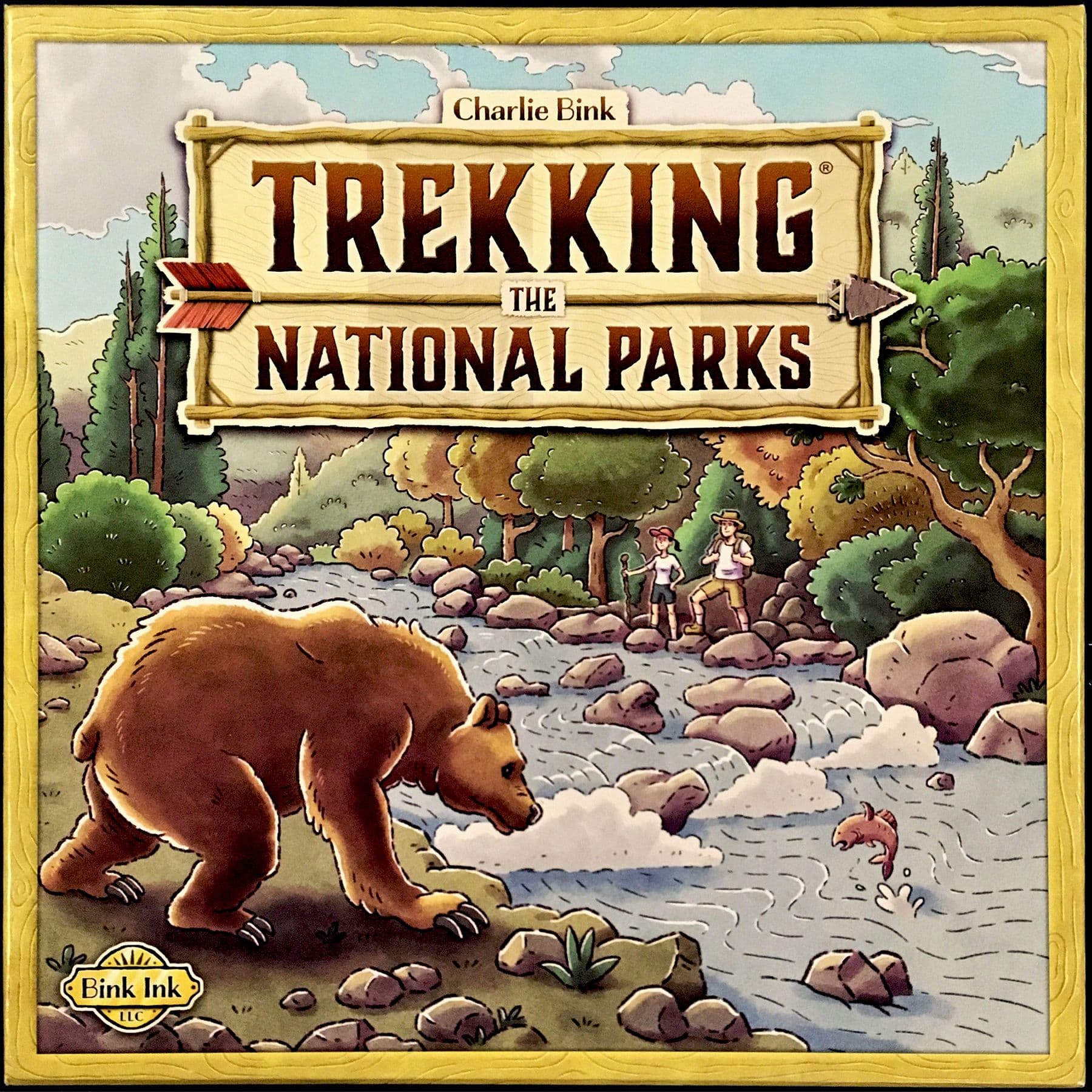
Imagine yourself staring down a giant Grizzly in Katmai National Park. Take a canoe ride alongside alligators in the swampy waters of the Everglades. Trek the trails that define our nation’s most valuable public resource – the National Parks! Trekking the National Parks is a spirited family board game that lets players experience the U.S. National Parks in a fun and competitive way. Up to six players compete in a cross country race to visit the National Parks and collect the most points. Gathering colored trek cards allows players to move across the map and claim valuable park cards. If a player is the first to visit a National Park, they collect that park's colored stone, which award bonus points at the end of the game. Players must jockey for position and make tough tactical decisions at every turn to emerge victorious!
White Elephant
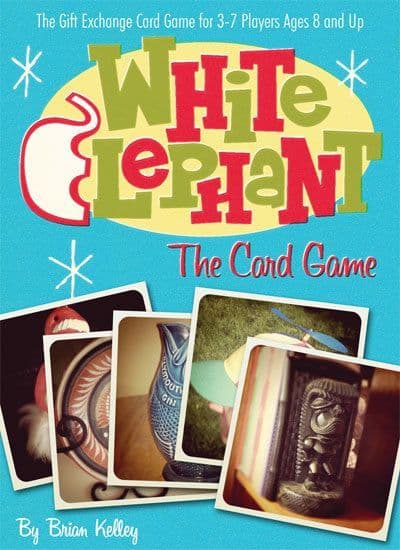
Some may know the classic White Elephant gift exchange game as Yankee Swap, Dirty Santa, Thieving Secret Santa, or Parcel Pass. The White Elephant Card Game simulates this classic holiday game in a quick, light family card game. In the White Elephant Card Game you play the part of a no-good cheapskate, unwilling to spend a measly dime on the people on your gift list. However, you will be attending several White Elephant parties. You can take some junk from your attic and exchange it for treasures to give as gifts. If you “play your cards right” you could fill your gift list for free and no one will be the wiser! Each player has a Gift List Card, a list of three people for whom to acquire gifts. The Gift Cards in their hand constitute their “attic”. There is one “White Elephant Party” for each card in a player’s attic. For each “party” a player “brings a gift to the party” by placing one Gift Card from their hand facedown on the table in front of them. The first player begins by selecting one of the gifts and “opens” it by turning it face up. The next player may then select a new gift, or “steal” an opened gift by taking a face-up Gift Card from a player who has an open gift. When a player steals an open gift they hold it in their hand until a new gift is opened. This way a gift may be stolen only once until a new card is turned over. When a new card is turned over all stolen gift cards are placed face up so the next player may steal any opened gift. This continues until the last gift is opened. At this point each player keeps the gift they have and a new party begins. This continues until all of the Gift Cards have been played. At the end of the game each player counts only the one highest-numbered Gift Card they received that matches each color on their gift list. The total of these cards is the player’s final score. The player with the most points wins.