
Library: Driftless Tabletop
109 games in this library
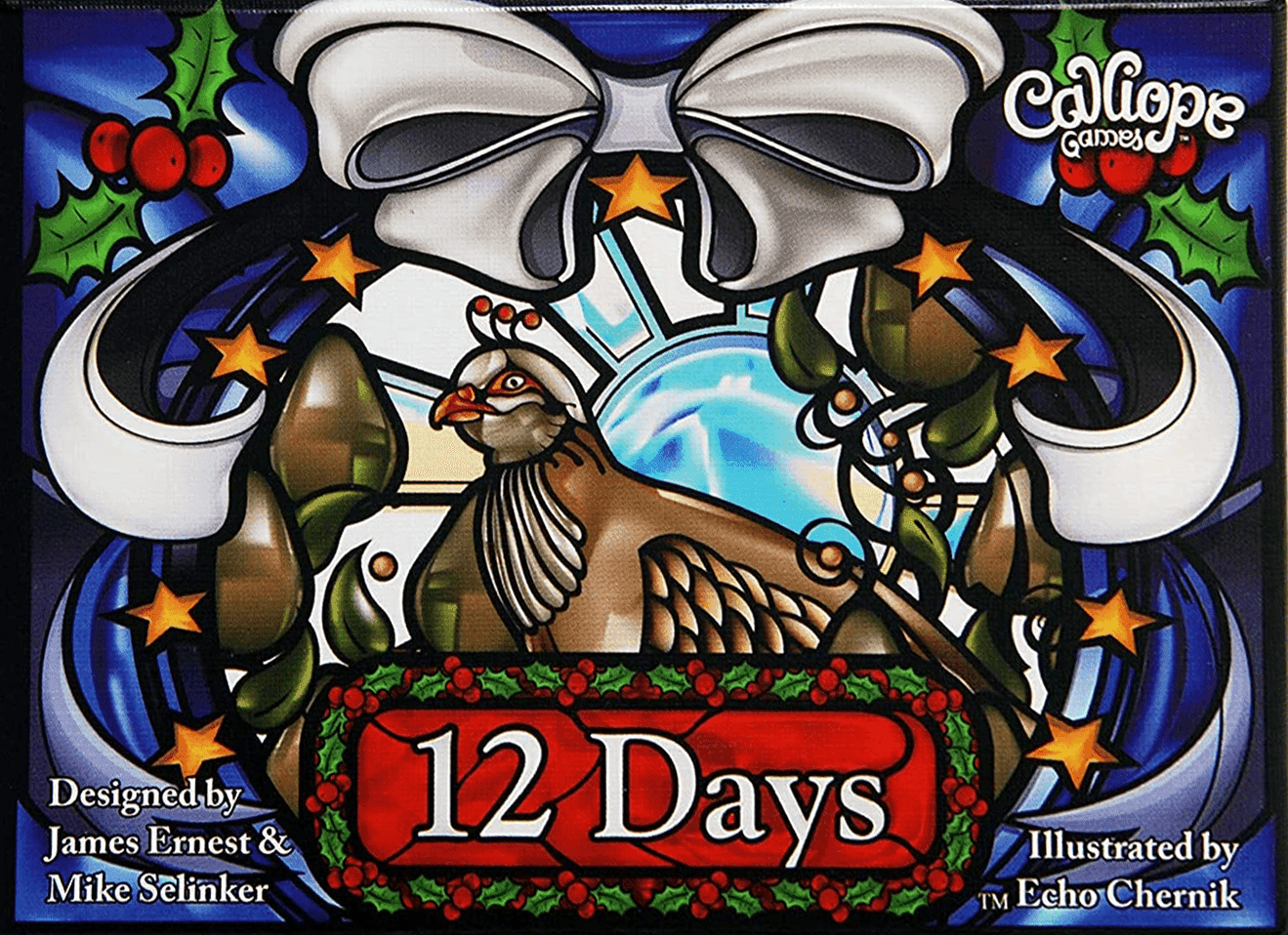
12 Days
The holiday-themed 12 Days takes the familiar "Twelve Days of Christmas" song and twists it into a quick-playing card game. Over twelve rounds, players try to re-gift unpopular cards while keeping cards that are strong enough to win the day, while also keeping a careful eye for bonus scoring at the end of the game. The gift deck consists of eighty cards: one partridge in a pear tree, two turtle doves, and so on up to twelve drummers drumming, as well as one card each for Mr. and Mrs. Claus. Shuffle this deck, then deal each player twelve cards. Each round a new holiday card is up for grabs, with the cards ranked from 1 to 12 and being worth 1-12 points. In a round, a player: Gifts a present to the player to his left, Opens presents and tries to win the day with the best present, and Buys a new gift to refill his hand. More specifically, all players simultaneously pass one face-down gift card to their left-hand neighbor. Then everyone chooses one gift card in hand and reveals them simultaneously. Whoever plays the lowest gift card wins that round's holiday card; in the event of a tie for lowest, with the Clauses counting as zero, then the next lowest card wins. Each player then draws one card to bring their hand back to twelve cards. After twelve rounds, players score points for each holiday card they've collected. In addition, whoever holds the most gift cards for each rank scores as many points as that rank, with all tied players scoring in the event of a tie. Whoever has the most points wins. Happy holidays!
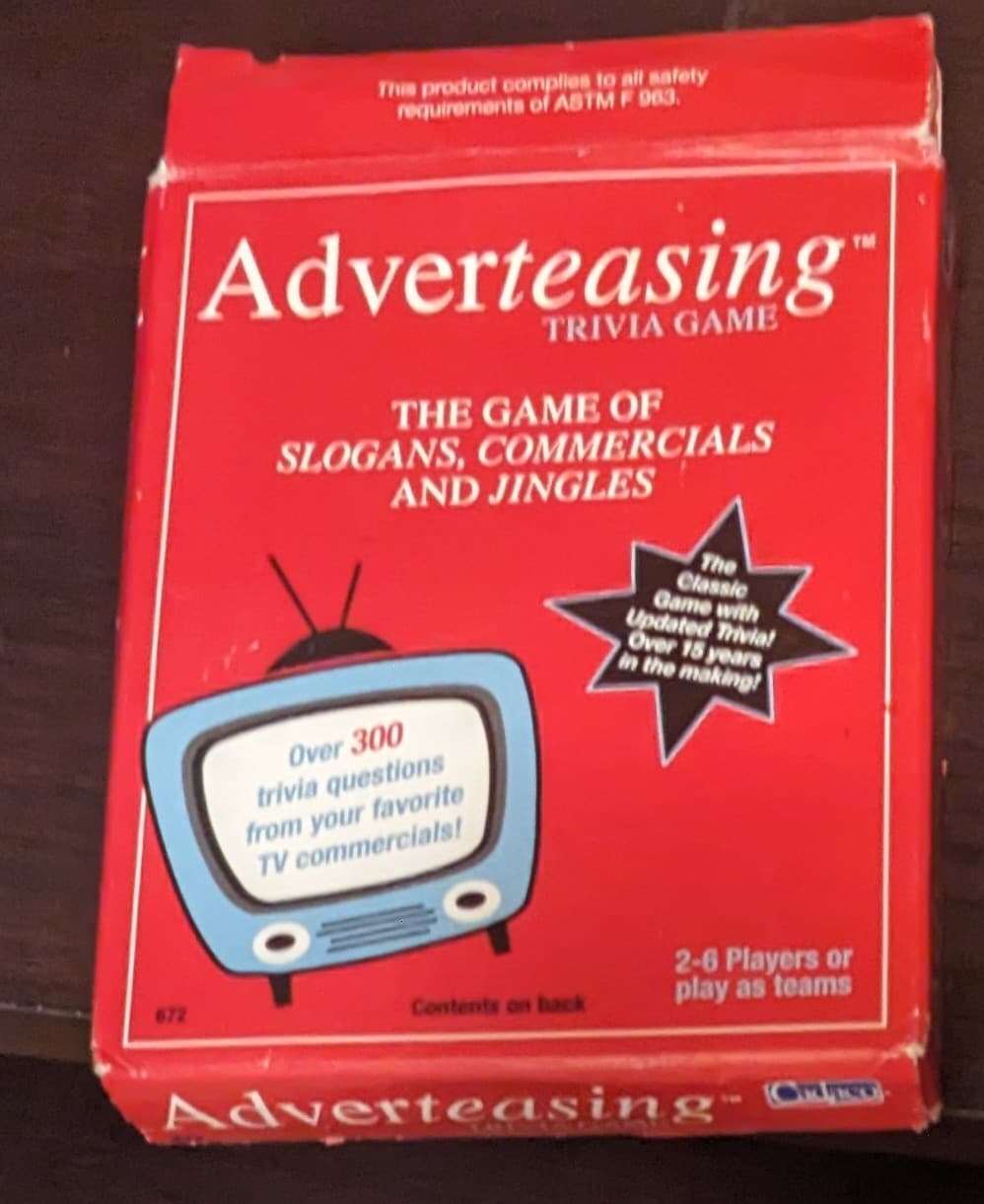
Adverteasing Trivia Game
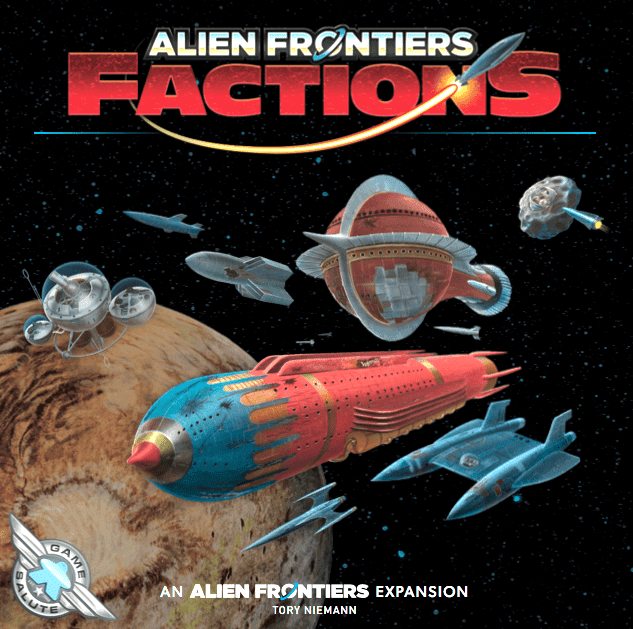
Alien Frontiers: Factions
Alien Frontiers: Factions adds a number of items to the Alien Frontiers base game: Ship and colony tokens for a fifth player. Factions (thus the name), with each faction providing its owner a special ability and new orbital facilities under his control. Agendas, which are hidden objectives that allow a player to earn bonus points at game's end or when the agenda is revealed in-game. New Alien Tech cards, such as the Lunar Tunneler, which will allow its owner to pay one fuel to receive an extra ore when using the Lunar Mine. This card's discard power will send all ships docked at the Lunar Mine to the Maintenance Bay, which can be useful when the Mine is clogged with high-value ships.
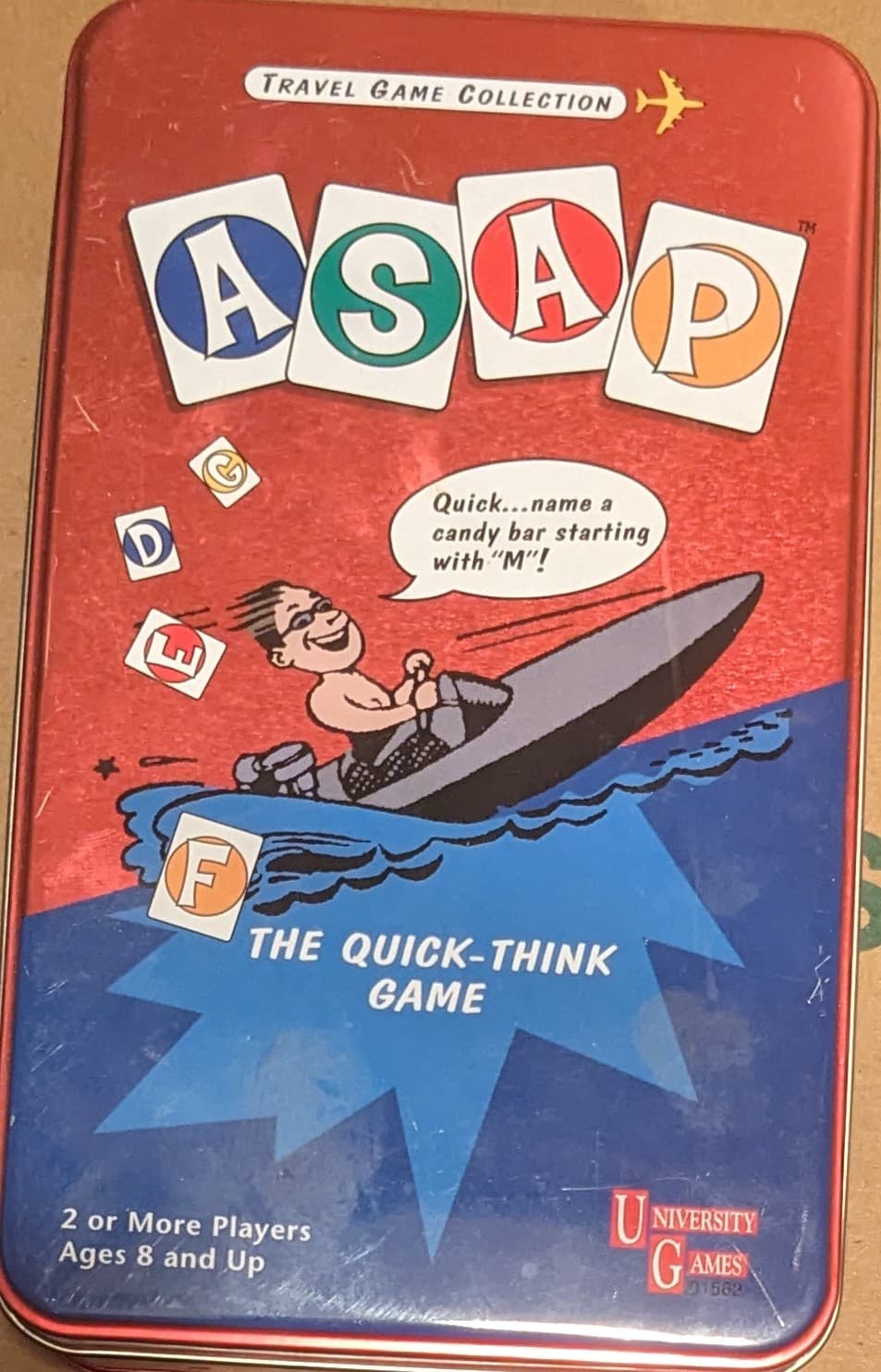
ASAP
ASAP The Quick Thinking Game Fast, furious and fun, ASAP is the quick-think game. Perfect for entertaining on the go, ASAP tests your quick-thinking and fast-taking skills in 26 categories. Quick, name a movie star starting with "L". Name a type of dog starting with "A". There are two decks of cards: one deck of letter cards (A to Z) and one deck of category cards (types of dogs, names of movie stars, etc.). You flip over the top card on each deck. The first to yell out a correct answer keeps the cards. The most cards win the game! For 2 or more players ages 8 and up.
Baby Blues
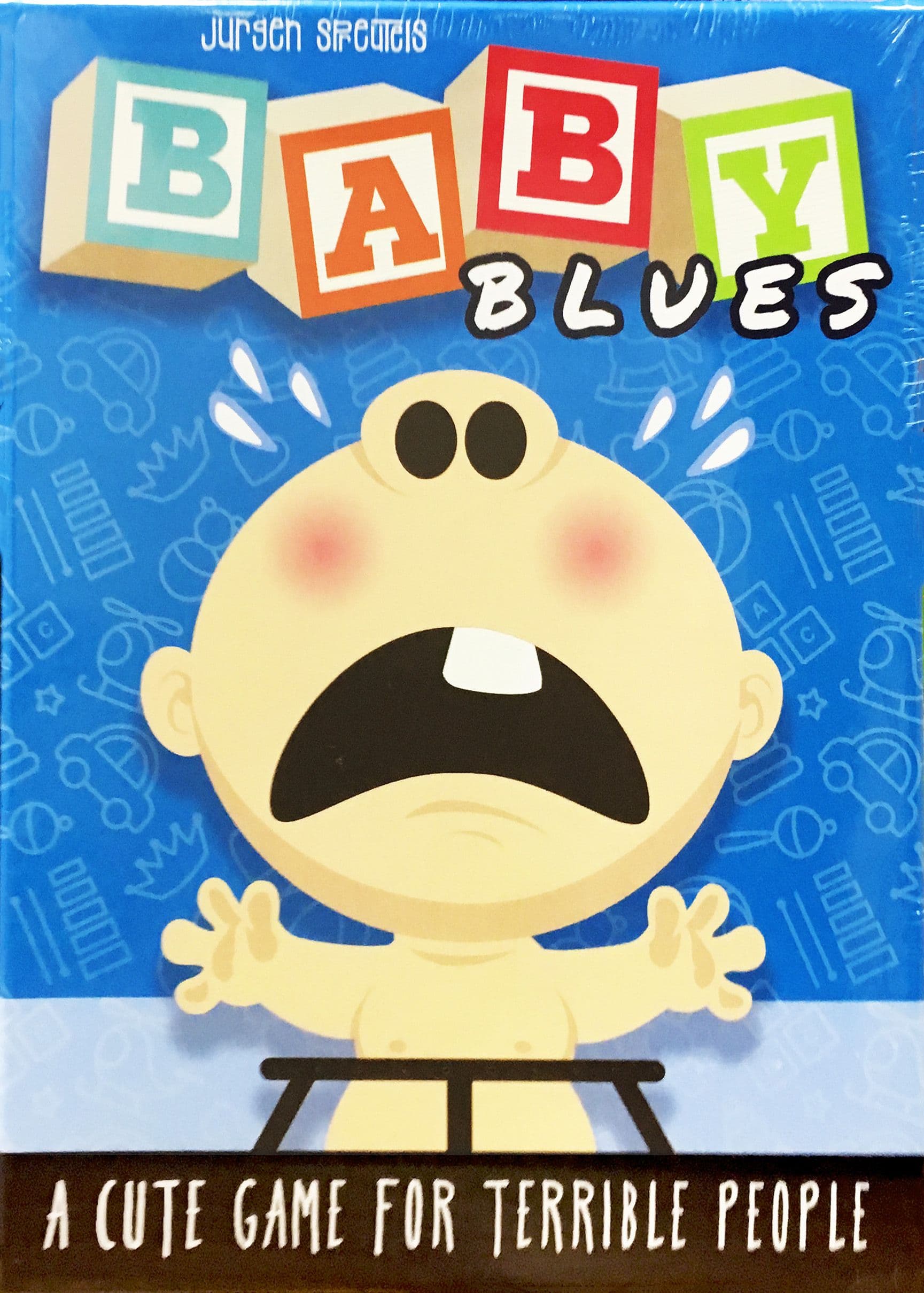
In Baby Blues every player is working in their neighbor's day care center. You have five babies under your charge, and you want to keep your babies happy. Happy babies score points at the end of the game, crying babies do not. You'll play cards to make other babies cry and keep your babies happy. Each turn you can play as many Green (good) cards and one Red or Orange (bad) card on one of your opponents. Red & Orange cards are misfortune events that make babies cry - like poopy diapers and taking their pacifier. Green cards comfort your babies, changing diapers and feeding. Any unhappy baby at the end of your turn will cry and is out of the game. The game ends when one player has only crying babies. All the babies that aren't crying are flipped over and their points totaled. The player with the most points wins!

Bears vs Babies
Bears vs Babies is a card game in which you build handsome, incredible monsters who go to war with horrible, awful babies. The shared deck of cards consists of bear parts (and other monster parts) and baby cards. When you draw a part, you use it to build a monster for yourself; when you draw a baby, it goes in the center of the table. When babies are provoked, they attack, and anyone who has fewer monster parts than the number of attacking babies loses their monster; everyone with more parts than babies defeats this infantile army and scores.

Bedlamb
You are a sheep farmer. You have raised a surprisingly similar flock of sheep to all of your neighboring farms. Because of this none of you can tell who is the finest at raising sheep. A cunning contest of sheep trading results! Each farmer secretly selects which sheep to trade with each neighbor, and which to send to the grazing fields. Lying and deception are of course the most important tools of any sheep trader. But beware – each farmer also has a wolf in his arsenal! Don't let the wool get pulled over your eyes! Each card in Bedlamb contains unique flavor text, and upwards of 30% of them are better than that wool joke.
Blurble
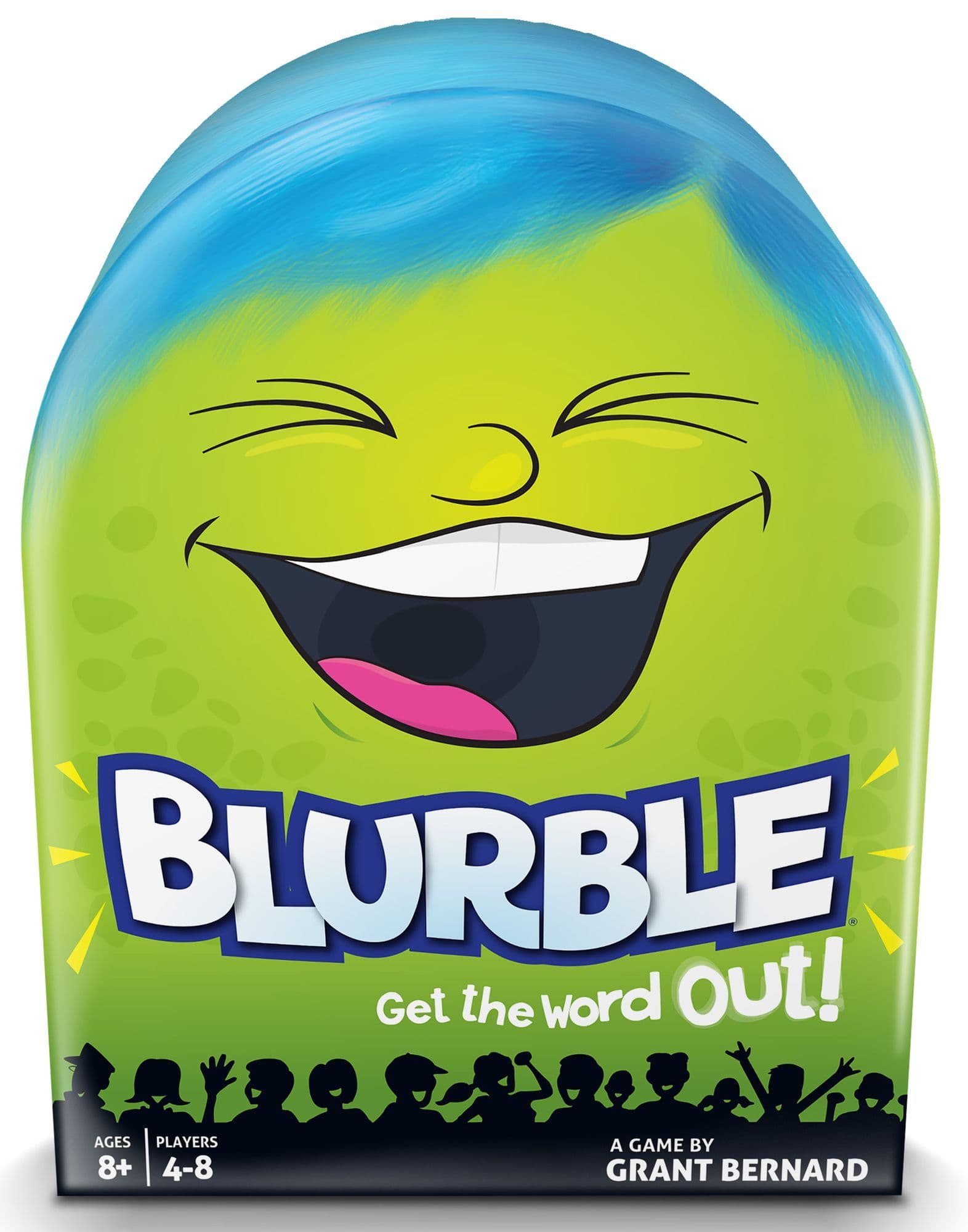
In Blurble, you need to think quickly — and obliquely — to grab more cards than any other player. Each round, the active player takes a stack of face-down image cards and holds a duel with each other player in the game. The player flips over a card between themselves and the player to their left, and whoever first yells out a word that starts with the same letter as the image shown on the card wins that card. Proper names are not allowed. For instance, if the card shows a dog, words such as "drain" or "dairy" would be acceptable, whereas "David" or "Denmark" would not. After this duel, the active player duels with the next player in clockwise order until they've faced all of the players at the table. The game can last multiple rounds or to a predetermined point total.
Cards Against Humanity: Family Edition
Cards Against Humanity: Family Edition is a new party game that’s just like Cards Against Humanity, except it’s written for kids and adults to play together. Each round, one player asks a question from a black card, and everyone else answers with their funniest white card. We didn’t just take the adult stuff out of the original game: we wrote a whole new game from scratch and tested it with thousands of families. If you like to laugh at stuff like “filling my butt with spaghetti,” this is the game for you. If you don’t, go fill your butt with spaghetti! —description from the publisher
Cards Against Marvel
This is a Marvel-themed Cards Against Humanity clone. Follows the standard Cards Against Humanity rules.
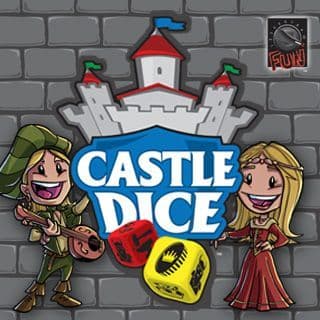
Castle Dice
Castle Dice is a light dice-drafting game in which the players have been ordered by the king to build castles along the borders of the kingdom. The player who can create the greatest castle will become the new heir to the throne. Players will explore the land by rolling the dice, and then take turns gathering resources from them. These resources are then used to hire workers and improve castles. Players must gather and spend wisely as the Barbarians from the neighboring lands will attack players and steal their resources throughout the game. At the end of seven turns, the player who has built the greatest castle (earned the most victory points) wins the game!
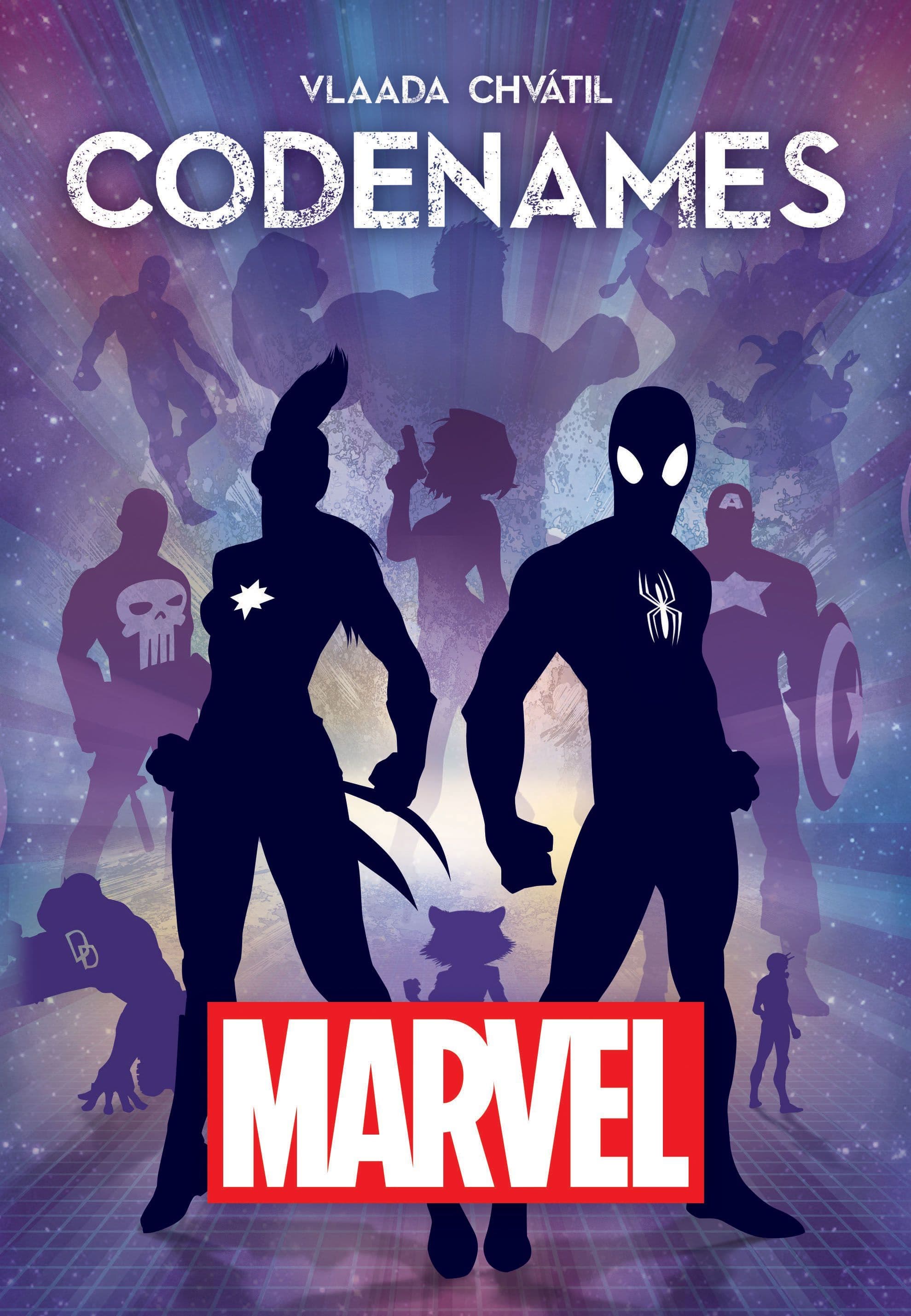
Codenames: Marvel
Codenames: Marvel combines the hit social word game Codenames, while featuring characters and locations from the Marvel Universe including, Spider Man, Guardians of the Galaxy, The Avengers and Doctor Strange. In Codenames, two teams — S.H.I.E.L.D. and Hydra in this case — compete to see who can guess all of their field agents (identified by either a word or picture) correctly first — but those field agents are hiding in plain sight in a 5x5 grid that includes the agents of the other team, neutral words, and an assassin that will cause you to lose the game immediately if you guess it. One person on each team is a spymaster and only these two know which agents belong to each team. Spymasters take turns giving one-word clues that can help their teammates identify multiple agents on the board. Their teammates try to guess agents of the right color while avoiding those that belong to the opposing team — and everyone wants to avoid the assassin.
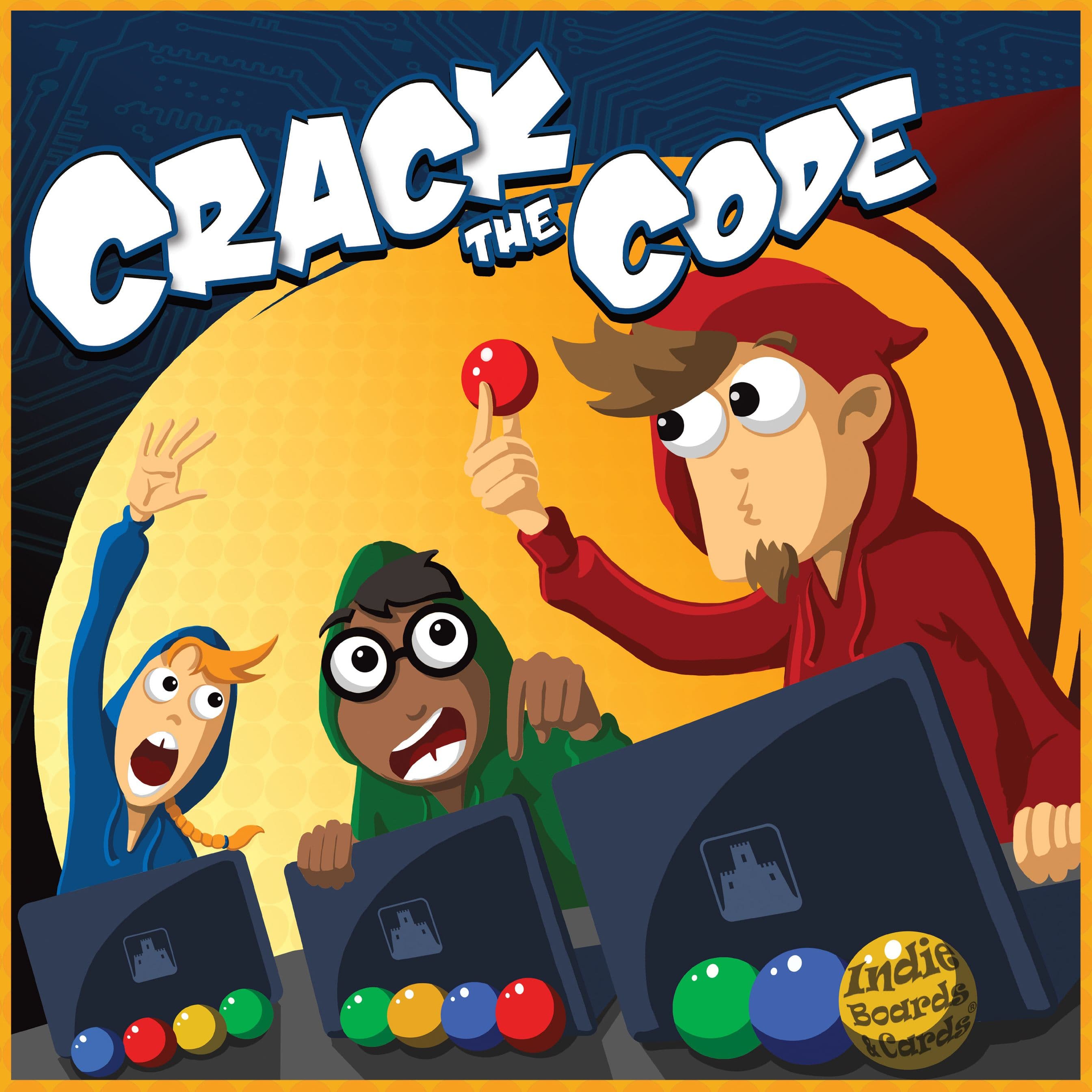
Crack the Code
Crack the Code is a limited communication, co-operative puzzle game in which players form a hacker team that tries to build a piece of code before they run out of moves and their program is terminated. Players can see the marbles in front of their teammates, but they cannot see the marbles in front of themselves. Using a series of action cards, they work together to rearrange the marbles to build a certain sequence before they run through the deck. —description from the publisher
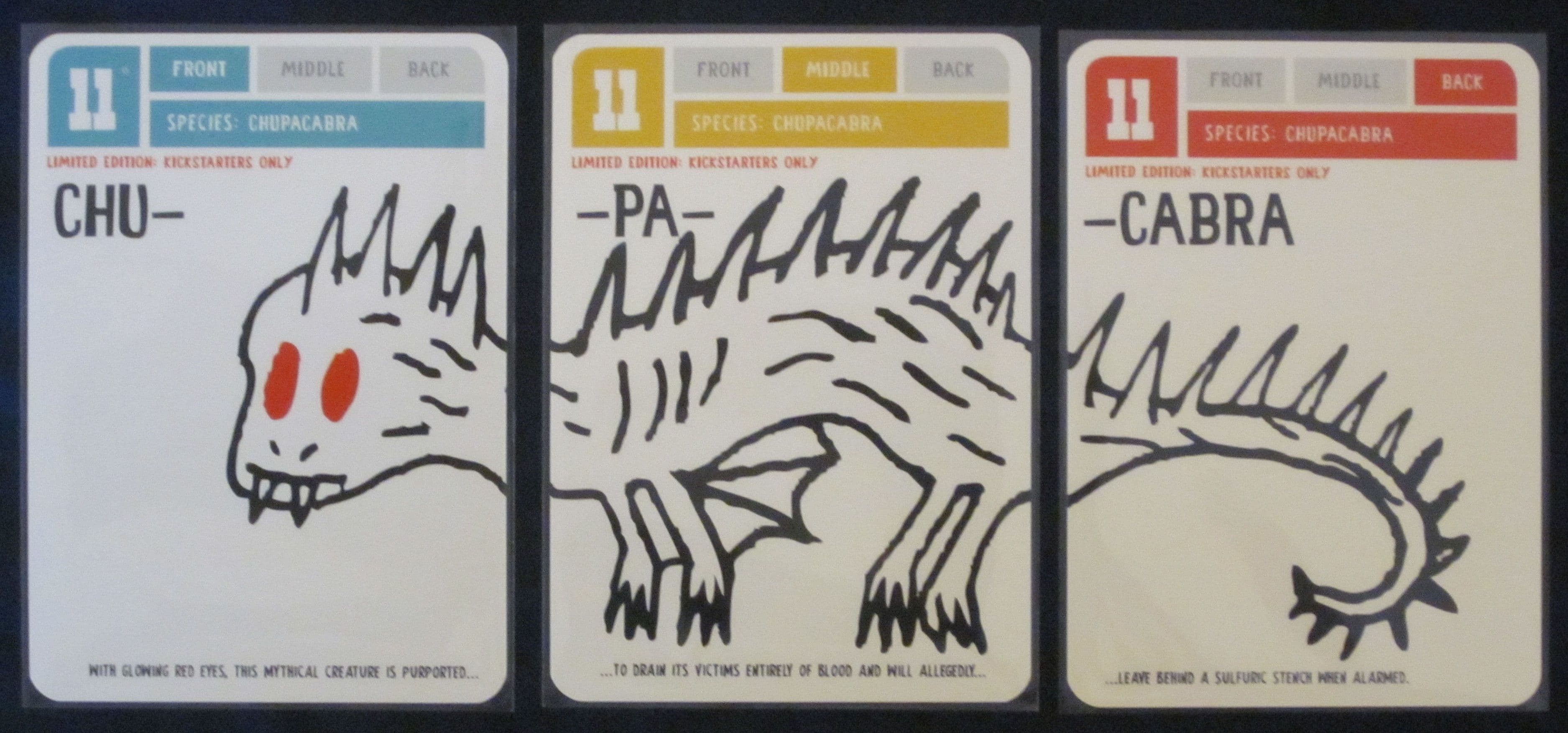
Creatures: The Card Game – Chupacabra Promo Cards
Creatures: Chupacabra is a special set of 3 creature cards, available only to Kickstarter backers: Front: CHU- (11 points) Middle: -PA- (11 points) Back: -CABRA (11 points) These cards are added to the CREATURES deck and can be used like any other creature card during the game. CHUPACABRA (11) - with glowing red eyes, this mythical creature is purported to drain its victims entirely of blood and will allegedly leave behind a sulfuric stench when alarmed.
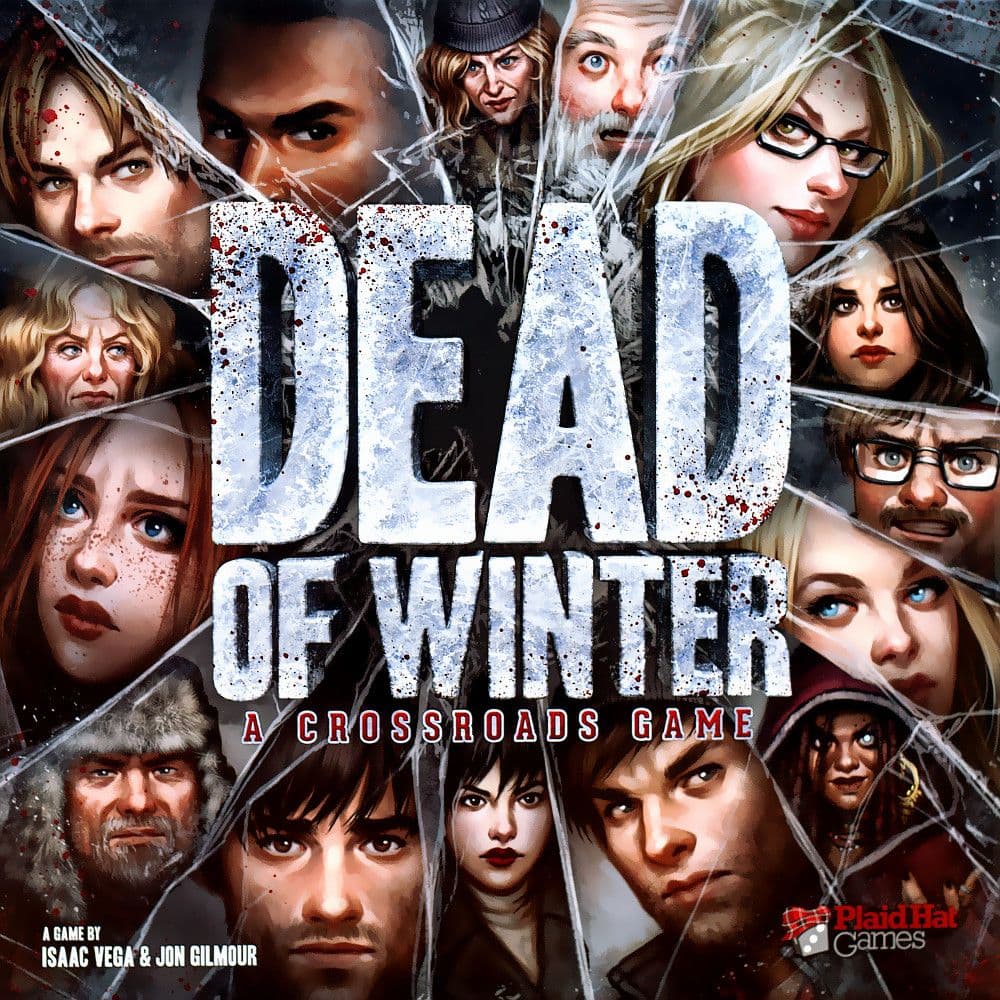
Dead of Winter: A Crossroads Game
"Crossroads" is a game series from Plaid Hat Games that tests a group of survivors' ability to work together and stay alive while facing crises and challenges from both outside and inside. Dead of Winter: A Crossroads Game, the first title in this series, puts 2-5 players in a small, weakened colony of survivors in a world in which most of humanity is either dead or diseased, flesh-craving monsters. Each player leads a faction of survivors, with dozens of different characters in the game. Dead of Winter is a meta-cooperative psychological survival game. This means players are working together toward one common victory condition, but for each individual player to achieve victory, they must also complete their personal secret objective, which could relate to a psychological tick that's fairly harmless to most others in the colony, a dangerous obsession that could put the main objective at risk, a desire for sabotage of the main mission, or (worst of all) vengeance against the colony! Games could end with all players winning, some winning and some losing, or all players losing. Work toward the group's goal, but don't get walked all over by a loudmouth who's looking out only for their own interests! Dead of Winter is an experience that can be accomplished only through the medium of tabletop games, a story-centric game about surviving through a harsh winter in an apocalyptic world. The survivors are all dealing with their own psychological imperatives, but must still find a way to work together to fight off outside threats, resolve crises, find food and supplies, and keep the colony's morale up. Dead of Winter has players making frequent, difficult, heavily-thematic, wildly-varying decisions that often have them deciding between what's best for the colony and what's best for themselves. The rulebook also includes a fully co-operative variant in which all players work toward the group objective with no personal goals.
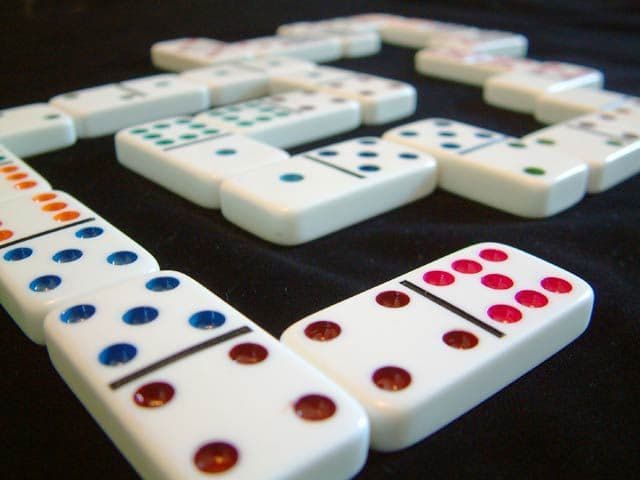
Dominoes double six
A traditional tile game played in many different cultures around the world. This entry is for Western Dominoes; the standard set being the 28 "Double Six" tiles. Chinese Dominoes use a 32 tile set with different distributions. Dominoes is a family of games using the "Western" style tiles. The standard set of tiles is based on the 21 different combinations made with a roll of two six-sided dice. Seven (7) additional "Blank" combination tiles combine with the 21 to form the standard 28 "Double-Six" set. "Double-Nine" (with 55 tiles) and "Double-Twelve" (with 91 tiles) are also popular. "Double-Fifteen" sets with 136 tiles also exist. There are many different games played with Dominoes. The standard game is known as the Block game. Forms of this game are known in many different areas of the world with similar rules. Puerto Rican Dominoes, Latin Dominoes, and Cuban Dominoes are all forms of the Block game. Another main variety of Dominoes games are based on the "Fives Family". Five-up, All Fives, Sniff, and Muggins are all part of this family. This variation adds the ends of the dominoes to make a multiple of five for scoring. Other popular Dominoes games include 42, ChickenFoot, and Mexican Train.
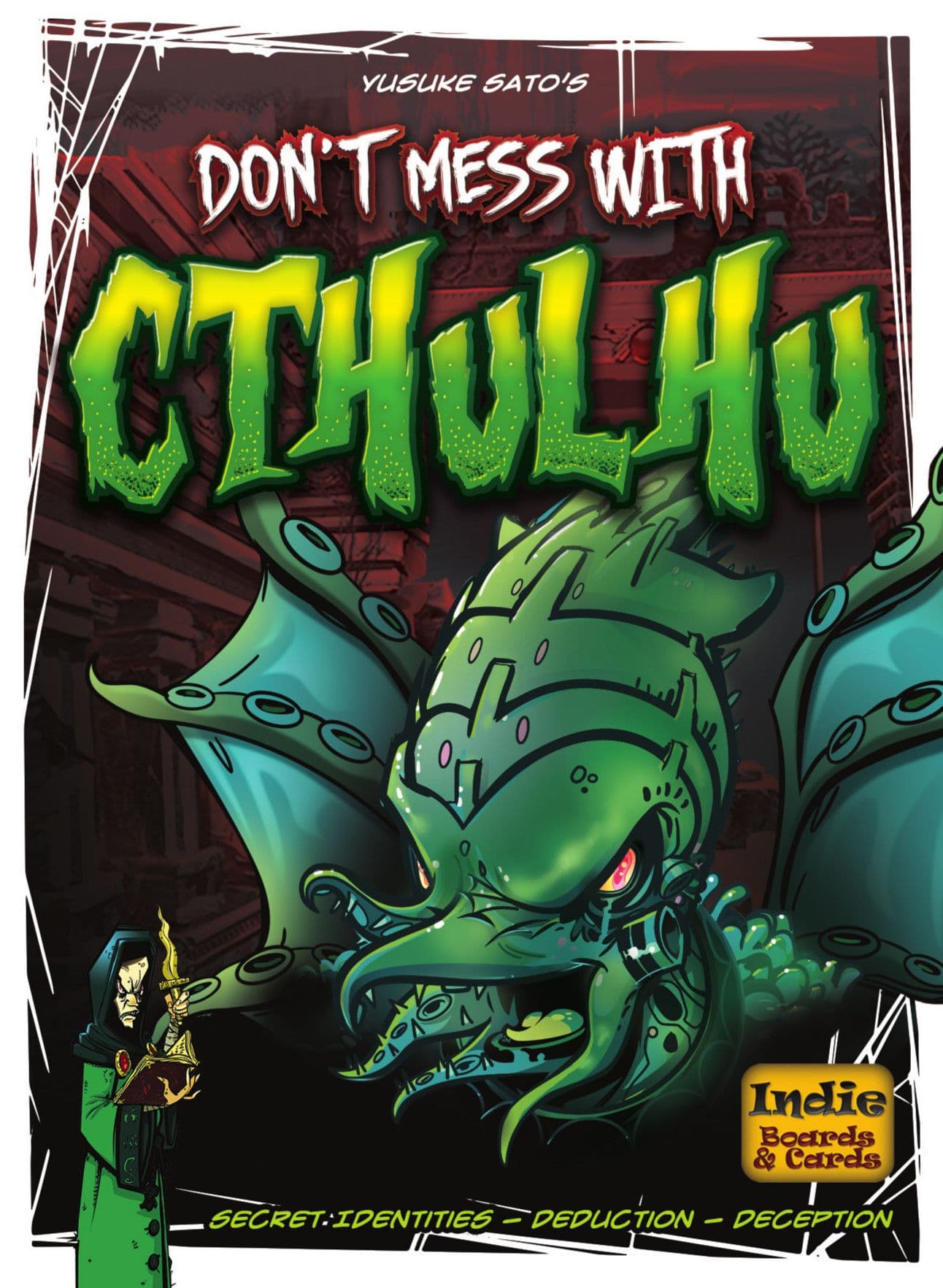
Don't Mess with Cthulhu
Don't Mess with Cthulhu is a social deduction game with secret identities. Players are either Investigators trying to keep Cthulhu from waking and controlling the world, or Cultists that want to bring the world to a disturbing end. The game takes place over four rounds. The Investigators must uncover all the Elder Signs to win; the Cultists win when Cthulhu is revealed or if the game ends before all the Elder Signs are discovered. Before each round players receive a number of Investigation cards, which they look at but then shuffle and put in front of themselves so they know what cards they have, but they don't know which card is which. Each round has a number of actions equal to the number of players in the game. Players take actions to reveal Investigation cards, and gather all unrevealed cards are shuffled an redistributed evenly among the players. Reveal Cthulhu, and the Cultists win instantly. Reveal all the Elder Signs, and the Investigators win. If you want to play multiple rounds (it's highly recommended), the losers in each game get Insanity tokens. Get three tokens, and the night is over with the winner(s) being those most sane. Kickstarter version notes: Kickstarter Edition has the following bonuses, unavailable in the retail version: #1 - 10 player aupport. All the components needed to play with up to 10 people at the same time. #2 - 3 x Necronomicon Investigation cards. Now the Investigators not only have to discover all the Elder Signs in time to prevent Cthulhu from rising, they must also discover the ancient tomes called Necronomicon. But the Necronomicon are dangerous to the uninitiated and cannot be revealed until at least one Elder Sign has been discovered. These promo cards add more information into the game, helping the Investigators in their quest. However the Necronomicon also give the Cultists another win condition - making the strategies more complex and the discussion even more lively. #3 - 6 x "Objects of Power" cards. These special cards have a variety of different uses, and provide more direct and indirect information in the game (as well as a touch of light-hearted fun). Objects of Power give the game more replay value, more strategy and more variability without adding complexity. Timebomb Themed edition In TimeBomb, you are playing either a terrorist trying to make a bomb blow up, or a SWAT team member trying to defuse it. Each player receives a card at the beginning of the game that indicates his role and keep it secret until the end of the game. Then, at each of the game's 4 rounds, each player receives 5 cards that he shuffles after having a quick look at them and place them face down in front of him. Among all of the player's cards, a number of "SUCCESS" cards, one "BOOM" card and the rest being "SAFE" card. The active player then chooses another's player card and reveals it, that player then becoming the new active player. After N cards have been revealed (N being the number of players), all cards are shuffled again and distributed equally to the players for a new round. If at any time the "BOOM" card is revealed, the terrorist's team wins. If all "SUCCESS" cards are revealed before that happens, then the SWAT team members win. Will you be able to convince the other player to reveal your own cards among them a SUCCESS is hidden? Or are you just trying to cheat the SWAT team members into revealing your own cards because the BOOM card is among them? Only a game of TimeBomb will say.
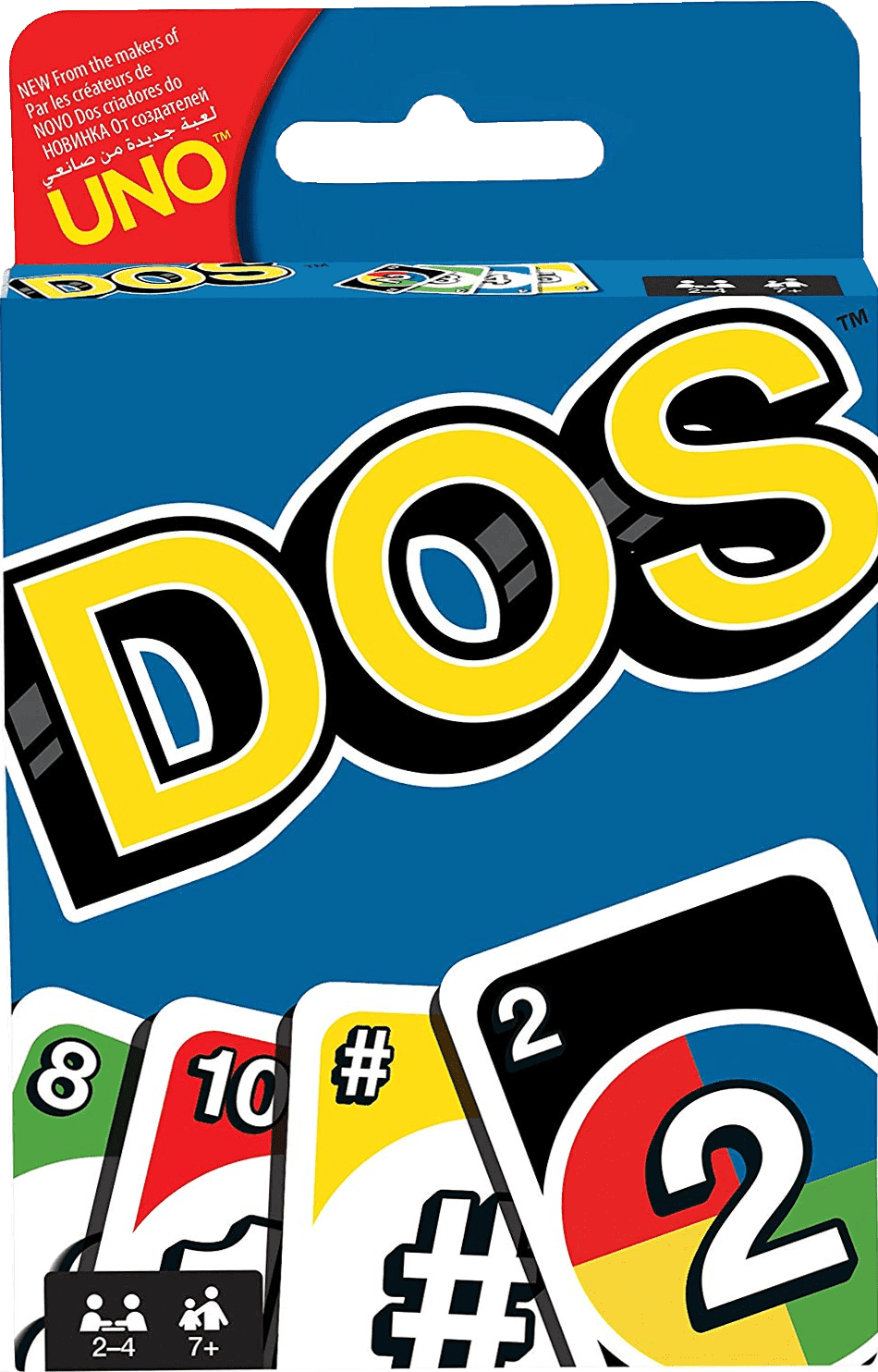
DOS
DOS is the follow up to the classic card game UNO. Like UNO, the object of DOS is to be the first player each round to get rid of all your cards and earn points for the cards left in your opponents' hands. On your turn you can play cards from your hand by matching their numbers to any of the face up cards in the center row. You can play one match for each card in the center row. You can also combine two cards from your hand that add up to the number you wish to match. If the card(s) you played match both number and color, you earn the right to place extra cards from your hand in the center row and even force other players to draw cards. Don't forget to yell "Dos!" whenever you have two cards in your hand or you could end up drawing more cards! The round ends when one player gets rid of all his cards. That player earns points based on the values of the cards left in the other players' hands. Continue playing in rounds until someone reaches 200 points. That player is the winner.
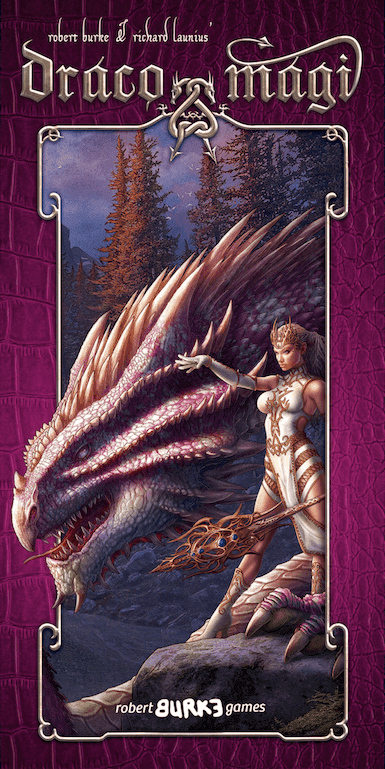
Draco Magi
Myrgos, the powerful and benevolent Dragon King has passed into the next world after an extended illness, and the land is now gripped with uncertainty. As the laws of succession dictate, only one of his remaining apprentices can rise to the position of "Draco Magi". With the death of the Draco Magi, the wizard-lock on the succession strongbox of each apprentice has completely dissipated. Inside each box, an apprentice will find a succession scroll. Contained on the scroll is the last piece of knowledge required to become the Drago Magi — but only one can claim the title. Each scroll holds a different "Spell of Succession" that may be executed only with the correct combination of rare gems. These magically imbued gems appear in sets of three only during times of succession and must be collected by dragons at the command of each apprentice. The competitor who is first to collect the gems needed to complete his Spell of Succession becomes the new Drago Magi. For the loser, the unofficial title whispered under the breath of the people is "Novitius Eterna" or "Forever a Novice". Be swift and remember, there is little room for error. Draco Magi is a card game designed by Richard Launius and Robert Burke. To start, each player selects an apprentice dragon mage he wishes to play. Each mage receives a deck of dragon cards that includes multiple copies of four different chromatic dragons (Green, Red, Black & Purple), four different metallic dragons (Gold, Silver, Brass & Bronze), and two special dragon cards (the Battle dragon and the Polar dragon). Each dragon has a different strength, weakness and special ability. Players will send their dragons, one at a time, to capture gems on different battlefields; each battlefield offers a different effect that may give an advantage or disadvantage to certain types of dragons. Players alternate playing dragon cards on battlefields until they have played all eight of their Dragon cards. Each player can play a maximum of three dragons on a single battlefield. When a dragon is placed, it may make a ranged attack. Not all dragons have a ranged attack breath weapon, but those that do have a breath weapon icon with a number. The number indicates the number of battle cards the player may reveal when attempting to hit with a ranged attack. A defender may defend with the number of cards equal to the dragon's shield value. A ranged attack can take place immediately only when the card is played against an opposing dragon. If a ranged attack is not used at this moment, the ranged attack is forfeited for the current round. After all dragon cards have been played, the melee phase of the battle begins. Each dragon has a "melee attack" value printed on its card which represents the number of battle cards the player can draw for the battle. The melee battle mechanism is a unique attack and counter system that provides opportunity for deduction, subtlety, and deadly combos. Players will also earn advance battle cards that build up their decks over the course of the game. The player with the most dragons present on a battlefield wins that gem. In the case of a tie, the dragons and gem remain for the next round. Draco Magi is a fast game heavily connected to its theme that incorporates area control, bluffing, hand management, deck building and deduction.
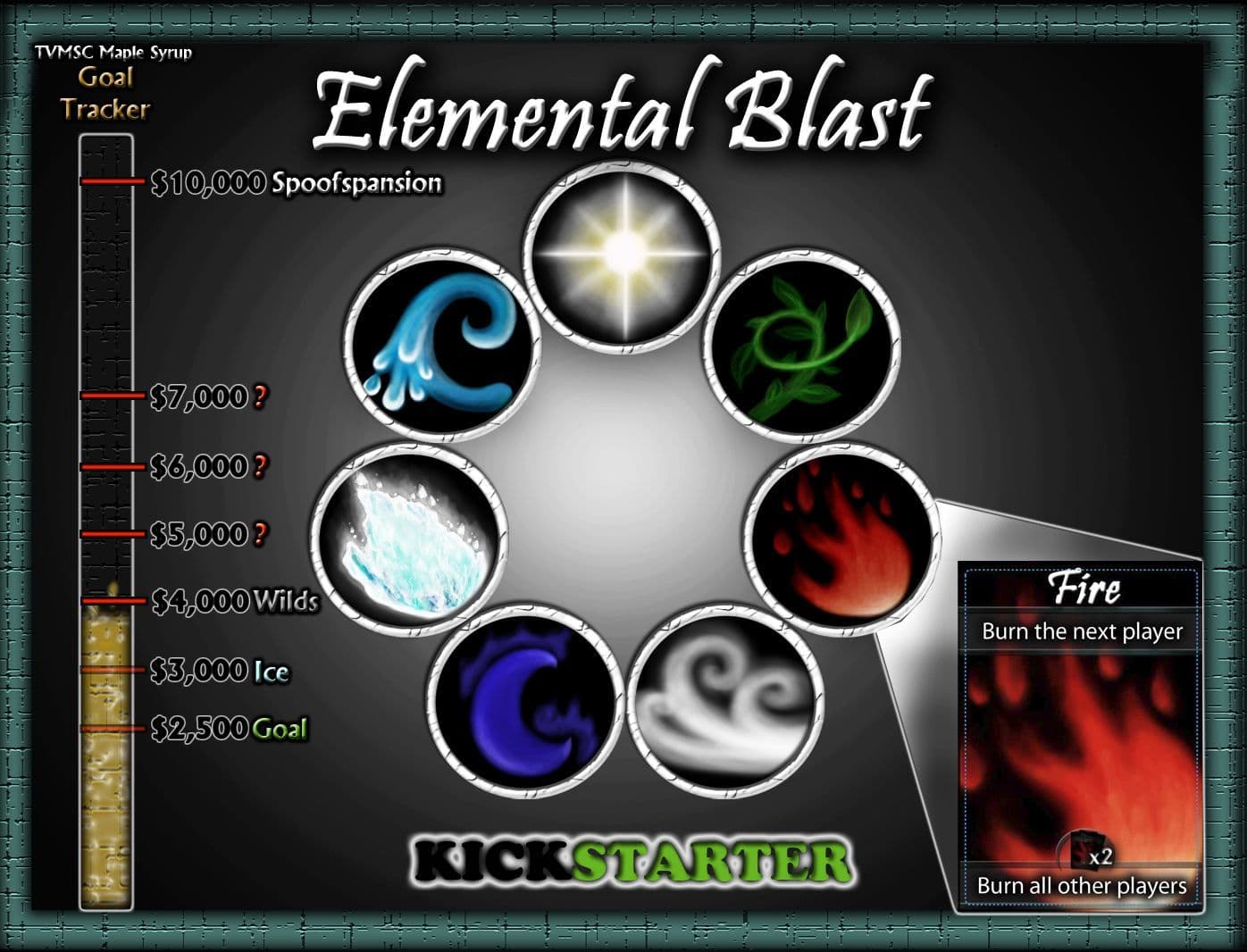
Elemental Blast
Elemental Blast is a quick playing card game for 3-7 players. The players take on the role of Elemental Sorcerers using the elements to compete for elemental dominance, culminating when one Sorcerer achieves an Elemental Blast. Elemental Blast is a light weight card game of strategic hand management. Starting with three cards each and using draw one/play one rules, the players utilize element cards to create effects to help themselves and hinder other players. Most harmful effects target the next player in turn order, but turn order can be reversed using certain elements. In addition, playing the same element that was just played creates a more powerful bonus effect that may affect additional players. The goal is to collect five of the same element in your hand, referred to as an Elemental Blast. The first player to complete an Elemental Blast wins the game.
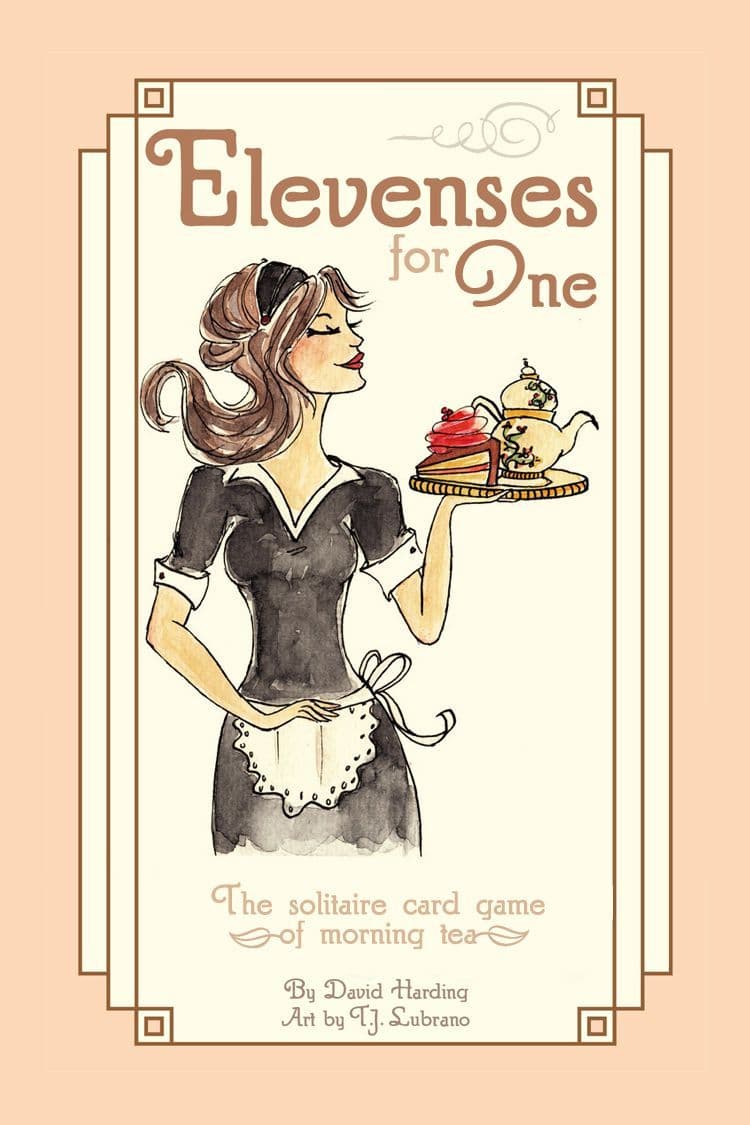
Elevenses for One
You are Grosvenor, the maid to Lady Agatha Smythe, one of the wealthiest landowners in the district. She is holding a gala High Tea at 11 o’clock – but, oh dear! You only have 15 minutes to get ready and where is that sugar? You mustn’t be late! The madam’s reputation is at stake! Welcome to Elevenses for One – a game for one player who must load her Tea Trolley with all the accoutrements required for a splendid morning tea... before the clock strikes 11! A micro solitaire game with just 11 cards (each with specific actions the player must choose to follow or ignore - possibly to her detriment), Elevenses for One is a tense puzzle. Can you load the Tea Trolley correctly within fifteen actions?

Empire Builder
Empire Builder, first published in 1982 by Mayfair Games, is a classic railroad strategy game that introduced the “crayon rails” system. Designed by Darwin Bromley and Bill Fawcett, the game tasks players with building rail networks across the United States and Canada while delivering goods to meet demand cards. What set it apart was its innovative mechanic: players literally draw their tracks on the board with crayons or erasable markers, creating a personalized rail empire as the game unfolds. This tactile element gave Empire Builder a unique charm and replayability, as every session produced a different map of connections and strategies.
Gameplay revolves around balancing construction costs with the profits earned from delivering goods. Players begin with $40 million and must carefully allocate funds to lay track across varied terrain—ordinary dots cost $1 million, mountains $2 million, small cities $3 million, and major cities $5 million. Crossing rivers or ocean inlets adds further expense, forcing players to weigh efficiency against opportunity. Delivering goods to cities listed on demand cards earns revenue, while event cards introduce unexpected challenges such as disasters or economic shifts. The winner is the first player to amass $250 million and connect six of the seven major cities, making resource management and long-term planning essential.
Empire Builder’s success led to a long-running series of spin-offs and expansions, collectively known as the “Empire Builder series.” These included international versions like British Rails, Eurorails, and Australian Rails, as well as imaginative settings such as Iron Dragon (fantasy), Lunar Rails, and Martian Rails. The franchise became beloved among fans of economic and transportation-themed board games, praised for its strategic depth and high replay value despite its lengthy playtime of 60 to 240 minutes. Even decades later, Empire Builder remains a touchstone in board gaming history, remembered for blending economic simulation with creative map-building in a way that continues to inspire modern titles.
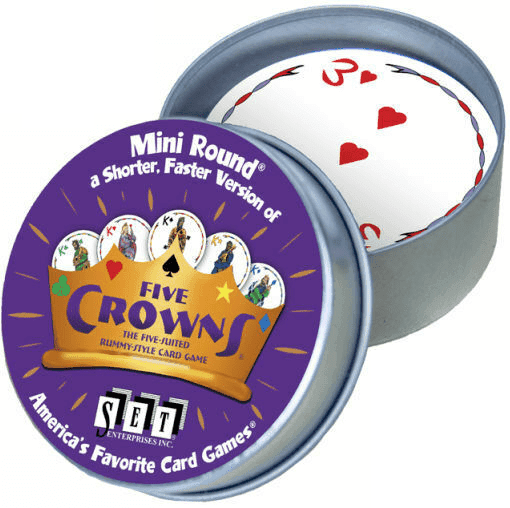
Five Crowns Mini Round
Five Crowns Mini Round is a five-suited rummy-style card game that's a smaller version of Five Crowns with fewer cards, although the fifth suit of stars and a rotating wild card are still present. Your goal is to combine all of your cards into sets and runs, be the first to go out, then watch the others scramble as they get one last chance to cut their losses. With each round, the number of cards dealt increases and the wild card changes keep players on their toes.
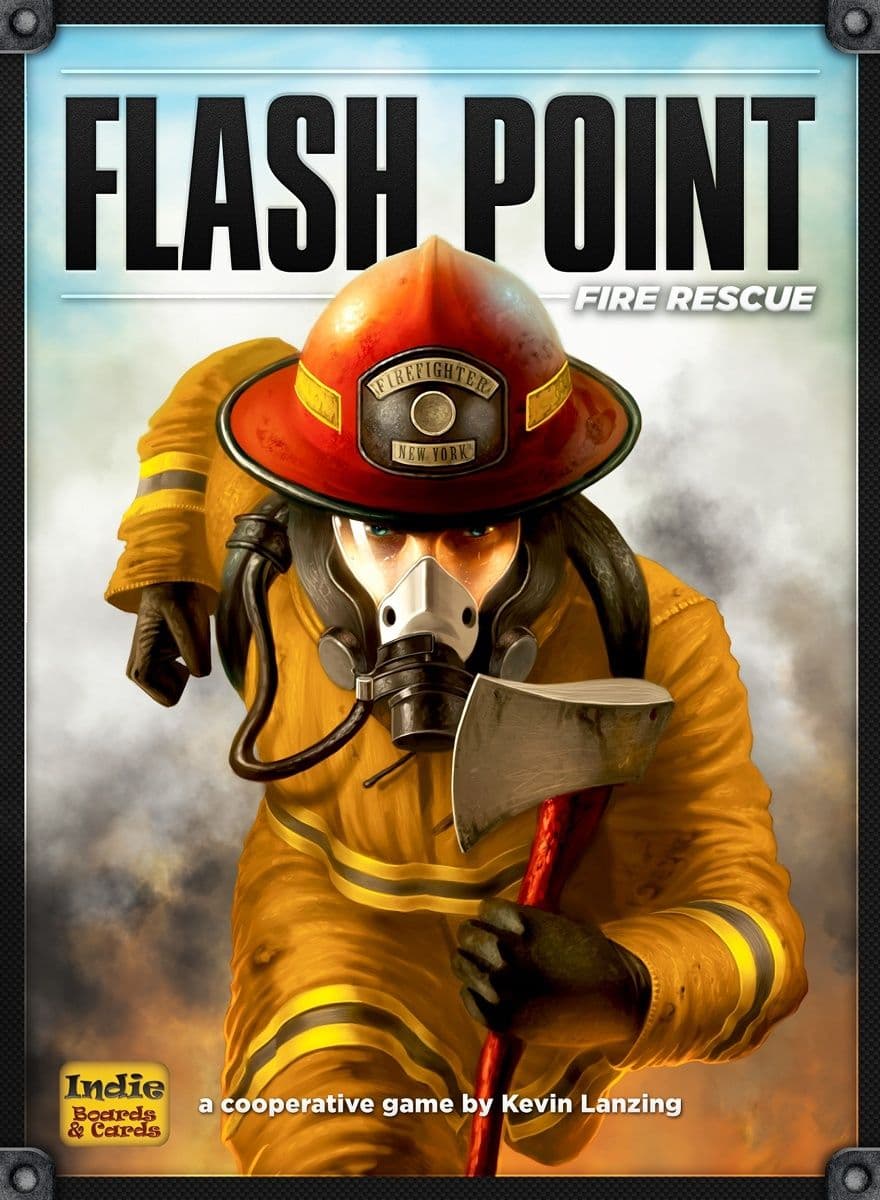
Flash Point: Fire Rescue
The call comes in... "911, what is your emergency?" On the other end is a panicked response of "FIRE!" Moments later you don the protective suits that will keep you alive, gather your equipment and rush to the scene of a blazing inferno. The team has only seconds to assess the situation and devise a plan of attack – then you spring into action like the trained professionals that you are. You must face your fears, never give up, and above all else work as a team because the fire is raging, the building is threatening to collapse, and lives are in danger. You must succeed. You are the brave men and women of fire rescue; people are depending on you. This is what you do every day. Flash Point: Fire Rescue is a cooperative game of fire rescue. There are two versions of game play in Flash Point, a basic game and expert game. In both variants, players are attempting to rescue 7 of 10 victims from a raging building fire. As the players attempt to rescue the victims, the fire spreads to other parts of the building, causing structural damage and possibly blocking off pathways through the building. Each turn a player may spend action points to try to extinguish fires, move through the building, move victims out of the building or perform various special actions such as moving emergency vehicles. If 4 victims perish in the blaze or the building collapses from taking too much structural damage, the players lose. Otherwise, the players win instantly when they rescue a 7th victim. The expert variant included in the game adds thematic elements such as flash over, combustible materials, random setup, and variations on game difficulty from novice to heroic. The game includes a double sided board with two different building plans and several expansion maps are available.
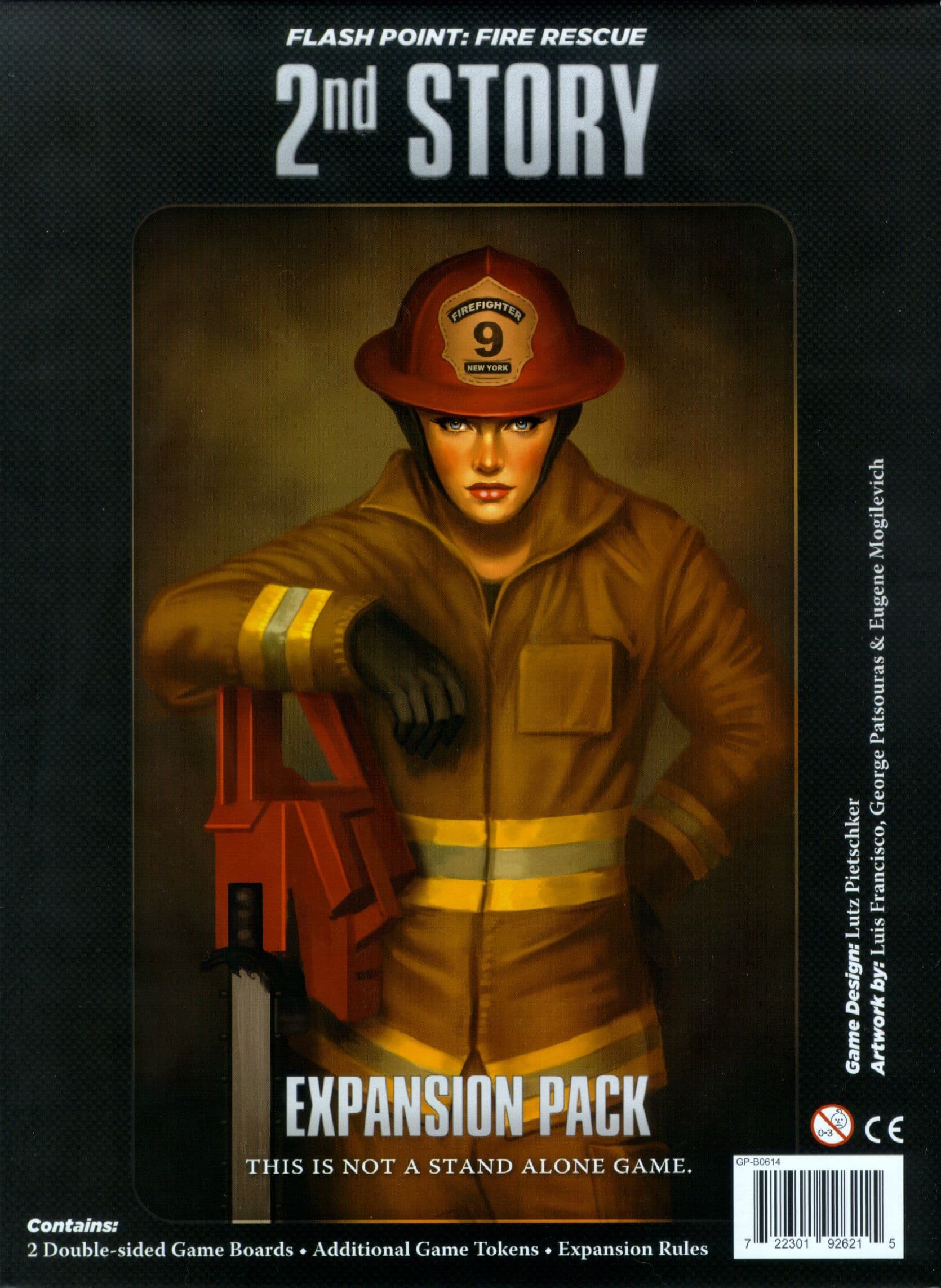
Flash Point: Fire Rescue – 2nd Story
Flash Point: Fire Rescue - 2nd Story, an expansion pack for Flash Point: Fire Rescue, contains two double-sided mounted game boards and a counter sheet that contains ladders, windows, an explosion marker, and more. Each game board represents one floor of a building, and the player firefighters will need to cover more area in this expansion to keep things under control. Ladders and stairs provide access to the upper building level, and windows let firefighters enter and leave the building without causing structural damage.
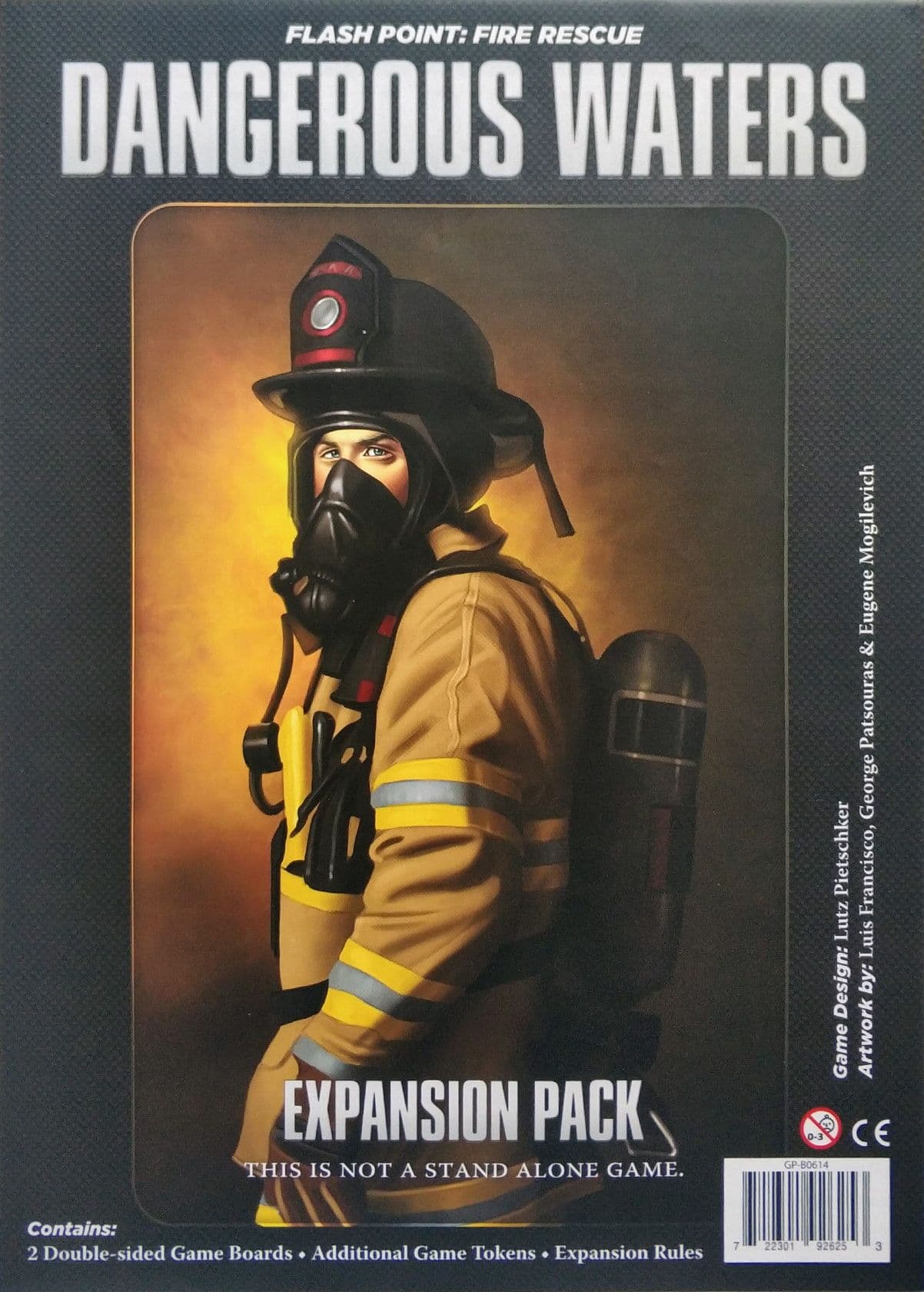
Flash Point: Fire Rescue – Dangerous Waters
Flash Point: Fire Rescue - Dangerous Waters takes the firefighting experience to – and below – the seas. This expansion for Flash Point: Fire Rescue includes two double-sided half boards (similar to those in the 2nd Story expansion) that represent a ship on one side and a part of a submarine on the other. The interior of the ship features an engine room, cabins and heat-conducting steel walls on a 6x8 game board, while the submarine is an elongated 3x16 game board that features victims who can't just leap out of a window to safety – and who might be in danger even within the sick bay.

Flash Point: Fire Rescue – Extreme Danger
Flash Point: Fire Rescue - Extreme Danger Kickstarter Bonus Pack is a collection of promos for Flash Point: Fire Rescue given out to backers of the Flash Point: Fire Rescue – Extreme Danger Kickstarter campaign.
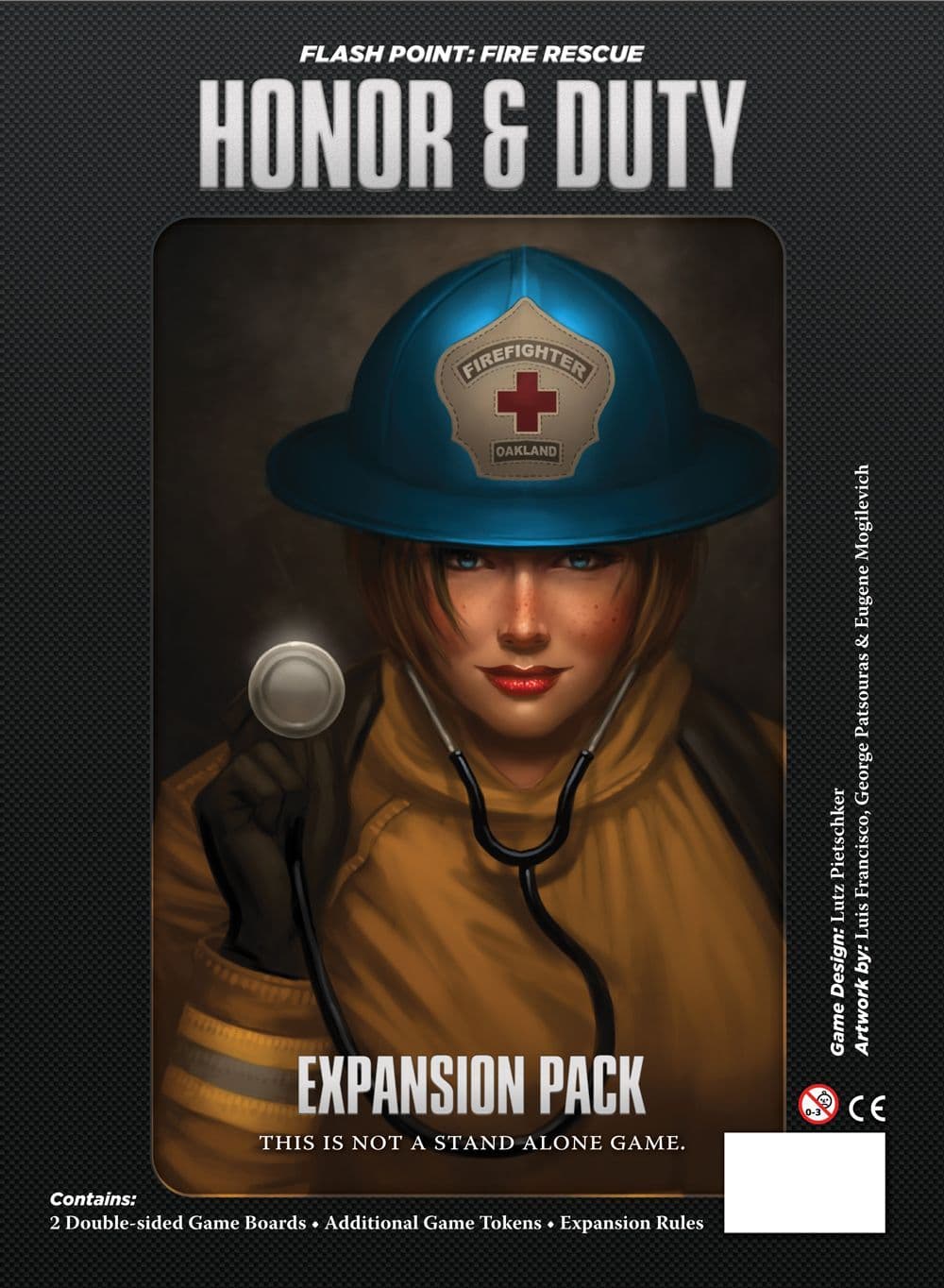
Flash Point: Fire Rescue – Honor & Duty
Flash Point: Fire Rescue - Honor & Duty, an expansion for Flash Point: Fire Rescue, consists of a double-sided game board that features an airplane fire on one side and a subway station disaster on the opposite side. Also included are several new game markers and detailed instructions for playing with these new materials. The first edition of this game, sold via Kickstarter, includes a new specialist card, the Fire Prevention Officer, and a double-side game board with an alternative attic and basement layouts; these items will not be included in the retail edition of this expansion. Honor & Duty requires the Flash Point: Fire Rescue base game, and the attic/basement game board also requires the Extreme Danger or the 2nd Story expansion.
Flash Point: Fire Rescue – Urban Structures
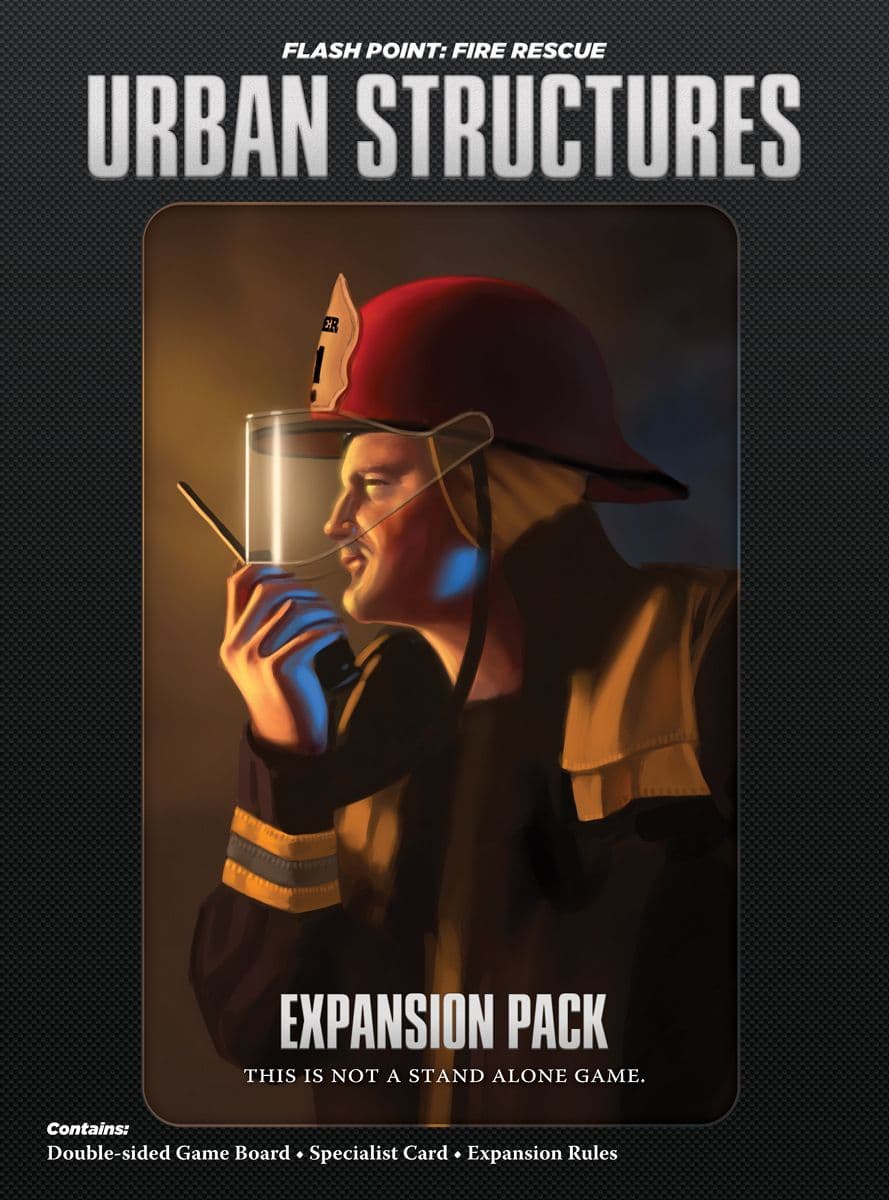
Urban Structures is an expansion pack for Flash Point: Fire Rescue. It was initially printed in low quantities in 2011 for supporters of the Kickstarter project for the base game. It is now available commercially. It comes with 2 additional maps as well as a "Structural Engineer" role card.
Fleet
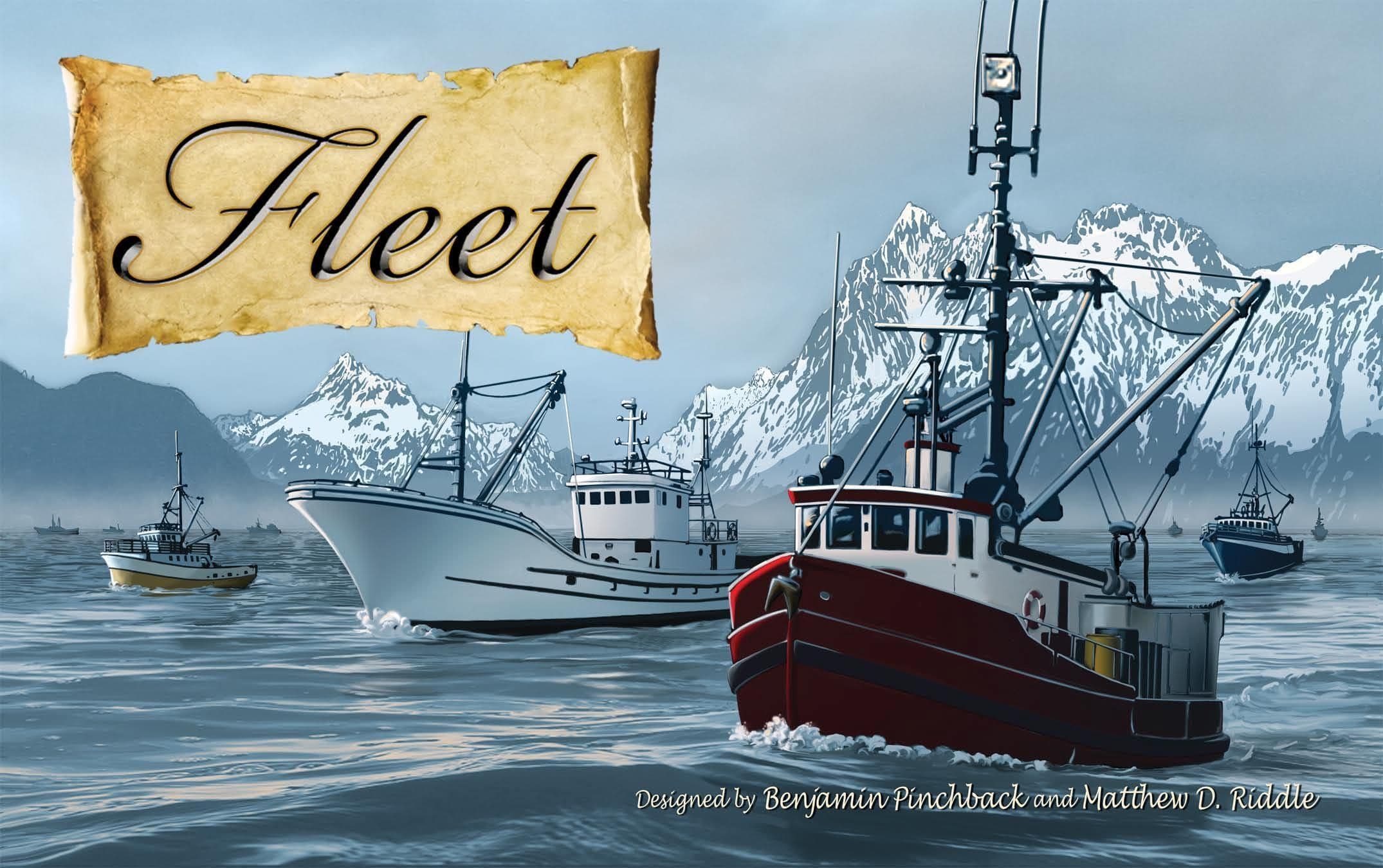
In the northwest corner of Nunavut, Canada, a formerly inaccessible bay off of the Arctic Ocean has become reachable through a secret inlet. Untouched by the hands of time and fed by both the ocean and warm fresh water springs, Ridback Bay is teeming with sea life. A remote, timeless bayside village is now being inundated by entrepreneurs awaiting the influx of the world's greatest fisherman to harvest this plentiful bounty. The docks and warehouses are being revitalized, and now it is time to begin the real adventure. Go build your Fleet and become master of the high seas! Fleet is an exciting, strategic card game with in-depth decisions and thrilling game play that new and experienced gamers can enjoy! In Fleet, you'll acquire licenses, launch boats, and fish the great briny blue. The player who best manages his resources and acquires the most VP via fish, licenses, and boats will build the strongest fleet and lead his crew to victory!
Fleet Wharfside
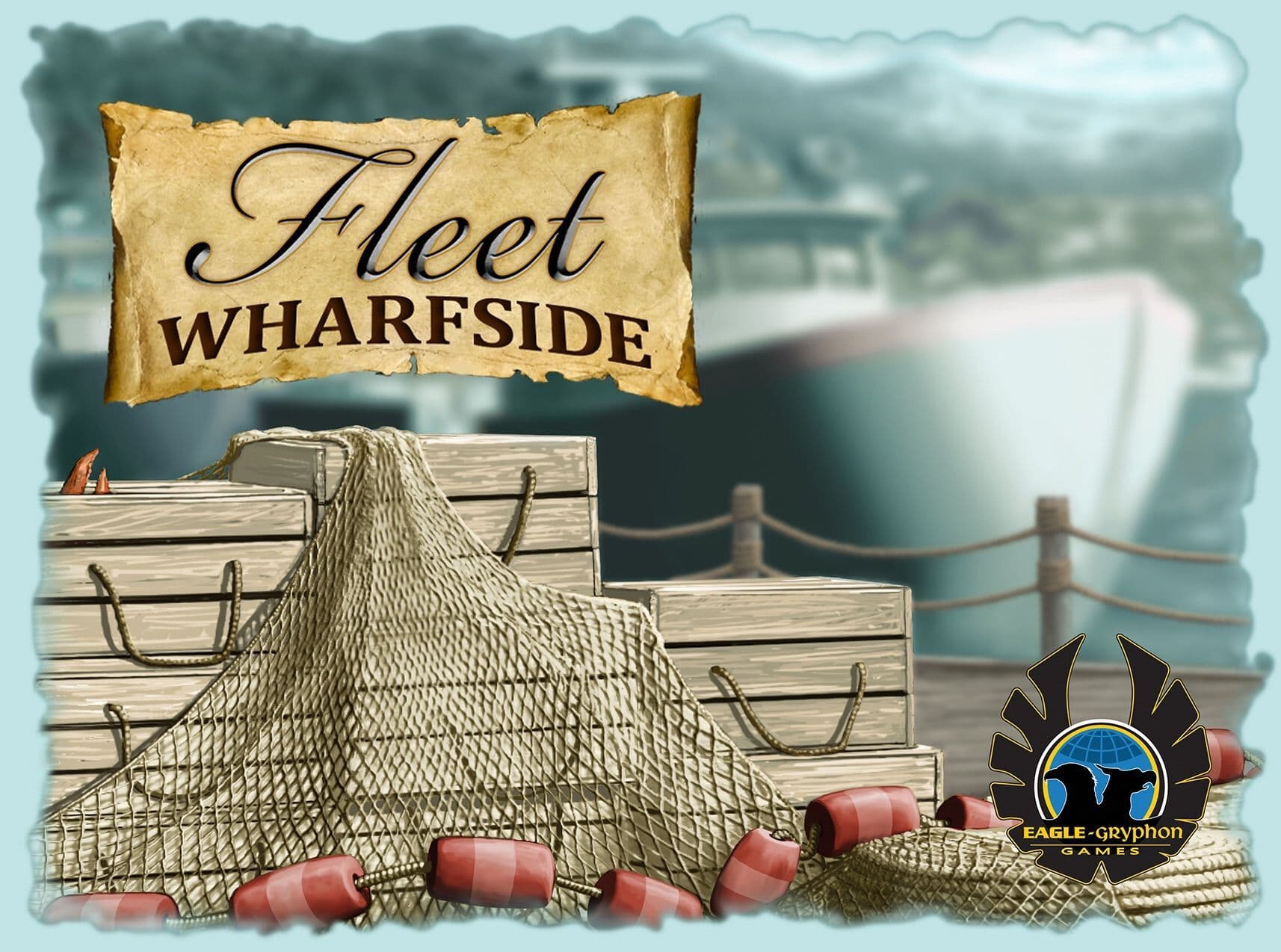
Fleet Wharfside is a standalone card game based on Fleet and Fleet: Arctic Bounty. Players compete to complete contracts by selecting contracts from the Market and by collecting fish from their fleet at the wharfside. It's what happens when the fleet comes home! Tales of the bountiful harvest at Ridback Bay have traveled far, attracting merchants to the local wharfside who wish to pay handsomely for your haul. A successful fisherman’s day is not done with the catch; keen business decisions will determine if your fleet has amassed a rich profit! Merchants have offered generous contracts for the catch, but which offer the greatest benefits? Choose and complete the most lucrative contracts and reap your reward! In Fleet Wharfside, players fulfill Contracts from local Ridback Bay businesses. Each turn, players will either collect fish from their fleet at the wharfs (by taking cards) or choose to purchase a Contract from the Market. Contracts provide a bonus while in play, but once they are completed the bonus goes away too! The player who collects the most VP from Contracts, Trophies, King Crab, final Goods, and their Captain Bonus wins the game! Fleet Wharfside is game #8 of the E-G-G Series!

Florida Man Card Game
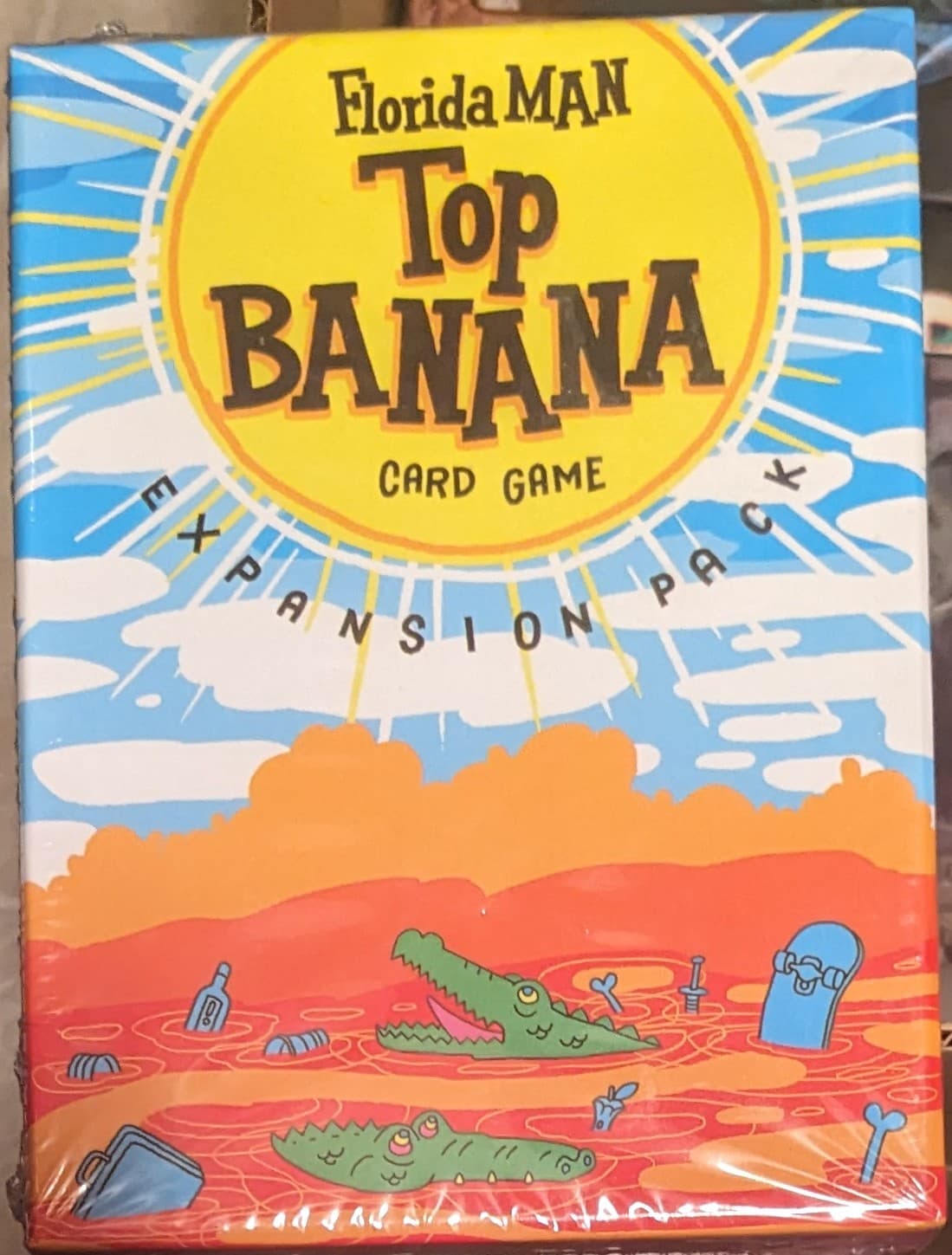
Florida Man is a party card game where players try to fill in the blanks on actual criminal cases in Florida. One player is the judge and plays a real headline from a Florida cases with some details left blank. The other players then submit their best guess to fill in the blank. The judge then decides the best guess and awards the card to that player. The person awarded the most headline cards at the end of the game is the winner. Includes: 100 Headline Cards 306 Action Cards 2 Decoder Cards 1 Headline Card Stand 1 Instruction Sheet
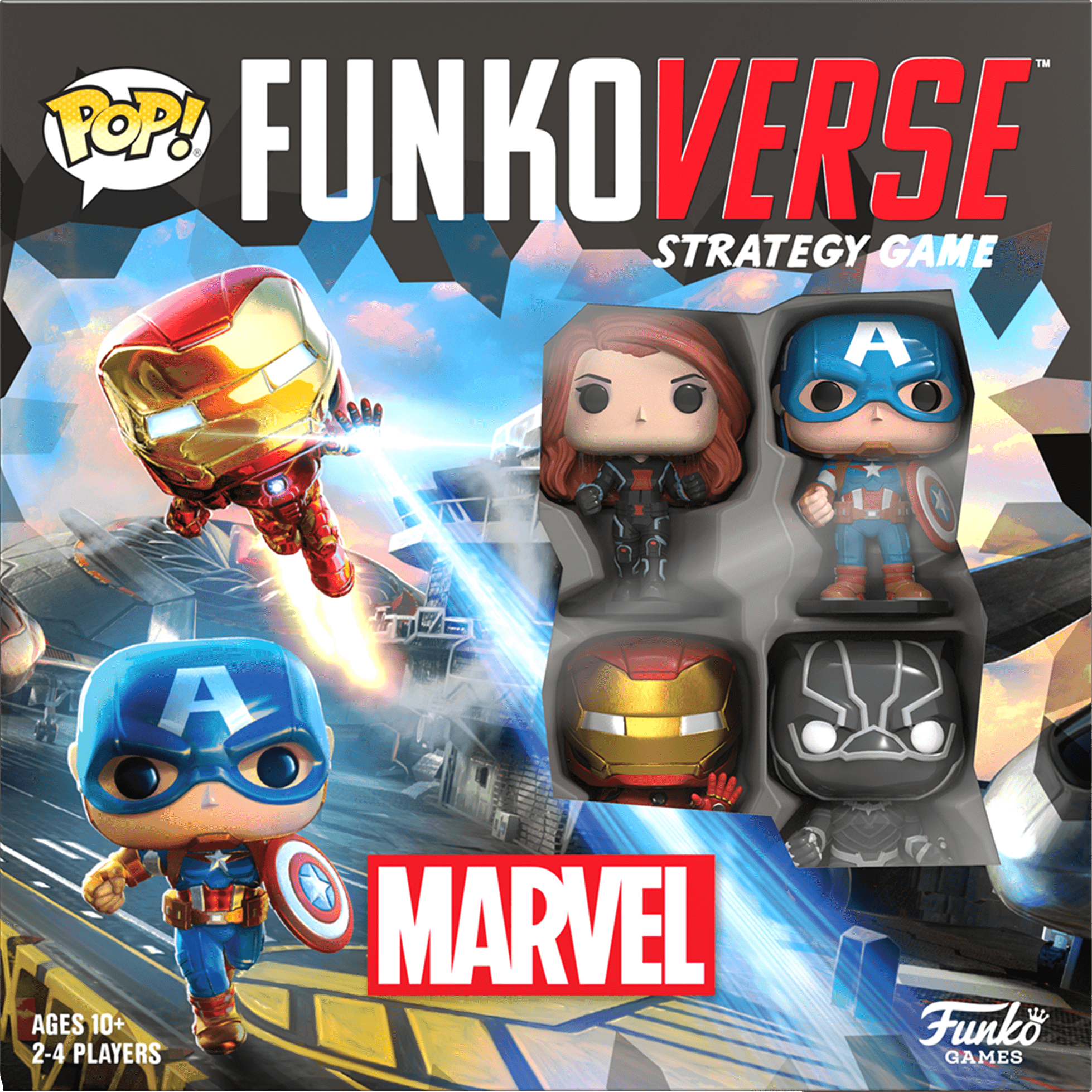
Funkoverse Strategy Game: Marvel 100
In the Funkoverse Strategy Game, you combine your favorite characters and go head-to-head in four exciting game scenarios. Use your characters' unique abilities to gain points and achieve victory! Each turn, you select one of your characters and perform two actions. Each character has access to basic actions like moving and challenges as well as several unique abilities that may be performed only by spending ability tokens. Funkoverse uses an innovative "cooldown" system — the more powerful the ability, the longer it will take for the ability token to become available again — so players have to spend their ability tokens wisely. Each character in Funkoverse is unique, so players are encouraged to try out different combinations of characters and items in order to discover their favorite synergies and powerful strategies for all four game scenarios. Funkoverse Strategy Game: Marvel 100 4-Pack is a standalone game that includes the characters Captain America, Iron Man, Black Panther, and Black Widow. This set may be combined with others, giving you the ability to assemble the team you want!
Geek Out!
Geek Out! is a party game that can determine once and for all which player is the most knowledgeable about your favorite pop culture subjects! In the game, you draw cards asking you to list a certain number of things which fall under a certain category: comic books, fantasy, games, science fiction, and miscellaneous. Before you begin, however, the other players may try to steal your points (and bragging rights!) by bidding to list even more than the card requires. The bidding continues until one player is ready to "out-geek" their friends. Collect a predetermined number of cards, and you win! —description from the publisher
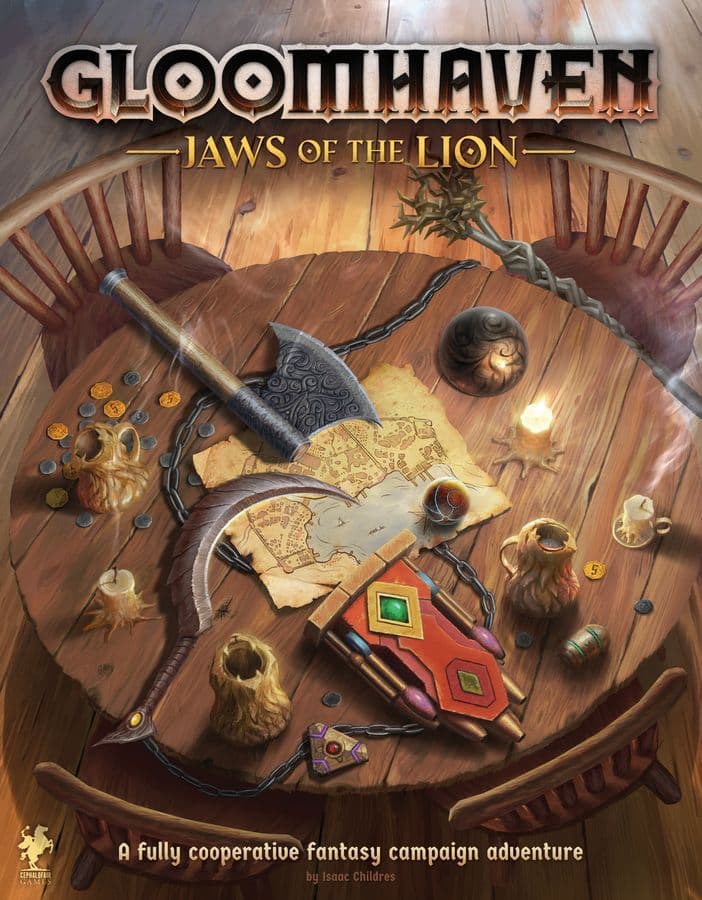
Gloomhaven: Jaws of the Lion
Gloomhaven: Jaws of the Lion is a standalone game that takes place before the events of Gloomhaven. The game includes four new characters — Valrath Red Guard (tank, crowd control), Inox Hatchet (ranged damage), Human Voidwarden (support, mind-control), and Quatryl Demolitionist (melee damage, obstacle manipulation) — that can also be used in the original Gloomhaven game. The game also includes 16 monster types (including seven new standard monsters and three new bosses) and a new campaign with 25 scenarios that invites the heroes to investigate a case of mysterious disappearances within the city. Is it the work of Vermlings, or is something far more sinister going on? Gloomhaven: Jaws of the Lion is aimed at a more casual audience to get people into the gameplay more quickly. All of the hard-to-organize cardboard map tiles have been removed, and instead players will play on the scenario book itself, which features new artwork unique to each scenario. The last barrier to entry — i.e., learning the game — has also been lowered through a simplified rule set and a five-scenario tutorial that will ease new players into the experience.
Gold Thief
Each player has a pool of gold, which everyone else wants to steal. Players have a secret goal of how much gold they need in their pool to win. Playing cards on other players moves gold and cards around, or blocks those actions. A player wins a round by starting their turn with their target amount of gold. The first player to win three rounds wins the game.
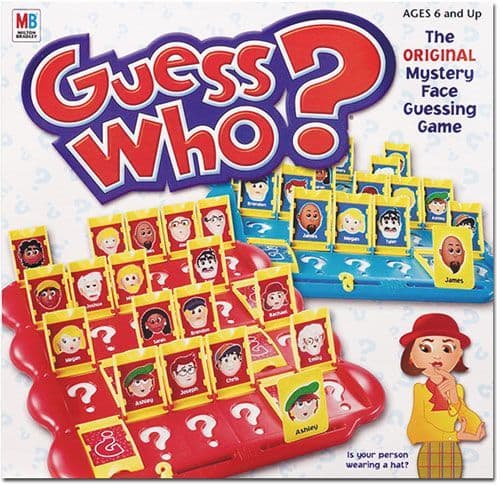
Guess Who?
The mystery face game where you flip over a collection of faces with different color hair, eye color, hair, hats, glasses etc. to deduce who the secret person is that your opponent has chosen. You flip over the hooked tiles as you narrow your choices by asking characteristic questions.
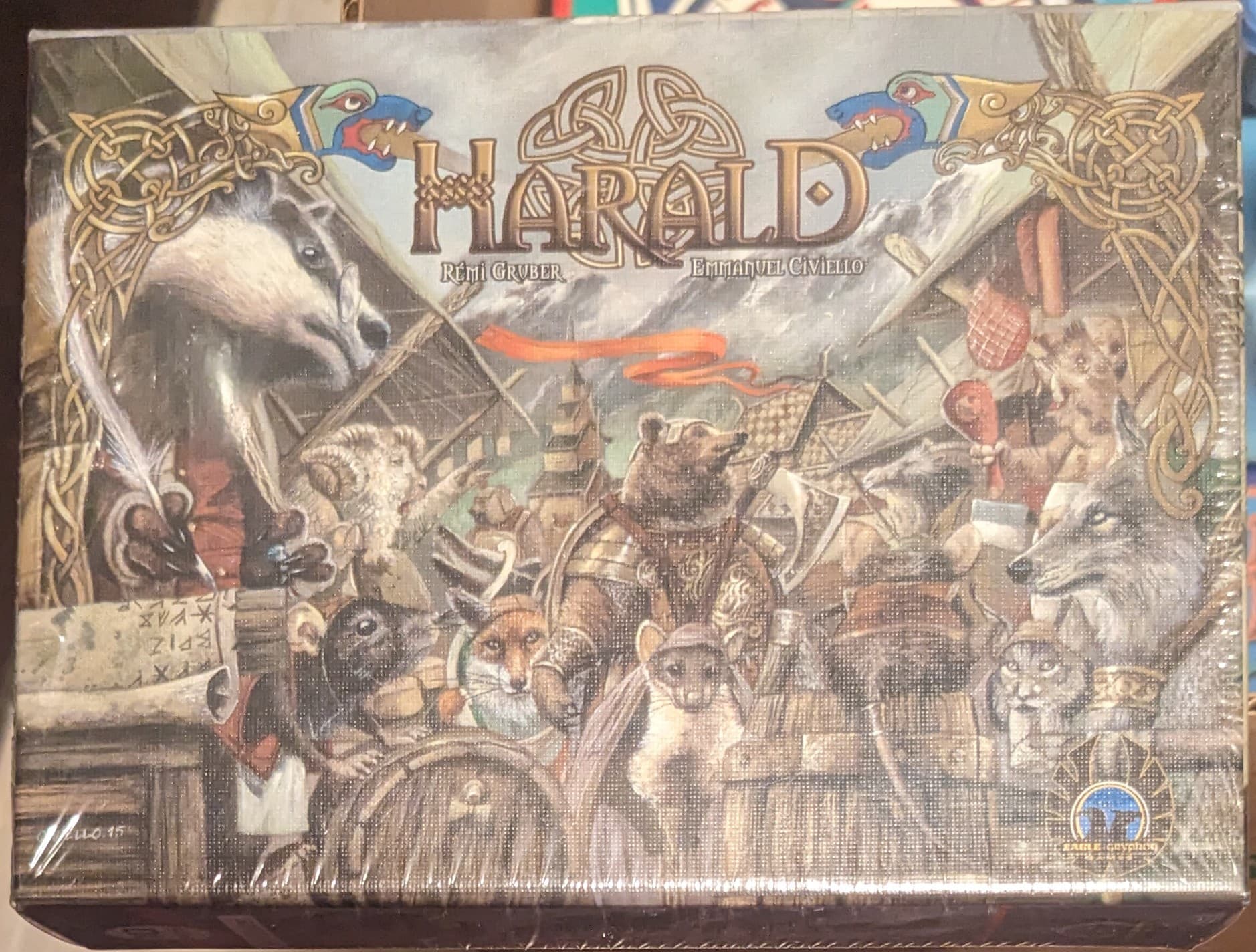
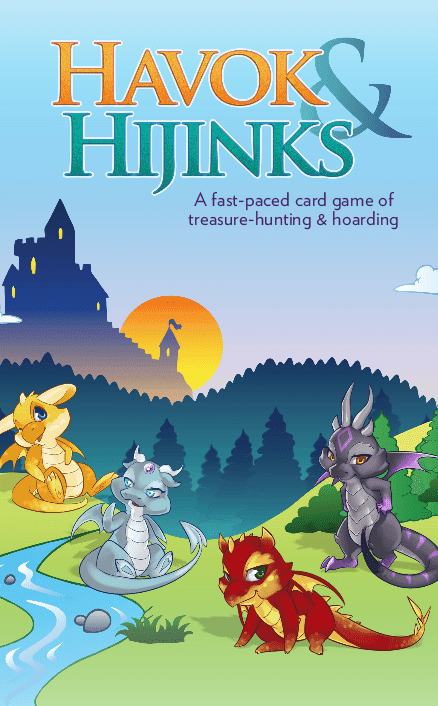
Havok & Hijinks
Come and enjoy our cute, cutthroat, family friendly, card game where our dragons will... Welcome you to the high fantasy world of Vallhyn. You will roam the countryside in search of treasure because you are a dragon — a young dragon, that is. You and your friends have just been kicked out of the nest for eyeing your parents' treasure hoards. The problem with being young is that you don't always succeed in your quest to find treasure, which often leads to havoc. To make matters worse, you must compete for the best loot with your friends by engaging in hijinks. Havok & Hijinks is a fast-paced, light strategy card game that pits you against your friends in a race for the first respectable treasure hoard. Each turn starts with a quest for treasure that could lead to Havok like loot-hungry adventurers or beneficial heat waves. Engage in Hijinks by stealing and breaking your friend's shiny treasures or defending your own. When a dragon has a hoard with a value of 15 or more, it wins! Game Play Start your turn by flipping a Havok Card Resolve any event flipped exactly as the card reads Add any treasure flipped to your hoard Once you've resolved your Havok card you may play one Hijinks card You may also use your dragon's play ability You may choose not to play a Hijinks card and instead discard one to draw one Pass your turn
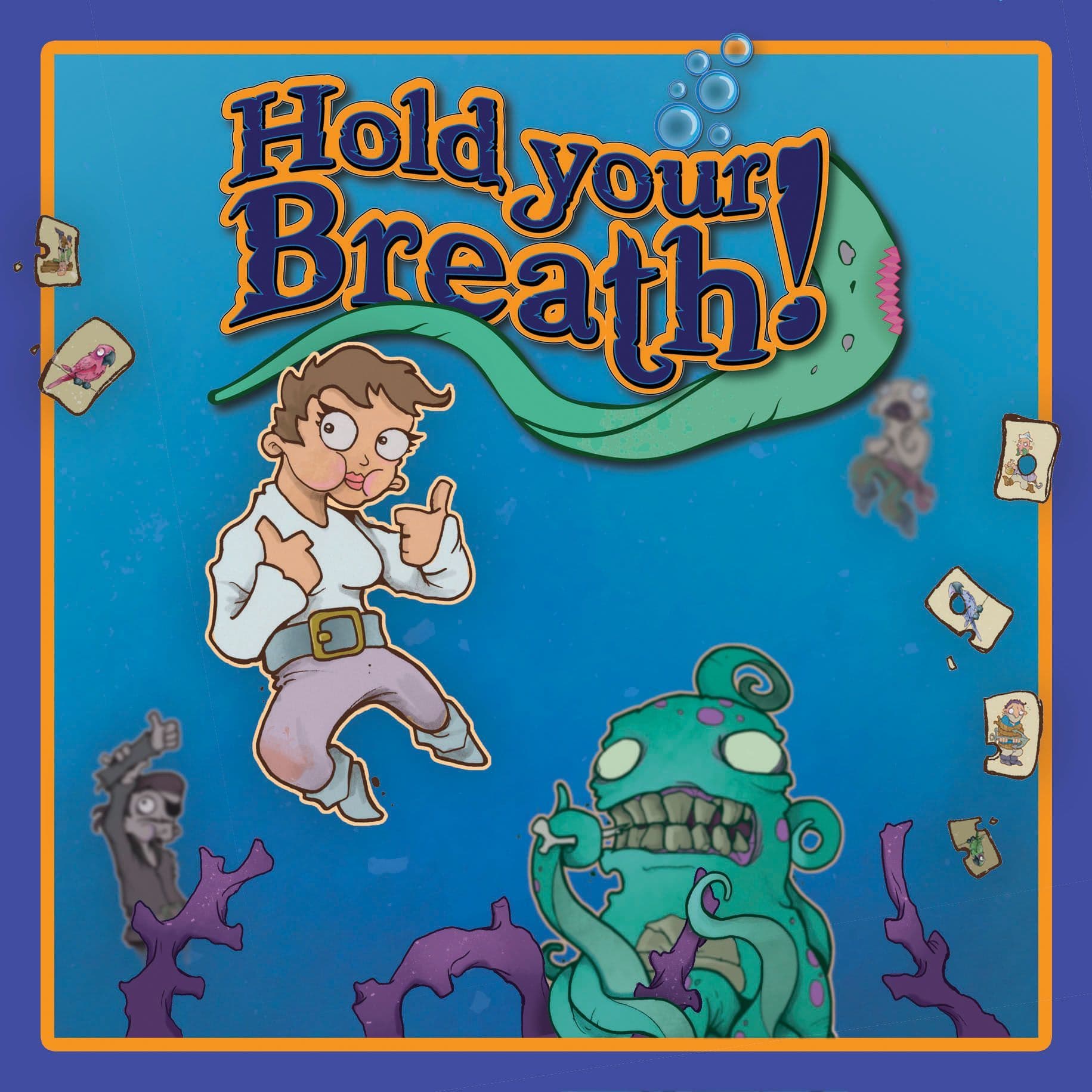
Hold Your Breath!
Hold Your Breath! is the final chapter in the "Get Bit Casual Trilogy" by Mayday Games, but you don't need to know ANYTHING about the first two games in the series to play this one other than that we are revisiting the dumbest pirates known to man. They have been kicked off the ship by their captain in Walk the Plank and chased by sharks in Get Bit, and now they face their final challenge. In Hold Your Breath! each player assumes the role of a pirate treading water in the ocean. These brilliant tacticians have decided to play a game of "Hold Your Breath" to see who is the toughest pirate because, you know, what else are you gonna do in the middle of the ocean facing certain death? The game is played in two rounds. In the first round, each player may dive deeper, providing they have the "Swim" and "Air" cards to do so. Players press their luck each turn since it is the pirate who dives the deepest in round one AND resurfaces in round two who is the winner. What about the losers? Who cares, they are losers. But if you really want to know, well, they dove down and ran out of oxygen before they could resurface, so now they are just "resting" underwater until the next game, okay? But we digress... Players can play "Panic", "Shark", and other nasty cards on the other players, slowing their progress. In the second round each player struggles to reach the surface before he runs out of air and therefore decides to take a rest. Most of the pirates may not make it back to the surface, but the one who makes it back alive AND dove the deepest is the winner. Be careful, though, because if you dove the deepest in the first round, you will surely have the toughest time getting back to the surface since A) you swam the deepest and B) no one else wants to see you make it back alive.
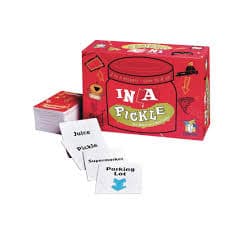
In a Pickle
In a Pickle is a quirky, creative card game that challenges players to think outside the box by fitting smaller things into bigger things. Published by Gamewright, the game includes over 300 noun cards featuring everyday objects, places, and concepts. Players take turns placing cards into rows, either showing how one item could fit inside another or how something larger could contain it. For example, a “Pickle” might fit inside a “Jar,” which could fit inside a “Refrigerator,” which could then fit inside a “House.” The fun comes from stretching logic and imagination, with players encouraged to defend their choices when others challenge them.
The objective is to win sets of cards by playing the “largest” noun in a row, but the real joy lies in the lively debates and outrageous scenarios that emerge. A giraffe in a phone booth or the universe inside a dictionary are the kinds of playful combinations that spark laughter and creativity. With simple rules and a focus on imagination, In a Pickle works well for families, parties, or casual gatherings, offering a balance of lighthearted fun and clever wordplay. It’s recommended for ages 10 and up, making it accessible to a wide audience while still engaging enough for adults.
Jenga
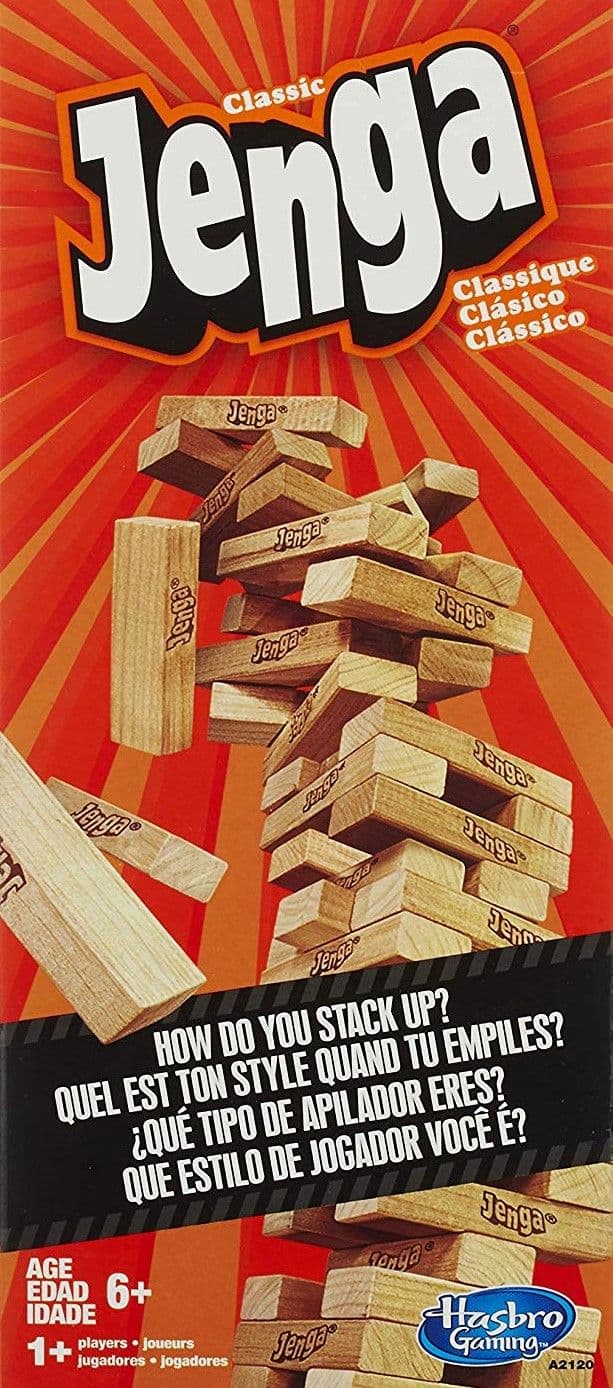
A tower building game. Jenga is played with 54 wooden blocks; each block is 3 times as long as it is wide, and slightly smaller in height than in width. The blocks are stacked in a tower formation; each story is three blocks placed adjacent to each other along their long side, and each story is placed perpendicular to the previous (so, for example, if the blocks in the first story are pointing north-south, the second story blocks will point east-west). There are therefore 18 stories to the Jenga tower. Since stacking the blocks neatly can be tedious, a plastic loading tray is included. Once the tower is built, the person who built the tower moves first. Moving in Jenga consists of taking one and only one block from any story except the completed top story of the tower at the time of the turn, and placing it on the topmost story in order to complete it. Only one hand at a time may be used to remove a block; both hands can be used, but only one hand may be on the tower at a time. Blocks may be bumped to find a loose block that will not disturb the rest of the tower. Any block that is moved out of place may be left out of place if it is determined that it will knock the tower over if it is removed. The turn ends when the next person to move touches the tower, although he or she can wait 10 seconds before moving for the previous turn to end if they believe the tower will fall in that time. The game ends when the tower falls in any significant way -- in other words, any piece falls from the tower, other than the piece being knocked out to move to the top. The loser is the person who made the tower fall (i.e. whose turn it was when the tower fell); the winner is the person who moved before the loser. The same game concept was published in 1984 by Fagus under the name "Hoppla - eins zuviel!" According to the designer, the game was developed from Takoradi blocks/bricks. "Jenga" is Swahili for "build".
Joking Hazard
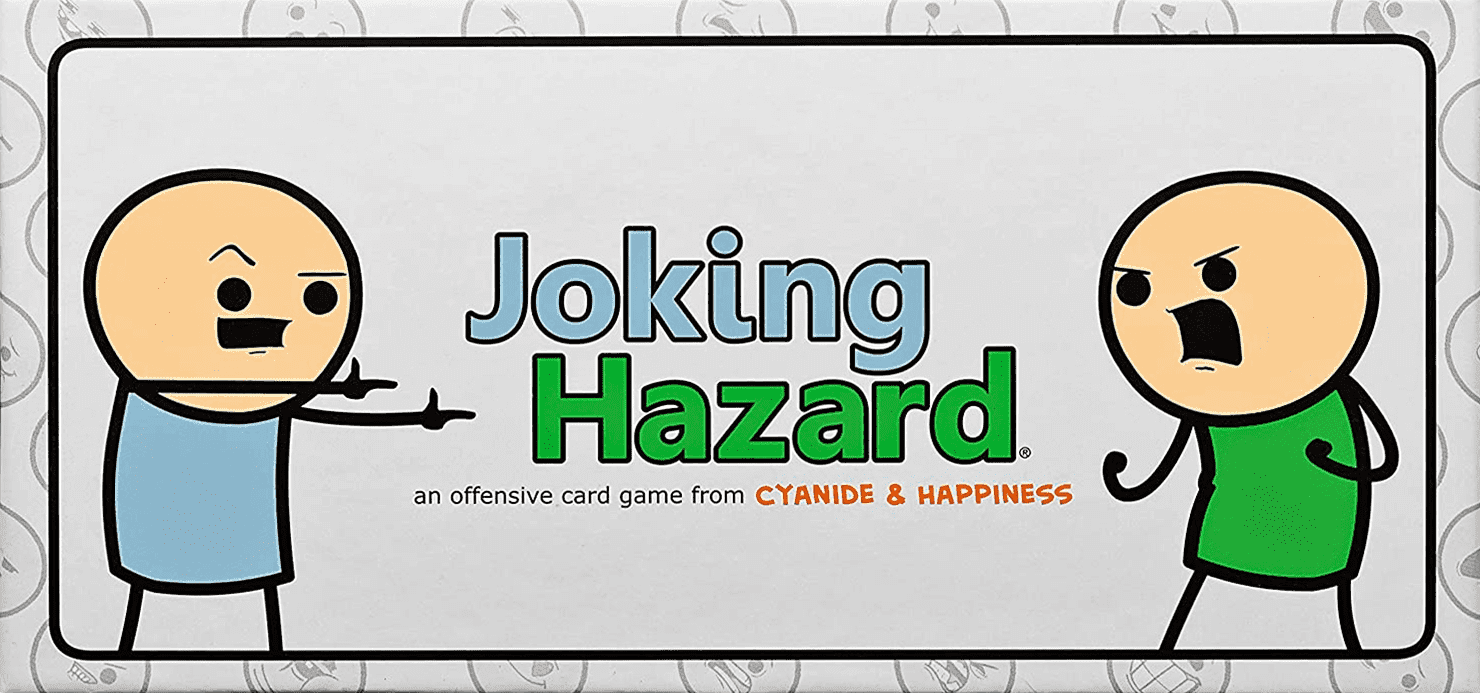
From the creators of Cyanide & Happiness comes a card game where players compete to finish an awful comic strip. The creators said: "Someone on the Internet once told us that making stick figure comics is easy as hell, and that we were ugly and stupid. They were right on all counts. So, after crying for a few hours, we created the Random Comic Generator which since its inception in 2014 has entertained millions with its computer-generated comedy. After a few weeks of playing with the Random Comic Generator, we started to wonder if its hundreds of random panels might lend themselves to a card game, where you compete against your friends to finish a comic with a funny punchline. So we printed out all of the RCG panels and started playing with them." Draw 7 cards. The deck plays the first card, select a Judge to play the second, then everyone selects a third card to create a three panel comic strip. The Judge picks a winner. The game includes a deck of 350 unique panel cards - that’s 15.4 million combinations of comics!
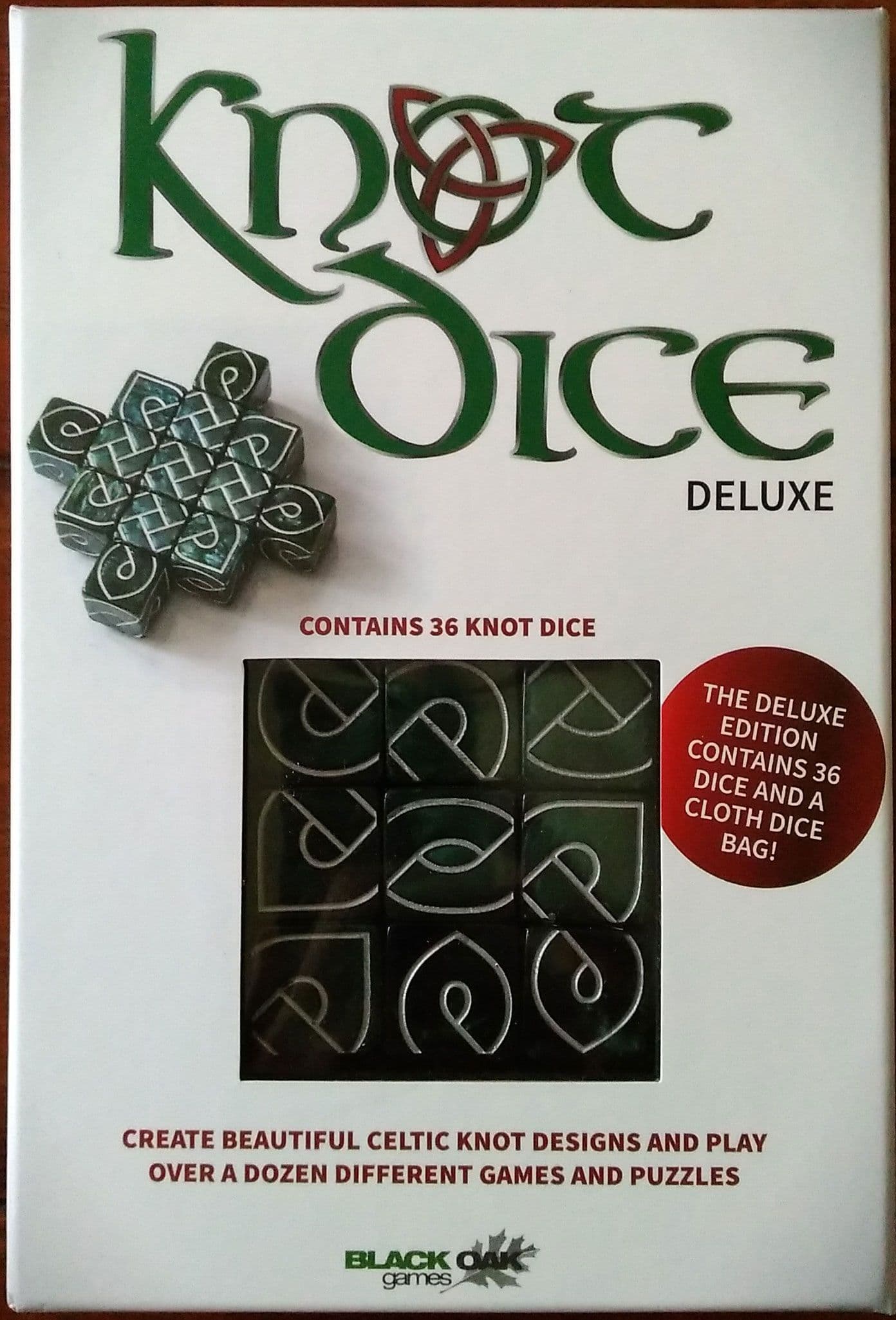
Knot Dice
Knot Dice is games, puzzles, and art wrapped up in a box. The 18 custom dice have Celtic knots design elements on each side that can be connected to play various games and create a large number of designs. Included are rules for several games and puzzles, including: Kells – a cooperative game for 1-3 players (or more with more sets), in which you try to form a complete design using as many dice as possible Kells, The Book – a campaign version of Kells Knot So Fast – a competitive real-time game for 2 players (or more with more sets), in which you try to form a closed design with your dice as quickly as possible Knot So Fast Too – a round-robin tournament real-time game for 3-4 players Distance – a competitive game for 2 players, in which you move two tokens over the paths created on the top of the dice to get your tokens farthest from one another Osbox (by Cameron Browne) – a 2-player pure strategy game, in which you select the face of a die to use and slide it on to a 4x4 grid trying to complete designs
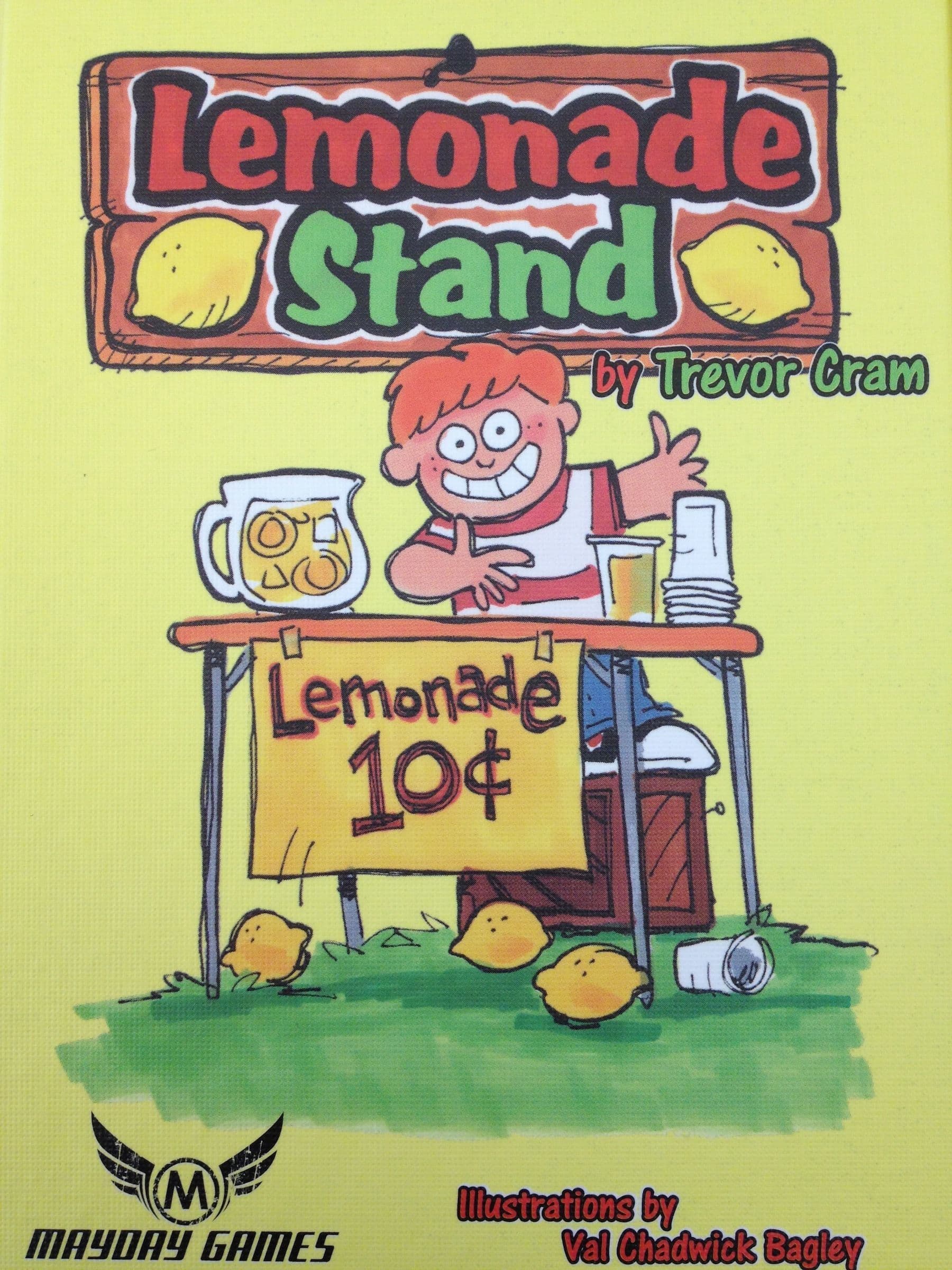
Lemonade Stand
Ahhhh... it's a hot lazy summer in your little suburb of the world and you're eleven years old again! You've played with your friends and explored on your bike and you're old enough to get excited by the prospects of earning some money. You've got $0.25 burning a hole in your pocket and your mom even offers to give you a shiny silver dollar to invest in your scheme. You're starting a lemonade stand! You've got just one week until the Fourth of July and you want to earn as much as possible to blow all of your profits on smoke bombs, bottle rockets and even some M-80s this year! Of course some of your friends are copying your idea – why do they always do that? It is going to be an epic battle for bragging rights and fireworks as you compete with one another to see who will have the most money at the end of the week! Lemonade Stand is played over seven turns (days), and each turn players start by turning over a forecast card which shows the weather forecast for the day along with number of customers and the price they will be willing to pay for each possible weather outcome. Players then place a 5, 10 or 15 cent price card down along with any signs or lemonade inventory they want to put out, all face down. All players reveal their cards at the same time and then a new forecast card is revealed which has an arrow pointing to one of five spots on the old forecast card, which determines which weather event occurred. Each player then collects money based on their price and # of glasses of lemonade invested versus the actual weather that happened. Money is gained or lost, and play continues for seven rounds. Most money wins!
Mad Libs Card Game
Players draw 10 cards that have words written on them. Each card has either a noun, a verb, an adjective, an adverb, or is one of two sorts of "wild" cards. The players' object is to create grammatically correct sentences using the words on their cards. A gin-like mechanic has players discarding and drawing cards so they can create their sentences. The tin version has double the amount of nouns, verbs, adverbs, and adjectives. There is also one extra FIB card for each as well.

Magical Unicorn Quest
Journey through the Magical Forest to find a Golden Unicorn and Majestic Unicorn. Add them to your stable to win the game. Your journey is not without challenges. Beware of foul mystical beings, potions, and magic as they may hinder your quest. This is a strategy card game and perfect for people of all ages. A must have for all unicorn enthusiast! Game Information Players: 2-6 Time: 15-40 min Age: 8+ Components 40 Mystical Being cards 20 Mystical Potion cards 15 Mystical Magic cards 6 Reference sheet 1 Rule book 1 Box
Magical Unicorn Quest: Dragon's Lair
Dragons and banshees are terrorizing the Magical Forest. Loot the dragon's lair, craft power potions, and cast mystical magic. The base game is required in order to play. Components: 1 Box 1 Rulebook 10 Being Cards 18 Magic cards 18 Potion Cards -description from publisher's website
Magical Unicorn Quest: Mystical Gear
The Fairies are enchanting ordinary items with special powers. You may attach the powerful gear to your mystical beings in order to aid you in your quest. But, Watch Out! Trolls are trying to steal the magical gear and keep it for themselves. Keep far away from the trolls in your search for the Magical Unicorns. The Magical Unicorn Quest: Mystical Gear is an expansion to Magical Unicorn Quest. The base game is required in order to play. Components: 15 Mystical Being Cards 30 Mystical Gear Cards 6 player reference Cards 1 Rulebook -description from publisher's website
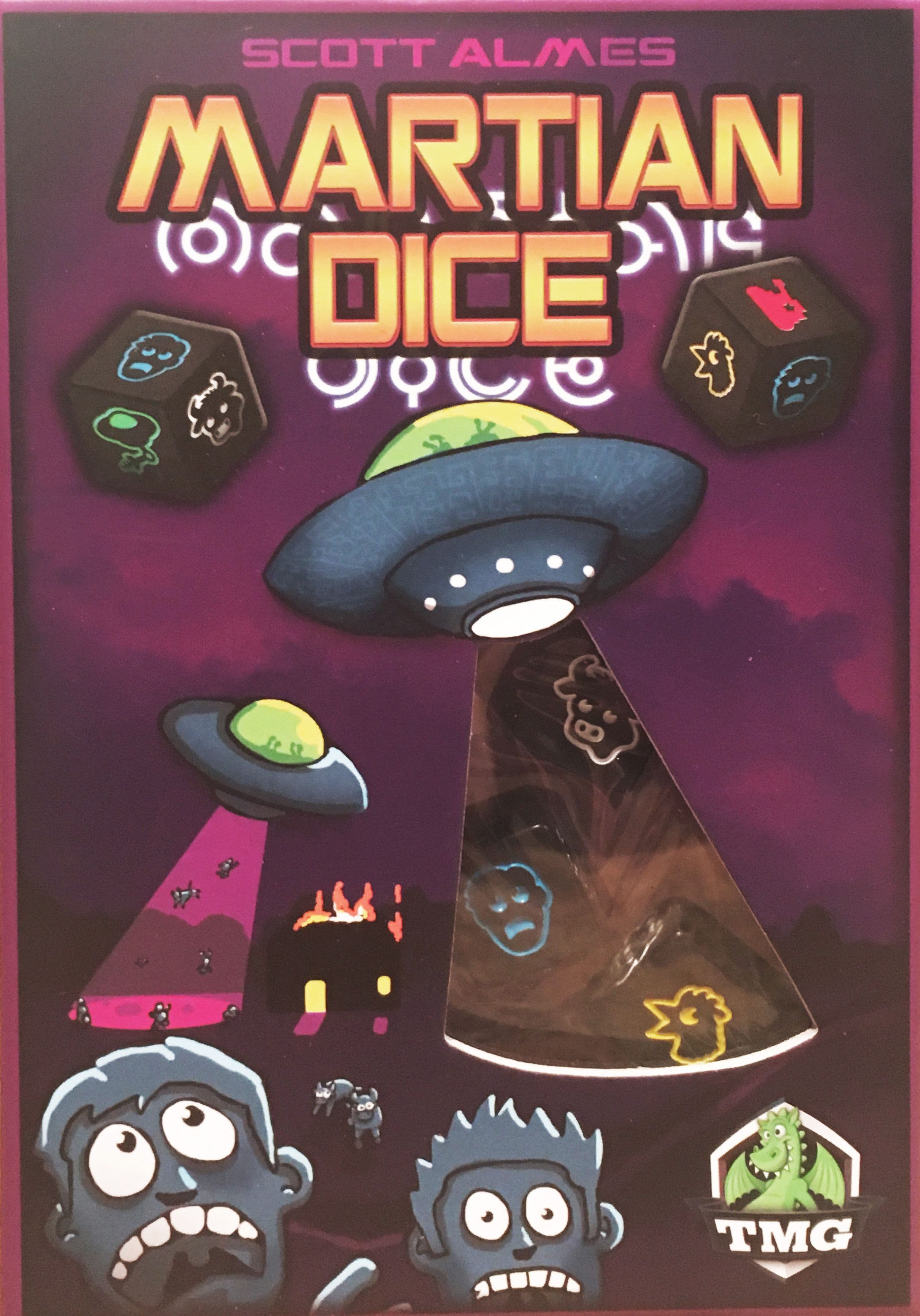
Martian Dice
Your mission, Martians, is to swoop down on the pathetic denizens of the primitive planet Earth and scoop up as many of the inhabitants as you can manage. We are interested in samples of the Chicken, Cow, and Human populations so that we can determine which of them is actually in charge. The Earthlings might manage to put up a feeble defense, but surely nothing that a small taste of your Death Rays can't handle. Make Mars proud – be the first Martian to fill your abduction quota! In Martian Dice you will roll 13 custom dice in an effort to set aside ("abduct") Humans, Chickens, and Cows. With each roll you must first set aside any Tanks, representing the human military coming to fend off your alien invasion. Then you may choose one type of die to set aside as well - one of the earthlings to abduct, or Death Rays to combat the military. At the end of your turn, if you have at least as many Death Rays as Tanks, then you may abduct the earthlings you've been setting aside. You can't pick any type of Earthling twice in one turn, but if you manage to abduct at least one of each you'll score a bonus! With each roll you will ask yourself, do you feel lucky?
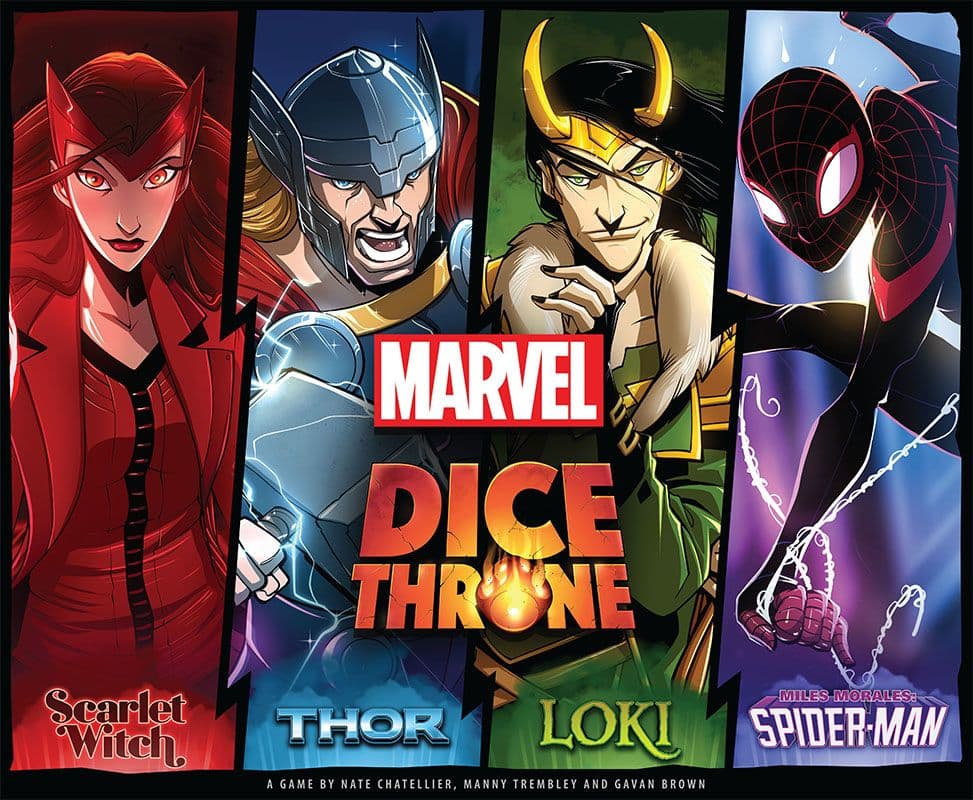
Marvel Dice Throne: Scarlet Witch v. Thor v. Loki v. Spider-Man
In Marvel Dice Throne , you become one of eight of Marvel's most famous heroes, including Black Panther, Captain Marvel, Black Widow, Scarlet Witch, Loki, Thor, Doctor Strange, and Miles Morales Spider-man! Every Marvel Dice Throne hero was painstakingly designed and balanced to provide the most thematic experience possible, allowing you to truly embody your favorite heroes like no other game. Featuring all-new mechanisms and asymmetrical designs, these are our most innovative and exciting heroes yet. Marvel Dice Throne is a heart-pumping, fast-playing game of skilled card play and dice manipulation supporting multiple modes of play, including 1v1, 2v2, 3v3, 2v2v2, or free-for-all. Attack your opponents and activate abilities by rolling your hero's unique set of five dice. Accumulate combat points and spend them on cards that have a large range of effects, such as granting permanent hero upgrades, applying status effects, and manipulating dice directly (yours, your teammate's, or even your opponent's). All 8 heroes are compatible with the entire Dice Throne ecosystem Use upgrade cards to improve your hero abilities as the game progresses Play action cards strategically to manipulate dice and surprise your foe Features a deluxe, highly functional, Battle Chest storage system Each hero in the Battle Chest has their own beautiful set of custom swirl dice —description from the publisher
Marvel Villainous: Infinite Power
Dominate the Marvel universe as an iconic comic book villain! Each villain follows a unique path to victory; each uses different abilities to face other villains and mighty heroes from across the universe. Choose Hela, Killmonger, Taskmaster, Thanos, or Ultron and fulfill your dark destiny! In Marvel Villainous: Infinite Power, players move their villains to different locations within their domain, carry out the actions there, and deal twists of fate to their opponents from a shared fate deck. Three different game modes allow players to scale the difficulty of their game by facing more or fewer events — situations that extract a heavy toll on villains until they are resolved the only way villains know how. Specialty cards add to each villain's ability, making them even more formidable as more specialty cards are played. With beginner and advance options, this game is an adventure for the whole family! —description from the publisher

Marvel Villainous: Mischief & Malice
In Marvel Villainous: Infinite Power, players move their villains to different locations within their domain, carry out the actions there, and deal twists of fate to their opponents from a shared fate deck. Three different game modes allow players to scale the difficulty of their game by facing more or fewer events — situations that extract a heavy toll on villains until they are resolved the only way villains know how. Specialty cards add to each villain's ability, making them even more formidable as more specialty cards are played. Marvel Villainous: Mischief & Malice is a standalone game that can also be combined with the Infinite Power base game. This "expandalone" feature three playable Marvel villains who each have a different goal to achieve in order to win: Loki needs to collect and spend ten "Mischief", while Madame Masque needs to defeat eight Marvel heroes, and M.O.D.O.K. must activate the Cosmic Cube.
Marvel Villainous: Twisted Ambitions
In Marvel Villainous: Infinite Power, players move their villains to different locations within their domain, carry out the actions there, and deal twists of fate to their opponents from a shared fate deck. Three different game modes allow players to scale the difficulty of their game by facing more or fewer events — situations that extract a heavy toll on villains until they are resolved the only way villains know how. Specialty cards add to each villain's ability, making them even more formidable as more specialty cards are played. In Marvel Villainous: Twisted Ambitions, players can forge their own twisted paths to victory as Doctor Octopus, Titania, and Kang the Conqueror. To win as Doctor Octopus, players must complete five schemes, such as defeating Spider-Man or amassing and paying power. Those who pick Titania will need to gain strength to become empowered and defeat She-Hulk. Finally, Kang the Conqueror will require players to unleash variants of Kang into other villains' decks and conquer four locations in other villain domains with robot duplicates. Each of the characters in Marvel Villainous: Twisted Ambitions can be played on their own or be mixed and matched with villains from previous Marvel Villainous releases.
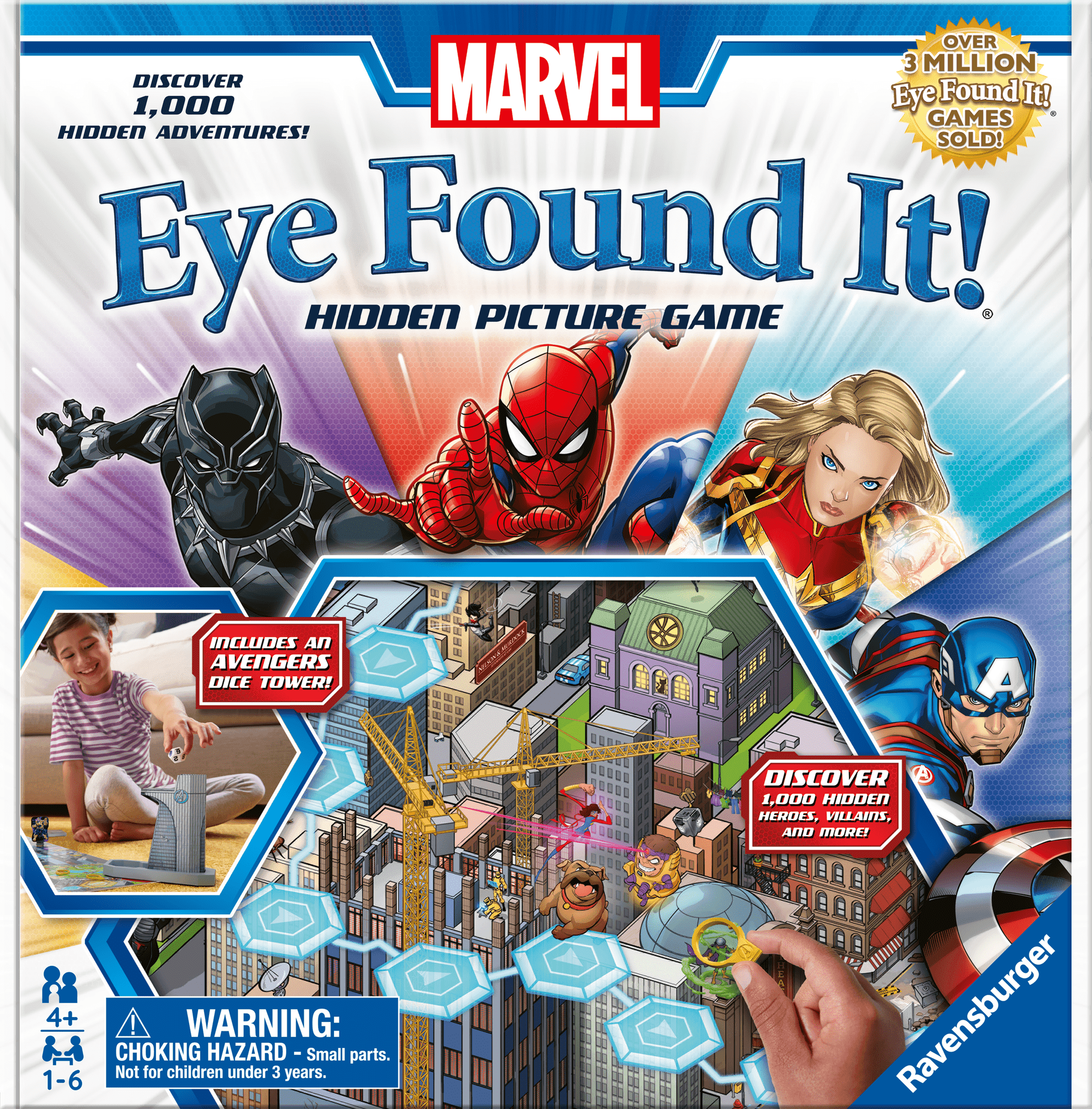
Marvel: Eye Found It!
Search for hundreds of hidden illustrations in the Marvel Universe in Marvel: Eye Found It! while visiting Wakanda, Asgard, and everywhere in between on a large game board with your favorite Marvel characters.
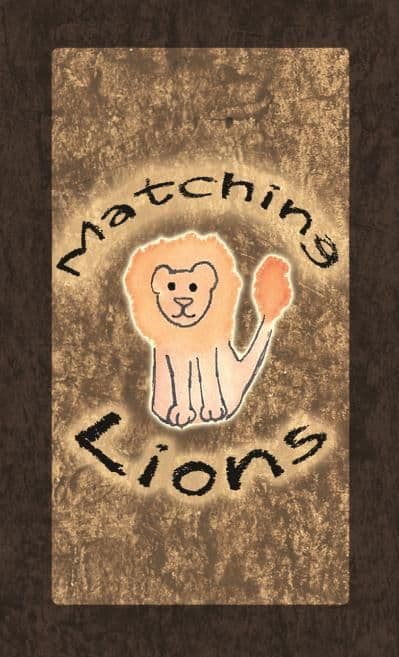
Matching Lions
How to Play: At the start of the game, deal each player 5 cards. At the start of your turn, draw a card. If at any time you run out of cards, replenish your hand by drawing five more cards from the deck. On your turn you may place one herd animal face up in front of you, either a zebra or an antelope. When you have 5 of one kind in front of you (5 zebras or 5 antelopes), you win the game. After you play your herd animal, you may play one action card from your hand. Lions, elephants and giraffes are your action cards. To play a lion, place it face up in front of you. When you have played a second lion, you now have Matching Lions. Your matching lions can be used to chase away two animals from one other player’s herds. They can chase away 2 zebras, 2 antelopes, or 1 zebra and 1 antelope. The animals all go into the discard pile. You may use your matching lions on the turn you play the 2nd lion, or you may wait and use them on another turn, after playing your action card for your turn. If you gather several pairs of matching lions in front of you, you may use them all on one turn to chase away other players’ herd animals if you choose. When you play an elephant, everyone, including you, must pick up their lions and put them back in their hand. The elephant then goes to the discard pile. When you play a giraffe, you may choose any other player and view all the cards in their hand. The giraffe then goes to the discard pile. Other animals: The hippopotamus is a defense card. Play the hippopotamus to block a pair of lions from chasing away any of your herd animals. The hippopotamus and the pair of lions all go to the discard pile. The hyena is automatically played when it is drawn. All herd animals migrate left, meaning your herds go to the player to your left, that person’s herds go to the player to their left, and so on until every herd has migrated. The hyena goes to the discard pile, and you get to draw again and start your turn. (If you choose, you may use the hyena as an action card instead.) When the last card from the deck is drawn, the discard pile is shuffled and replaced as the deck.
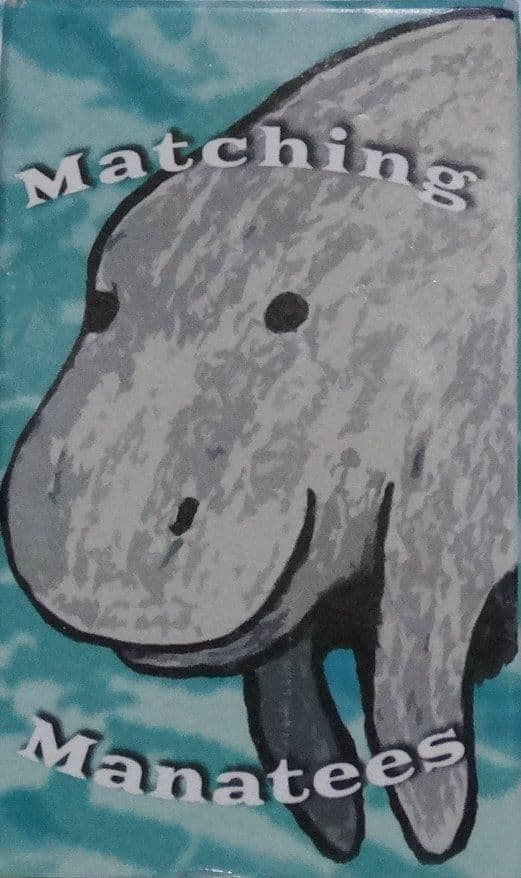
Matching Manatees
A memory card game of trying to get your manatees home avoiding getting hit by the boats. "The cards are set up in a 5x5 grid. This is the "ocean" where the manatees are swimming. The 4 corners is where the "home" cards go and the very center is a stack of shuffled boat cards that should be face up. All other spaces should each have stacks of two manatee cards on them face down. " "On your turn, you... ----1. Flip over two manatee cards. If they match, leave them face up. If they do not match, turn them face down again. (OR: if there is a stack of two face-down manatee cards adjacent to an empty space with no manatee cards, you may move the top card from the stack of two into the empty space instead of flipping any cards over.) ----2. If any of YOUR manatees are face up, you may move one of them toward their home location. If you have face up manatee cards that are adjacent to each other, any adjacent manatee can follow the card that moved by moving into the space it just left, and an adjacent manatee can follow that card, and so on. Manatees move up/down and left/right but not diagonal. If a manatee makes it home, that manatee is safe and counts as a point toward winning. ----3. If you moved a manatee you have to move a boat one space too (unless there are no boats left). The boat has to go toward the location matching the manatee on the card, moving up/down and left/right but not diagonal. If the boat lands on the same space as any face-up manatee, the manatee is removed from the game. The boat only moves one space per turn, even if several manatees moved by following the manatee you initially moved. When the boat makes it to the home location, the boat is out of the game. (Note: You can play competitively or cooperatively. You can move the boats to take your opponents manatees out of the game on purpose or you can work together to have none of the manatees get hit by boats. Players keep taking turns until one of the players has all of their manatees out of the game, either from getting hit by a boat or making it safely home. At this point, players should count up all the manatees they got home. Each manatee counts as one point. Whoever has the most points wins."
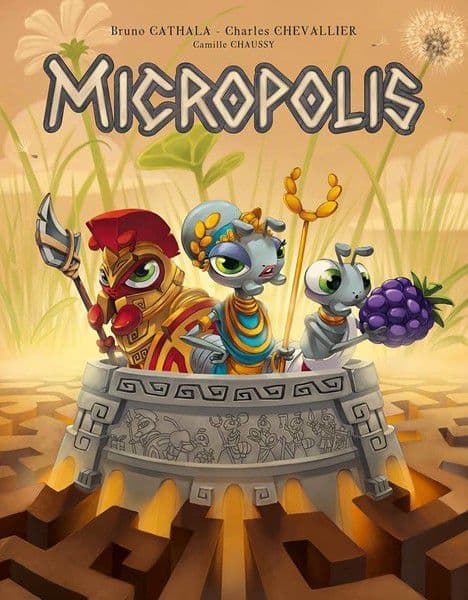
Micropolis
Gather your ants in Micropolis, and send them through the anthill to do your bidding. What do you want? Fruit? Warriors? A queen? Even more ants?! Each player starts with a central location that will be surrounded by ten tiles over the course of the game, with the tiles being connected by a series of tunnels. Over ten rounds, players draft tiles one at a time, with the player with the largest army going first. They can take the first tile in line, or place an ant on each tile they want to pass to get to something better. The tiles have various roles on them: Queens who if alone can improve their space; Nannies who give you extra ant soldiers; Architects who let you take any tile for free; Warriors who attack the first player; Generals who manage the movement of your ant soldiers; and Fruit gatherers who collect fruits, which score based on the variety you have. Ants at the end of the game are worth one point each, and whoever has the largest army earns an additional 5 points.
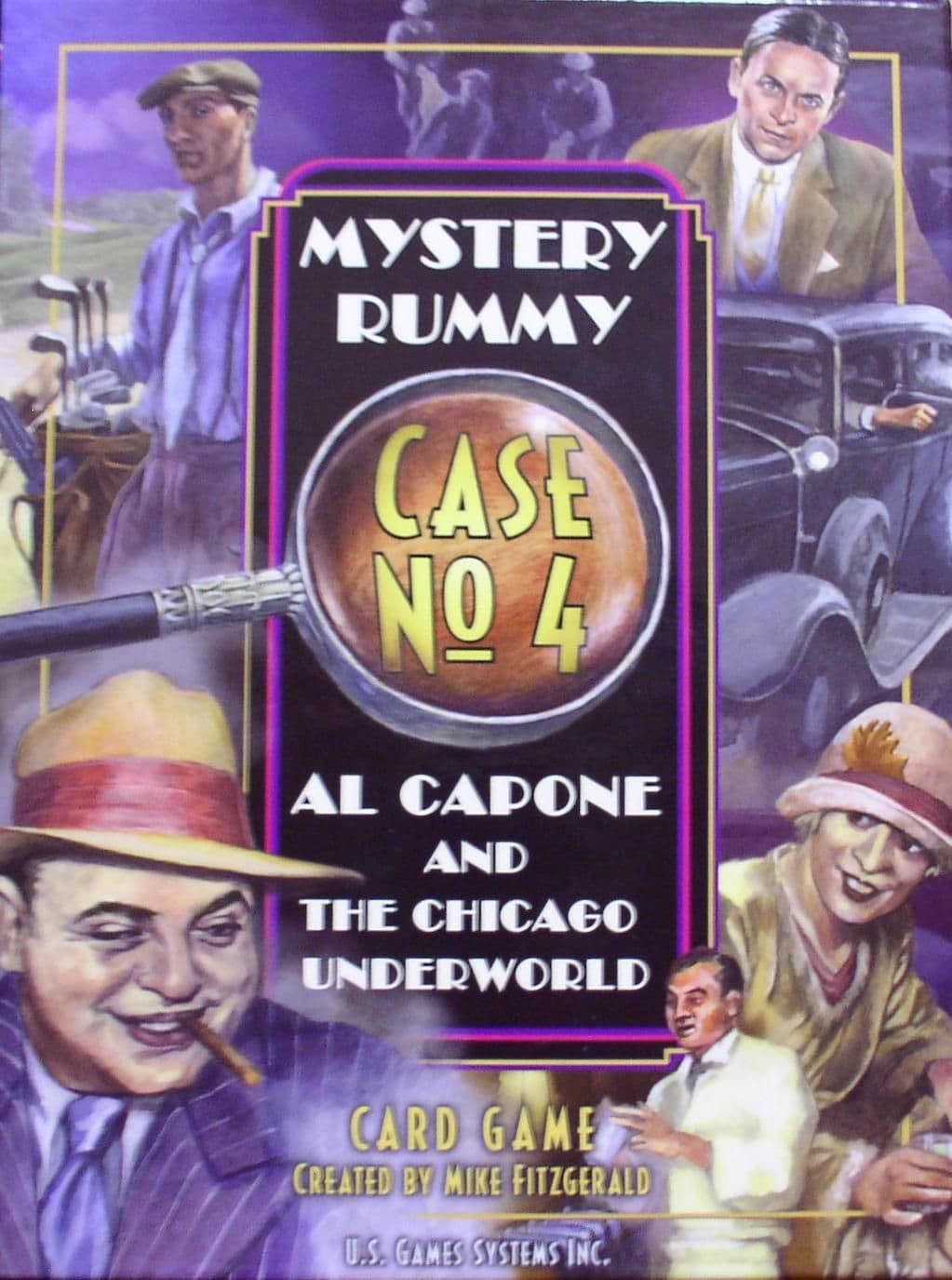
Mystery Rummy: Al Capone and the Chicago Underworld
Mystery Rummy: Al Capone and the Chicago Underworld, the fourth title in the Mystery Rummy series, introduces some elements of Canasta with players scoring bonuses for collecting complete sets. Sets have varying numbers of cards in them, from Mike Heitler with four cards up to Al Capone with eight. The four types of gavel card make cards accessible everywhere: ";Agent Meeting"; searches other players' hands, ";Eliot Ness"; searches the deck, "Search Warrant" looks in the discard pile, and "Raid" allows you to take an opponent's already melded cards, provided you have at least three melded. All these mechanisms help make completing entire sets for their bonuses something you can reasonably strive for – while also putting you on guard against your opponent doing the same.
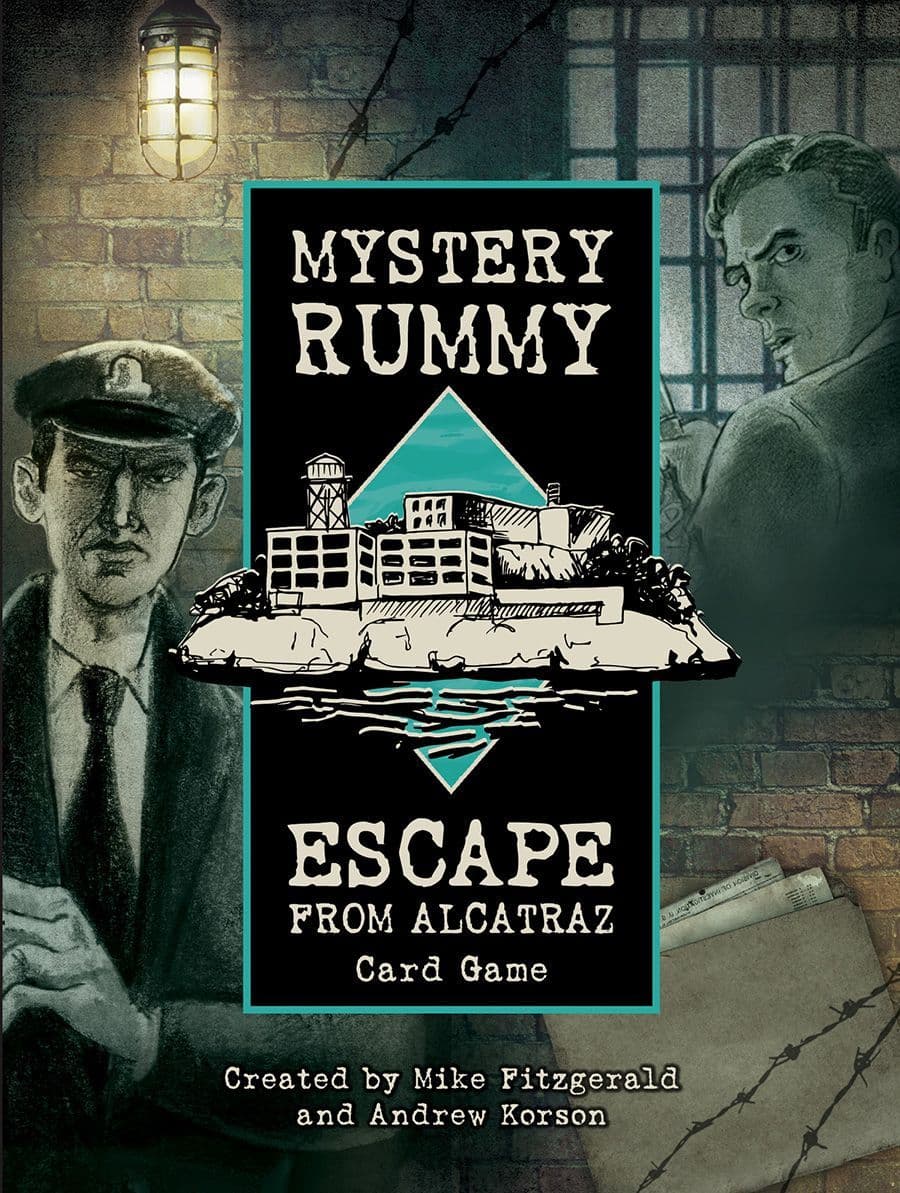
Mystery Rummy: Escape from Alcatraz
Alcatraz Island is home to one of the most formidable federal prisons ever conceived. In its history, no one was ever acknowledged as having escaped from the prison. As guards, it's your job to foil escape attempts by gathering information on plans and capturing the ringleaders. Mystery Rummy: Escape from Alcatraz, game #5 in the "Mystery Rummy" series from Mike Fitzgerald, consists of 129 cards in two decks: the Plans Deck of 84 escape plan cards and 14 escapee cards, and the Action Deck of 31 action cards. The goal of the game is to earn points by helping foil escape plans. Players gather information by melding matching plan cards or playing off an existing plan. When players collect eight matching plan cards and identify the plan's mastermind, they can foil the escape plan, capture the culprit, and score points. The first player to reach 100 or more points at the end of a round wins.

Mystery Rummy: Jack the Ripper
This game attaches an interesting theme to a fairly standard Rummy framework. Playing Victims, Suspects, Scenes, and Evidence-melds, players try to build a case against various suspects for the famous Jack the Ripper serial murders. Whichever suit has the most cards played in it when a player goes out is the guilty party, but if all the Victim cards come out before the end of the game, the Ripper might escape, giving the player who produced that card a significant point allowance. This is #1 in the Mystery Rummy series.
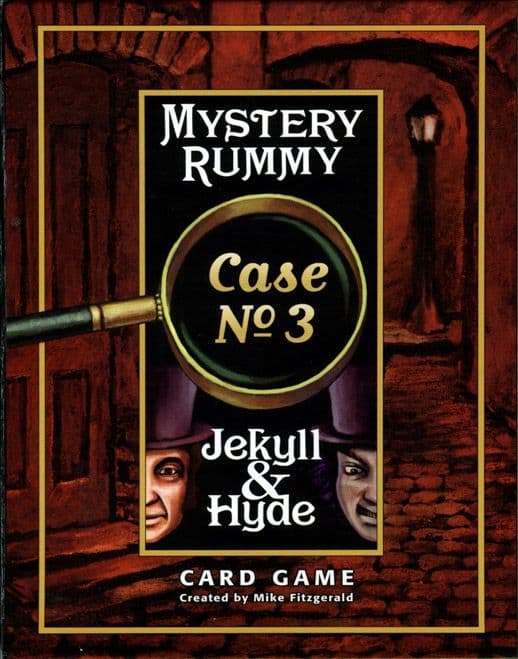
Mystery Rummy: Jekyll & Hyde
It's still rummy at heart, with multiple suits of 5 cards each, with the twist being that the suits are designated J for Jekyll, H for Hyde, or J/H for suits that count as both Jekyll and Hyde. The unique mechanism in this version of MR is that there is a two sided card (the 'identity card') on the table next to the draw deck, which has Jekyll on one side, and Hyde on the other. At the start of the game, Dr. Jekyll is showing, but this can change if a "potion" card is played (one of the three gavel cards, cards you can only play one of on your turn). You then flip the identity card over, and draw 2 cards from the draw deck. This is important, because you can only play melds whose suit matches the identity that is currently showing. The identity card is important in scoring as well, because any melds that match the identity card when scoring count double, and during scoring if all your meld suits match the current identity card, you shut the other player out! This makes for a tense endgame, especially if you're trying to go for a shutout, because there is a card 'transformation that can change the value of your or an opponents meld from one suit to another. Add in one more gavel card type ('work in lab') which lets you draw three cards from the draw deck and keep one, or the top of the discard pile, but only if the card you take matches the identity currently showing. The round ends when one player goes out, and scoring then occurs. Cards in your hand count as negative points. This is #3 in the Mystery Rummy series.
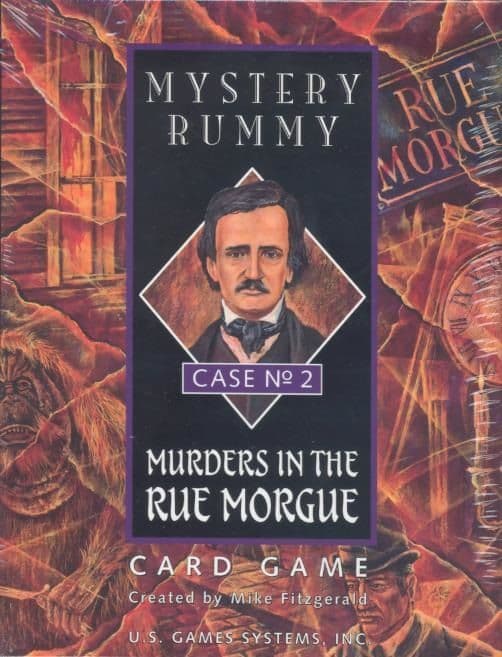
Mystery Rummy: Murders in the Rue Morgue
The second Mystery Rummy game. In this one players investigate the murder from the Edgar Allan Poe story. The basic mechanics (evidence card melds, gavel cards, etc.) are similar to the first Mystery Rummy game, but this one adds a hidden "kitty" in which players secretly place cards throughout the hand. The first player to go out (before the draw deck is exhausted) wins the kitty in addition to their regular melds. Can be played as a partnership game with 4 players.

Nerdy Inventions
We are a group of nerd inventors. In this competition, who can invent the most prolific inventions and become the nerdiest inventor? Nerdy Inventions (発明オタクの怪奇な傑作) is a game for 2-4 players that takes about 25-30 minutes. Players take turns until the game meets one of the ending conditions. In each turn, the active player rolls 3 dice. Then he may do the following 4 actions as many times as he wants (the actions can be done repeatly). When he cannot or decide not to take any more actions, he passes and next player's turn begins. The 4 available actions are: Use your own invention card Charge your own invention card Research (Swap uninvented cards) Build (Take) invention card Invention cards provide victory points and abilities. At the end of the game, the player with the highest total of victory points wins the game!

Pandemic
Pandemic is a cooperative board game where players work together to stop the spread of deadly diseases across the globe. Designed by Matt Leacock and first published by Z-Man Games in 2008, the game challenges two to four players (expandable with certain expansions) to take on specialized roles such as Medic, Scientist, or Dispatcher. The objective is to discover cures for four diseases before outbreaks spiral out of control. Unlike competitive games, Pandemic emphasizes teamwork, requiring players to coordinate their actions, share resources, and strategize collectively to win.
Gameplay unfolds on a world map featuring 48 interconnected cities, where disease cubes represent infections spreading across regions. Each turn, players travel between cities, treat infections, build research stations, and collect cards needed to cure diseases. Meanwhile, the game’s infection deck drives the spread of outbreaks, escalating tension as epidemics accelerate the pace of play. The balance between immediate crisis management and long-term planning makes Pandemic both accessible and deeply strategic. Its moderate complexity and 45-minute playtime have helped it reach mainstream popularity, appealing to casual players and dedicated hobbyists alike.
Pandemic has grown into a franchise with expansions and spin-offs that add new layers of challenge and narrative. Expansions like On the Brink, In the Lab, and State of Emergency introduce new roles, special events, and mechanics, while the acclaimed Pandemic Legacy series transforms the game into a campaign experience with evolving storylines and permanent changes to the board. Widely regarded as one of the most influential cooperative games, Pandemic has earned critical acclaim for blending tension, strategy, and collaboration, making it a staple in modern board gaming.
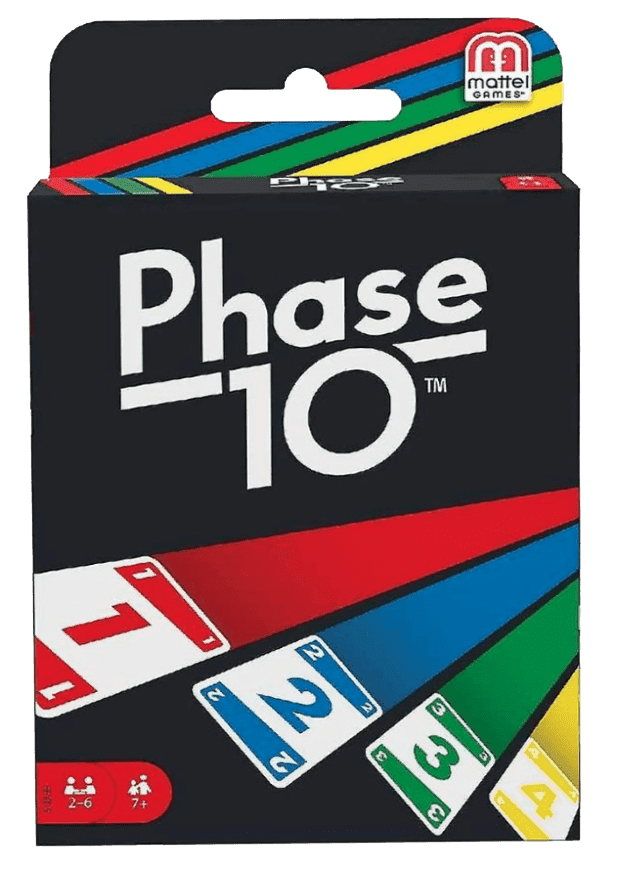
Phase 10
A rummy-type card game where players compete to be the first to finish completing all ten phases. Phases include collecting runs of numbers, collecting certain number of a given color cards, etc. The first player to finish completing the 10th phase wins. In case of ties, the player with the fewest number of points wins.
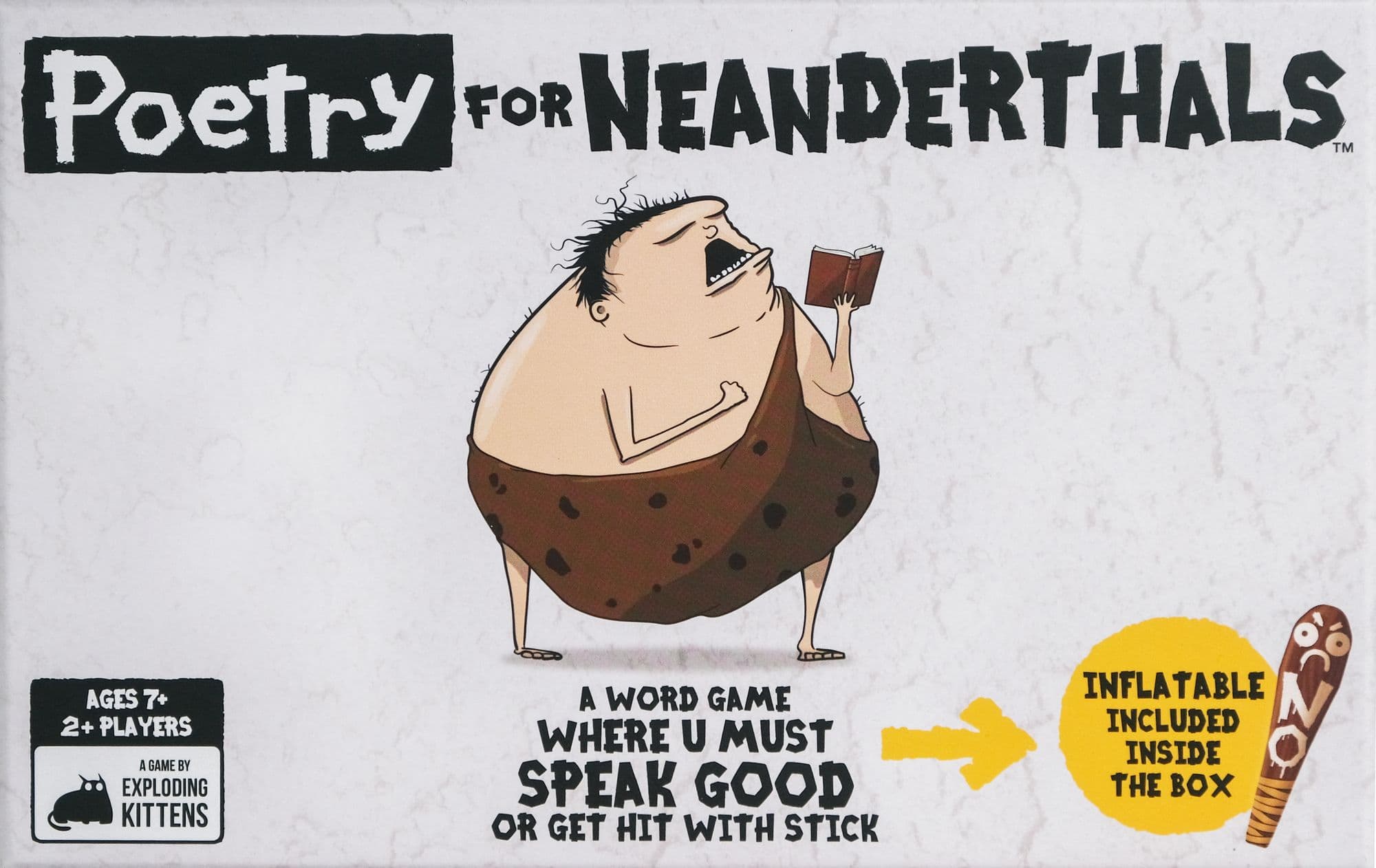
Poetry for Neanderthals
Poetry for Neanderthals is a competitive word-guessing game where you can only give clues by speaking in single syllables. So, instead of saying "broccoli," you'd say something like "green thing you eat for live long and have good health." If you mess up and use a big word, such as "vegetable," you get bopped on the head with a NO !Stick and you lose points. The goal of the game is to score the most points by correctly interpreting words and phrases. The chosen Poet starts off the game with a Poetry Card and tries to get their teammates to say the listed word, using only words with one syllable within a 90-second time limit. The team with the most points is the winner. Contents: 220 cards 1 inflatable NO! Stick 1 sand timer 2 point slates
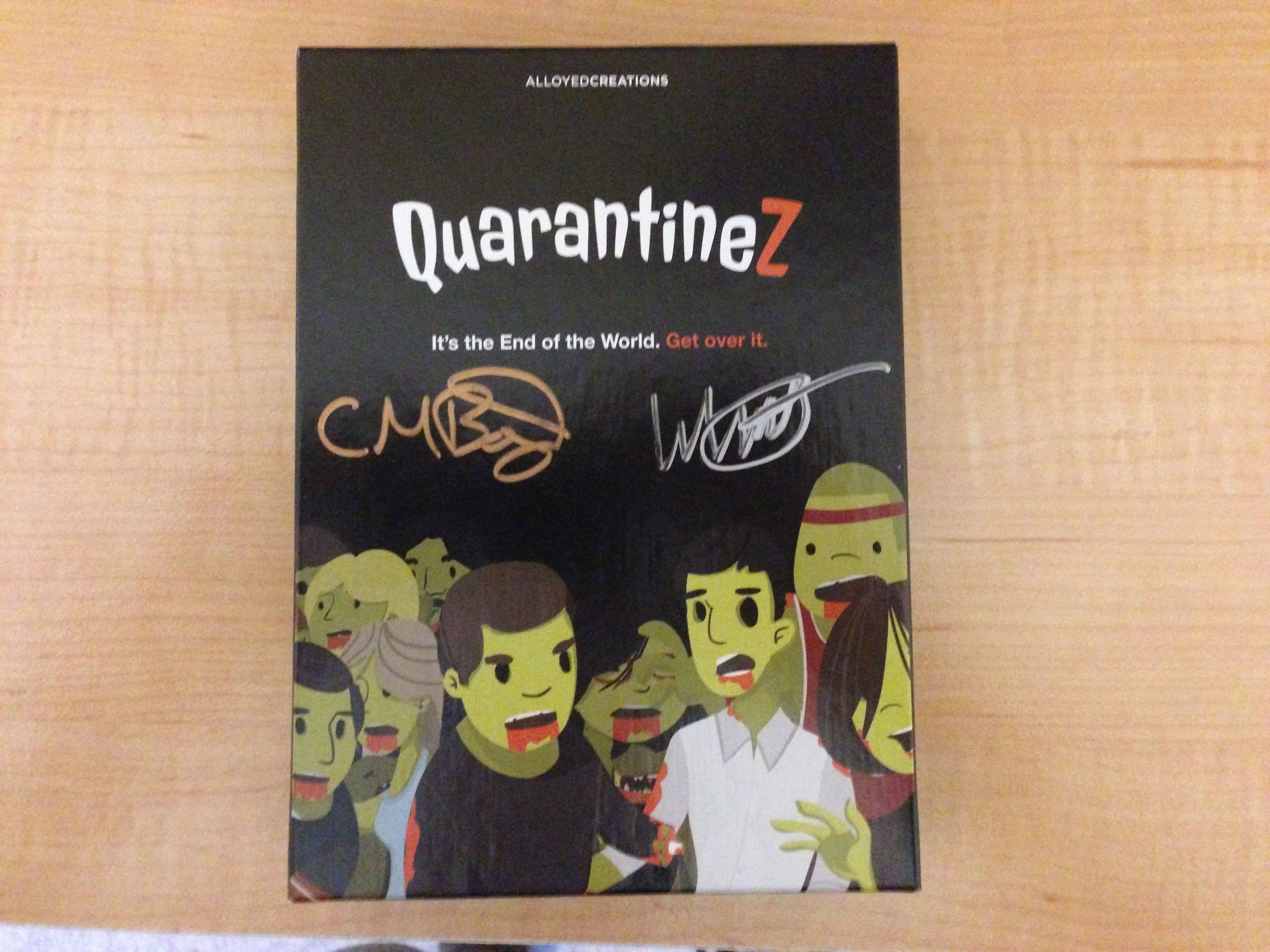
Quarantine Z
Quarantine Z is a survival card game for 3-5 players. It takes place in a town, city or neighborhood that has been infested with a Zombie outbreak. The Department of Inexplicable Events has placed the area under quarantine; nothing can get out of the area until the zombie threat runs its course. One player plays as the Zombies, whose goal is to kill all Survivors. The remaining Players are Survivors, whose goal is to collect supplies and find shelter to outlast the zombie threat and the quarantine. Survivors win if they are still alive when the Zombie Player runs out of cards in the Zombie Deck, and the Zombie Player's hand is empty. Each Survivor has 3 life, and they can be hurt by either Zombies, or other Survivors. By playing Supply cards while they are at a Shelter, Survivors "wait a week" and the Zombie player is forced to discard cards. Survivors travel from location to location collecting Supplies and Munitions and killing or evading zombies placed in their path by the Zombie player. They must also watch out for the other Survivors who may at any time, betray them to steal their food and supplies, or use them as a distraction to save themselves.

Qwixx
Qwixx is a quick-playing dice game in which everyone participates, no matter whose turn it is. Each player has a scoresheet with the numbers 2-12 in rows of red and yellow and the numbers 12-2 in rows of green and blue. To score points you want to mark off as many numbers as possible, but you can mark off a number only if it's to the right of all marked-off numbers in the same row. On a turn, the active player rolls six dice: two white and one of each of the four colors listed above. Each player can choose to mark off the sum of the two white dice on one of their four rows, then the active player can choose to mark off the sum of one colored die and one white die in the row that's the same color as the die. The more marks you can make in a row, the higher your score for that row. Fail to cross off a number when you're the active player, however, and you must mark one of four penalty boxes on your scoresheet. If you mark off the 2 or 12 in a row and have at least five numbers marked in that row, you get to also mark off the padlock symbol in that row, locking everyone else out of this color. When either a player has four penalty boxes marked or a second color is locked, the game ends immediately. Players then tally their points for each color, sum these values, then subtract five points for each marked penalty box. Whoever has the highest score wins.

Racko
The object is to score points. Each round, you replace cards in your rack so their numbers read in any numerical progression from a low number at the front to a high one at the back (the racks hold the cards behind each other); achieving this ends the round. The cards are numbered from 1 to 60; you initially place them in your rack in the order they're dealt. On your turn, you draw from the deck or the discard pile, swapping the card with one from your rack. The original publisher was Milton Bradley. Re-implemented by: Super Rack-O Racko Plus
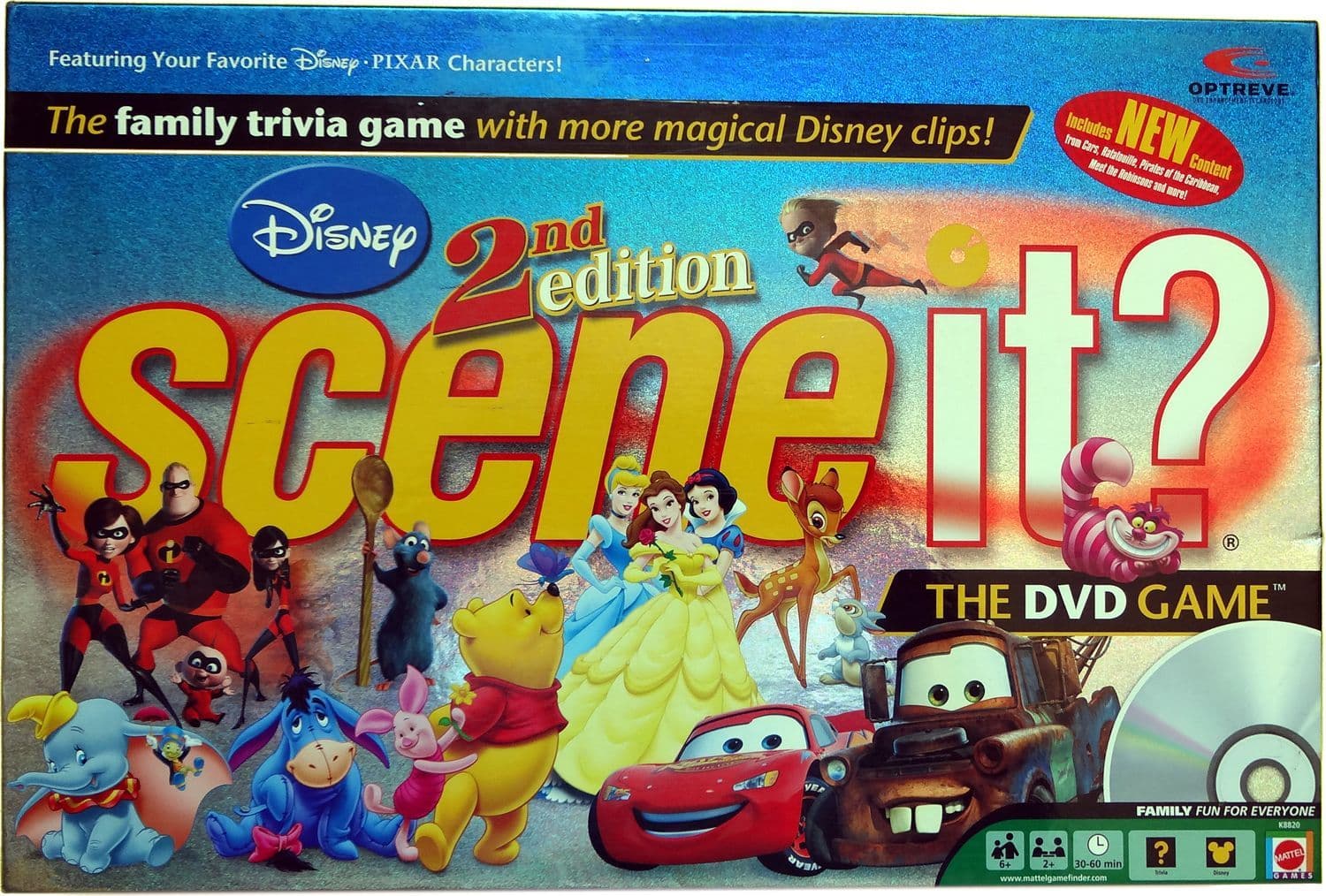
Scene It? Disney Second Edition
From the Publisher: Featuring Pirates of the Caribbean, Cars, and The Incredibles! Add the magic of Disney to your family fun time! Scene It? Disney 2nd Edition features more classic characters, more unforgettable songs, more favorite scenes from your favorite classics, old and new. Enjoy them all as you answer trivia questions and race around the game board. This game is guaranteed to keep your family smiling play after play. Ages 6 - Adult. Game Includes: Collectible Tin (Deluxe edition only) 1 DVD (Deluxe edition includes bonus DVD) Flextime® Game Board Party Play 4 Collectible Metal Tokens 160 Trivia Cards 30 Buzz Cards 1 Six-Sided Die 1 Eight-Sided Die Set of Game Rules

Scrabble Flash
Description from the publisher: The object of Scrabble Flash is to slide, swap and shuffle the five electronic tiles to create as many three-, four- or five-letter words as possible in sixty seconds. This fast-paced word-building game uses "SmartLink Technology," which allows the five electronic tiles included in the game to "talk" to each other. When the Scrabble Flash tiles are lined up to create a new word, the tiles will light up and beep. Scrabble Flash tiles also keep time and score. This groundbreaking technology allows players to compete individually against the game and try to earn the highest score possible. Three unique games can be played with Scrabble Flash. In the "Flash" game, players try to find as many three- to five-letter words as possible using the letters shown on the tiles. Five seconds are added to the play clock for every five-letter word formed. "Five Letter Flash" has players rushing to find the one five-letter word that uses the letters shown on the tiles. The game continues if the correct word is unscrambled. Play Scrabble Flash with a group in "Pass Flash" where players take turns forming five-letter words. Game 1: Scrabble Flash is a solo game that allows you to play 3, 4, or 5 letter words. Game 2: Scrabble Five-Letter Flash is a solo game that only lets you play 5 letter words. Game 3: Scrabble Pass Flash is a multi-player game that only lets you play 5 letter words.
Scrimish Card Game
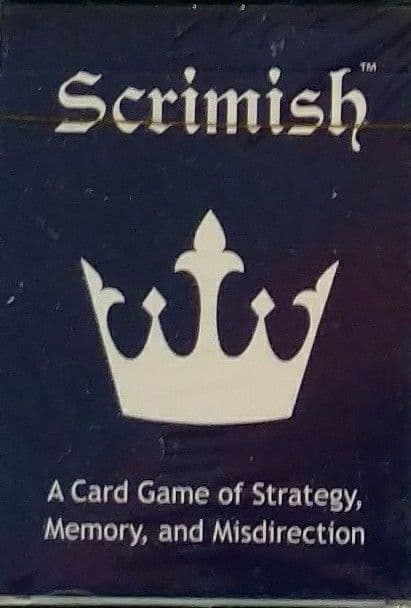
Scrimish is a fast moving card game that pits player against player in an epic 10 minute battle of strategy, memory, and misdirection. Every game is different, and you'll want to play over and over again to try new ways of outsmarting your opponent. The game is expandable to large team or free-for-all games. The objective of the game is to uncover and attack your opponent’s Crown Card with one of your own cards. Each player places 5 piles of 5 cards each face down in front of them. The crown card should be hidden on the bottom of one of the 5 piles. The rest of the cards may be arranged however you like, but choose carefully. A bad setup can quickly give your opponent the upper hand. Game play: Players take turns attacking by selecting the top Card from one of their Piles and laying that Card face up in front of one of their opponent’s Piles. The defending player must then reveal the top Card of the Pile that was attacked. The Card with the lowest number value loses and is discarded. The winning Card must be returned face down to the top of the original Pile it was drawn from. If the two Cards have the same number value, both Cards are discarded. Play continues until one of the players attacks their opponent’s Crown Card, winning the game. Special cards: Archer Card: If you attack with an Archer Card, it always wins. If your Archer Card is attacked, it always loses. Shield Card: Shield Cards cannot be used to attack. If your Shield Card is attacked, both your Shield Card and your opponent’s attacking Card are discarded (except for Archer Cards - see Additional Rules. Crown Card: You can attack with your Crown Card. If you attack your opponent’s Crown Card, you win. Otherwise, you lose the game
Scrimish: Pillars of Eternity
Scrimish is a fast moving card game that pits player against player in an epic 10 minute battle of strategy, memory, and misdirection. Every game is different, and you'll want to play over and over again to try new ways of outsmarting your opponent. The game is expandable to large team or free-for-all games. The objective of the game is to uncover and attack your opponent’s Crown Card with one of your own cards. Each player places 5 piles of 5 cards each face down in front of them. The crown card should be hidden on the bottom of one of the 5 piles. The rest of the cards may be arranged however you like, but choose carefully. A bad setup can quickly give your opponent the upper hand. Game play: Players take turns attacking by selecting the top Card from one of their Piles and laying that Card face up in front of one of their opponent’s Piles. The defending player must then reveal the top Card of the Pile that was attacked. The Card with the lowest number value loses and is discarded. The winning Card must be returned face down to the top of the original Pile it was drawn from. If the two Cards have the same number value, both Cards are discarded. Play continues until one of the players attacks their opponent’s Crown Card, winning the game. Special cards: Archer Card: If you attack with an Archer Card, it always wins. If your Archer Card is attacked, it always loses. Shield Card: Shield Cards cannot be used to attack. If your Shield Card is attacked, both your Shield Card and your opponent’s attacking Card are discarded (except for Archer Cards - see Additional Rules. Crown Card: You can attack with your Crown Card. If you attack your opponent’s Crown Card, you win. Otherwise, you lose the game
SiXeS
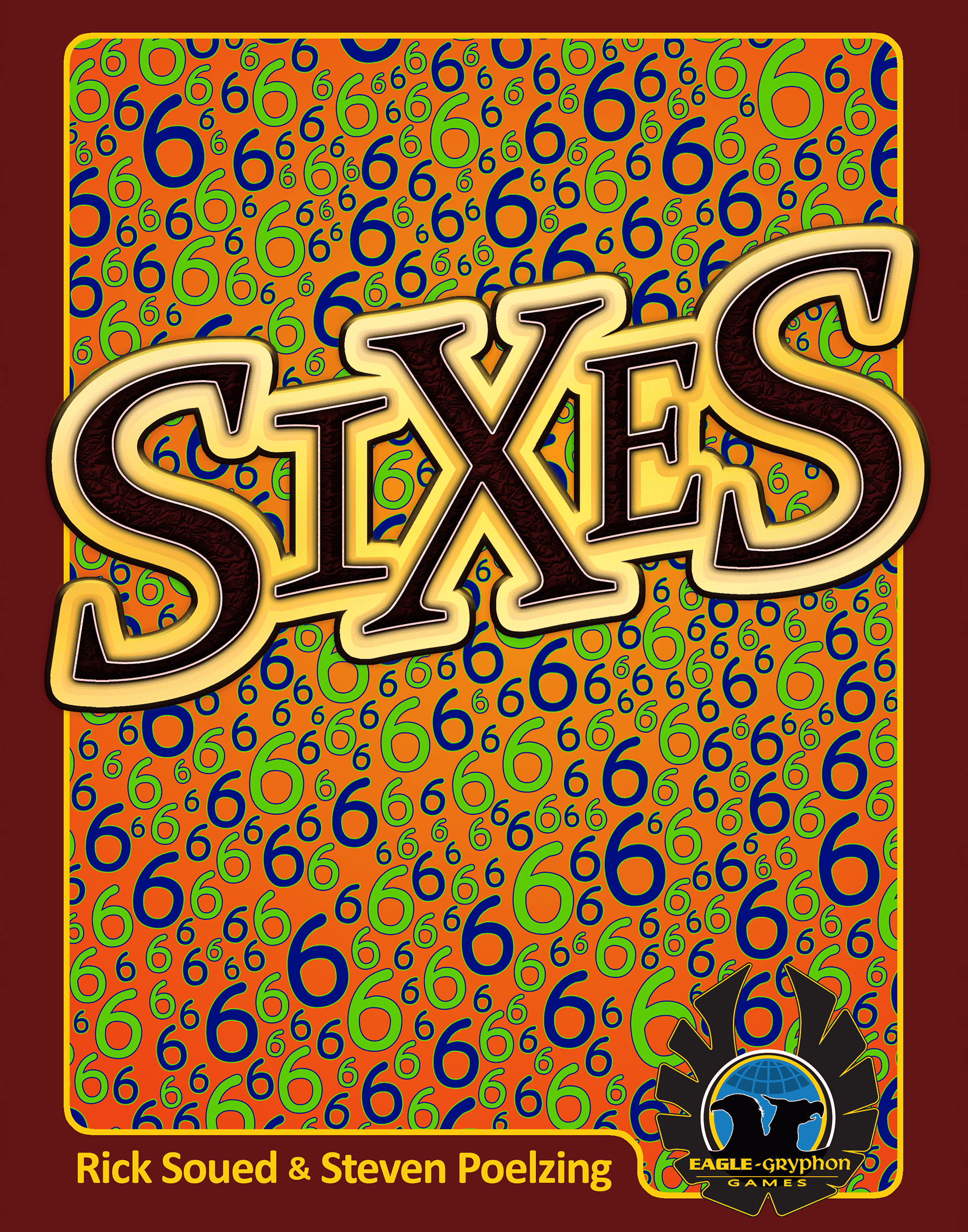
SiXeS is about things that are similar and different. Play six rounds, thinking of six things each round and trying to predict what you will write that will match — or not match — what the other players write, depending on whether you are in a "match" round or a "unique" round. The player with the most points after six rounds wins. SiXeS is #6 in the E•G•G Series from Eagle-Gryphon Games.
Sixis
A dice game from Asmadi Games. Cards are dealt out, each having a specific requirement (such as roll two fives, roll 1-2-3, etc.) and worth a set number of points. Each turn you may roll your six dice and try to satisfy the requirement of a card--when you do, you may claim the card, or flip it over revealing a related but more difficult requirement that is worth many more points. Be careful, though, as your opponent may be the one to claim the more valuable card. In addition, each turn you may set aside any number of the results you obtained on your dice to work towards a card. Rolling six of a kind nets you a Sixis, ending the game.
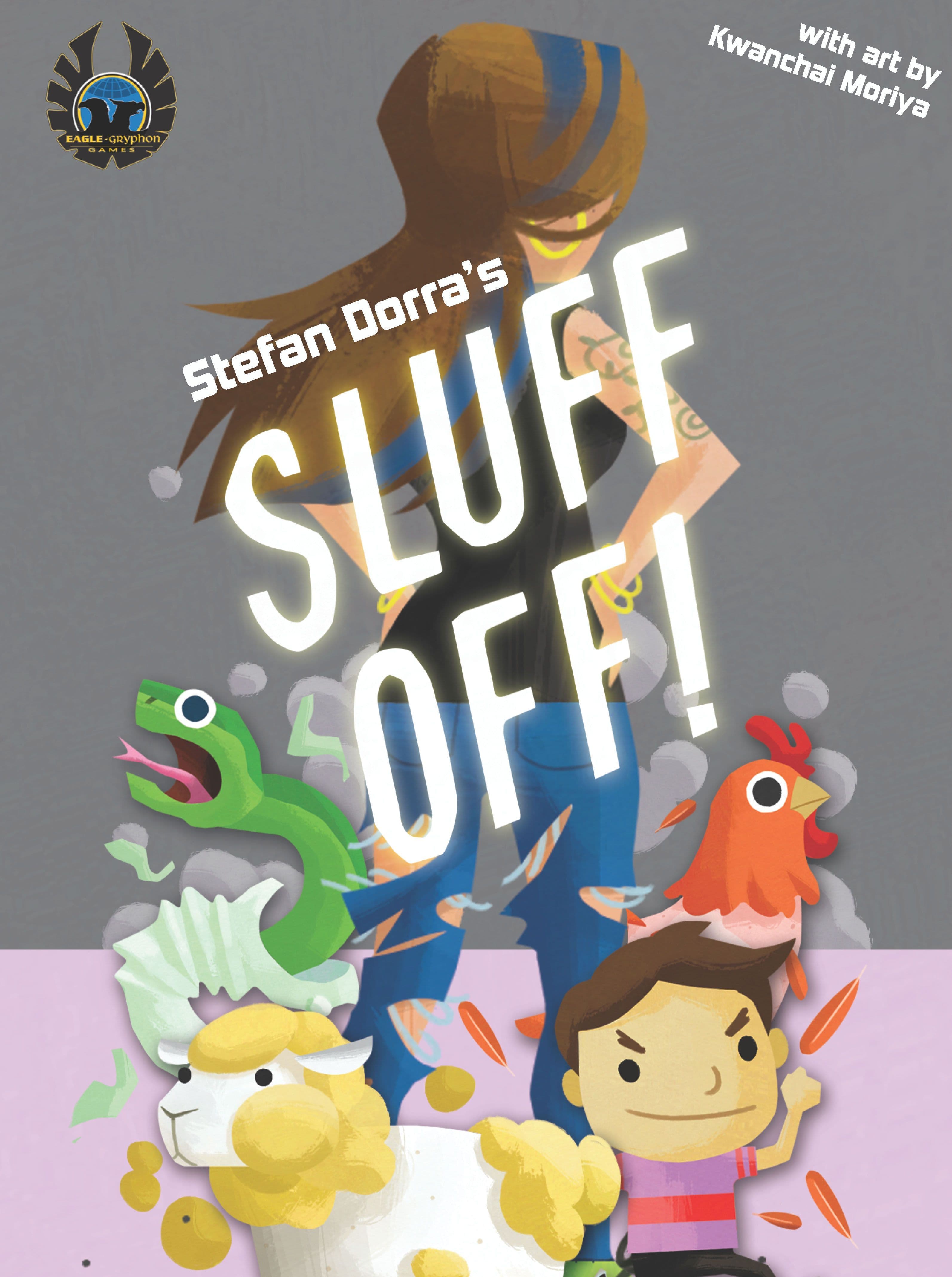
Sluff Off!
The gameplay for Sluff Off! follows the standard trick-taking formula: The cards are numbered 1-15 in five different suits, and blue is always trump. If someone leads a color, you must follow suit if you can; otherwise, you can throw off a card or trump the trick. It's an exact-bidding game, but you predict your tricks by taking colored chips. For each trick that you win, you toss a chip back. If you take a trick in a color for which you didn't have a chip, then you must take a black chip (worth -3 points). If you have any colored chips left at the end of the round, they're worth -2 points. If you have any white chips left at the end of the round (wildcards that you get when someone takes a colored chip away from you during bidding), they're worth -4 points. There's also the Sluffer, whose role is to feed unwanted tricks to other players. Instead of bidding tricks the Sluffer takes 4 black chips each worth -1 for him at the end of the hand. When players take tricks they didn't predict, they take black chips from the Sluffer. If the Sluffer feeds enough of the black chips to other players, it can zero out the Sluffer's score for that round.
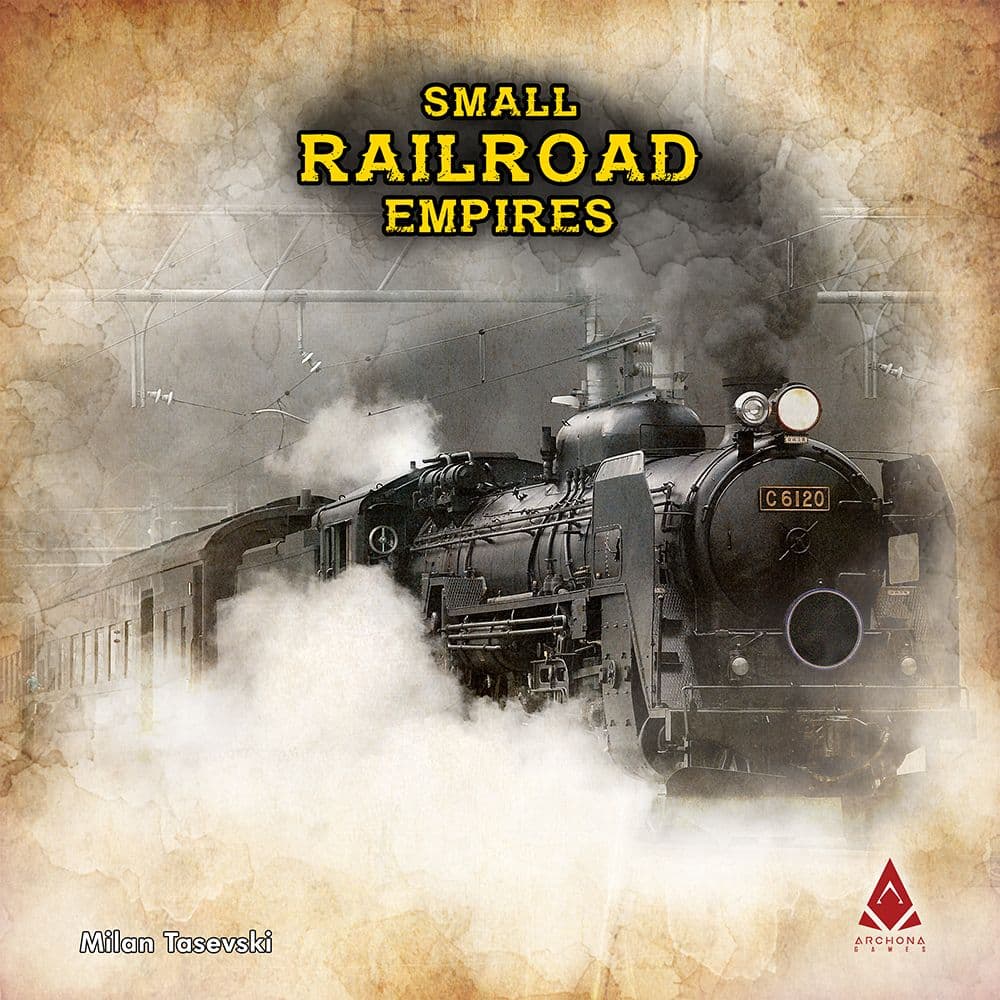
Small Railroad Empires
Small Railroad Empires is a pickup and deliver, track-laying and set-collection board game for 2-4 players, where players build railroad tracks, send trains with goods from industries to cities, and complete achievements to earn prestige! During their turn, players will build their tracks by placing 2 trains on the modular board. When building tracks, players must pay the gold costs for the different terrain that the track passes through. Once a track connects an industry that produces a good with a city that demands that certain good, the player may send a train to complete the delivery and earn gold depending on the track length. Players will also race to complete achievements such as: "Be first to make 4 deliveries" or "Be first to build 3 Tunnels" for which they will earn extra prestige. Finally, when all players run out of tracks to lay down, the game ends. Player calculate the final prestige points they have from the achievements and the player with the most prestige is the winner! —description from the designer
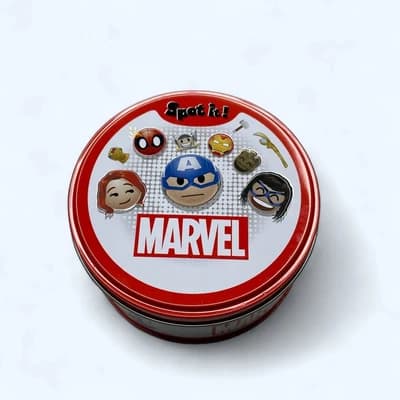
Spot It! Marvel
Spot it!, a.k.a. Dobble, is a simple pattern recognition game in which players try to find an image shown on two cards. Each card in original Spot it! features eight different symbols, with the symbols varying in size from one card to the next. Any two cards have exactly one symbol in common. For the basic Spot it! game, reveal one card, then another. Whoever spots the symbol in common on both cards claims the first card, then another card is revealed for players to search, and so on. Whoever has collected the most cards when the 55-card deck runs out wins! Rules for different games – each an observation game with a speed element – are included with Spot it!, with the first player to find a match either gaining or getting rid of a card. Multiple versions of Spot it! have been published, with images in each version ranging from Halloween to hockey to baseball to San Francisco. The game is sold as Spot it! in the USA and Dobble in Europe, with slight differences between the two editions. Note: some versions have fewer cards and fewer symbols per card. (E.g. 30 cards with 6 symbols each.): Spot it! 1,2,3
The Oregon Trail Card Game
The Oregon Trail: Hunt for Food Card Game
The Oregon Trail: Hunt for Food Card Game challenges 2-6 players to find enough food to keep them alive during their travels -- six hundred pounds of food, to be precise. Not all of you might live while tracking down this food, but ideally at least one of you will make it to the end of the trail with a full belly. To set up, shuffle the hunting cards, then lay them out in a 6x6 grid, with three cards in each pile. Shuffle the supply deck, then lay out four supply cards, which are available for you to use. Place the hunter on a pile on the outside border of the playing area. Each player takes a die, which has numbers 1/1/2/2/3/4. On a turn, the active player rolls their die, then has a number of actions equal to the result. A player can (1) flip a card in an orthogonal line from the hunter up to a distance equal to the number of actions that remain in the turn, (2) move orthogonally to an adjacent space that isn't blocked, or (3) shoot at an animal that isn't blocked. If you flip flowers, a tree, or a rock, that space is now blocked; if you flip an abandoned wagon, you can pillage it for a card of your choice from the supply deck, but then it too becomes an obstacle; if you flip a blank card, nothing happens; and if you flip an animal, you can try to shoot it on a future action as long as nothing blocks the hunter's path to it. When you shoot, you spend a bullets token, then all players roll their die and you need successes on all dice, e.g. rolls of 1 or 2 to kill a bison. If you don't succeed, you can spend more bullets and reroll the dice that failed. If you succeed, you get one hundred pounds of meat; if you run out of actions or decide to stop, the animal flees. You have only twelve bullet tokens at the start of the game, with four more in the supply deck. If you run out of bullets, you lose the game. If you flip dysentery or drowning, you die and everyone else carries on without you; if you flip snake bite, broken leg, or other calamities, you need the treatment from the supply deck, dying if an identical card is flipped before this happens. If all players die or the hunter becomes trapped by obstacles, you lose the game. Only by collecting six hundred pounds of meat do you win, no matter how many of you are still alive! The Oregon Trail: Hunt for Food Card Game can be played on its own or combined with The Oregon Trail Card Game.
Time Management: The Time Management Game
Time Management: The Time Management Game is a quick-playing, tile-laying game. Players are workers at the Office of Time Management, managing the space-time continuum. Their goal is to add temporal workers to the work force and arrange them in such a way to ensure the safety of the continuum and to save time — and save time!
Tiny Epic Tactics
Tiny Epic Tactics utilizes a simple combat system with variable player powers and 3-D terrain to achieve endless layers of strategy and fun. Tiny Epic Tactics offers competitive play, cooperative play and solo play! Conquer your opponents in tactical combat where every calculated move matters... or journey across the land and through the caves in a grand cooperative/solo adventure! Nesting inside the game box are 5 smaller boxes and a map/scroll. Players will set up the game by placing these 5 boxes, plus the box bottom, onto the scroll in designated areas. This creates the environment that players will explore and battle across. In Tiny Epic Tactics, players will have a team of four unique heroes: a Fighter, a Wizard, a Rogue and a Beast. Each hero type, and each character within that type, offers unique advantages to movement, attacks, and/or support. Finding the synergy in your team is key to victory. In competitive play, players will pit their teams against one another in effort to score the most victory points by the end of the game. Each turn, players will have three actions to assign across their team. They can move and/or attack with their heroes. Victory points are rewarded for area control, enemy heroes captured, and keeping your own heroes alive. Gaining complete control of one, or multiple, specific areas offers the most victory points in competitive play. Gaining control of said areas requires your heroes maintaining majority presence in these areas over the course of a few turns. This requires a careful balance of offense and defense. The control of these areas can easily shift from one player to another based on which player has the majority heroes present in the designated spaces. Once a set number of areas are captured, or one of the players has lost all of their heroes, the end game is triggered. Tiny Epic Tactics offers a distinctly different experience for solo and cooperative play. In these modes, players will adventure across the map, fighting spawning enemies and exploring caves (printed on the interior of each of the boxes). The goal is to acquire treasures, that belongs to the enemy, from these caves while keeping your heroes alive. Once the end of the game is triggered, victory points are tallied based on how many treasures you took from the enemy and how many of your heroes you kept alive.
Traitor Mechanic: The Traitor Mechanic Game
In Traitor Mechanic: The Traitor Mechanic Game, players are automobile mechanics, all working together to fix cars. However, one of them has been hired by a rival auto-shop to undermine their efforts and make this auto-shop go bankrupt. You must work together, fix the cars, and attempt to reveal just which one of you is the...traitor mechanic.
Trekking the National Parks
Imagine yourself staring down a giant Grizzly in Katmai National Park. Take a canoe ride alongside alligators in the swampy waters of the Everglades. Trek the trails that define our nation’s most valuable public resource – the National Parks! Trekking the National Parks is a spirited family board game that lets players experience the U.S. National Parks in a fun and competitive way. Up to six players compete in a cross country race to visit the National Parks and collect the most points. Gathering colored trek cards allows players to move across the map and claim valuable park cards. If a player is the first to visit a National Park, they collect that park's colored stone, which award bonus points at the end of the game. Players must jockey for position and make tough tactical decisions at every turn to emerge victorious!
Trial by Trolley: Derailed Edition
This game combines the Derailed promo pack with the base game. In Trial by Trolley, one player acts as the Trolley Operator and must choose where to send a murderous, out of control, trolley. Every other player at the table plays cards and argues in order to convince the operator to spare their lives and condemn everyone on the other track to a gruesome death-by-trolley.
Trick-Taking: The Trick-Taking Game
The world's greatest magicians have been assembled to establish who is the best illusionist of all time — but as with all great magic, there is much sleight-of-hand afoot, and the magicians in Trick-Taking: The Trick-Taking Game will use cunning and great mentalist powers to steal each others' tricks!
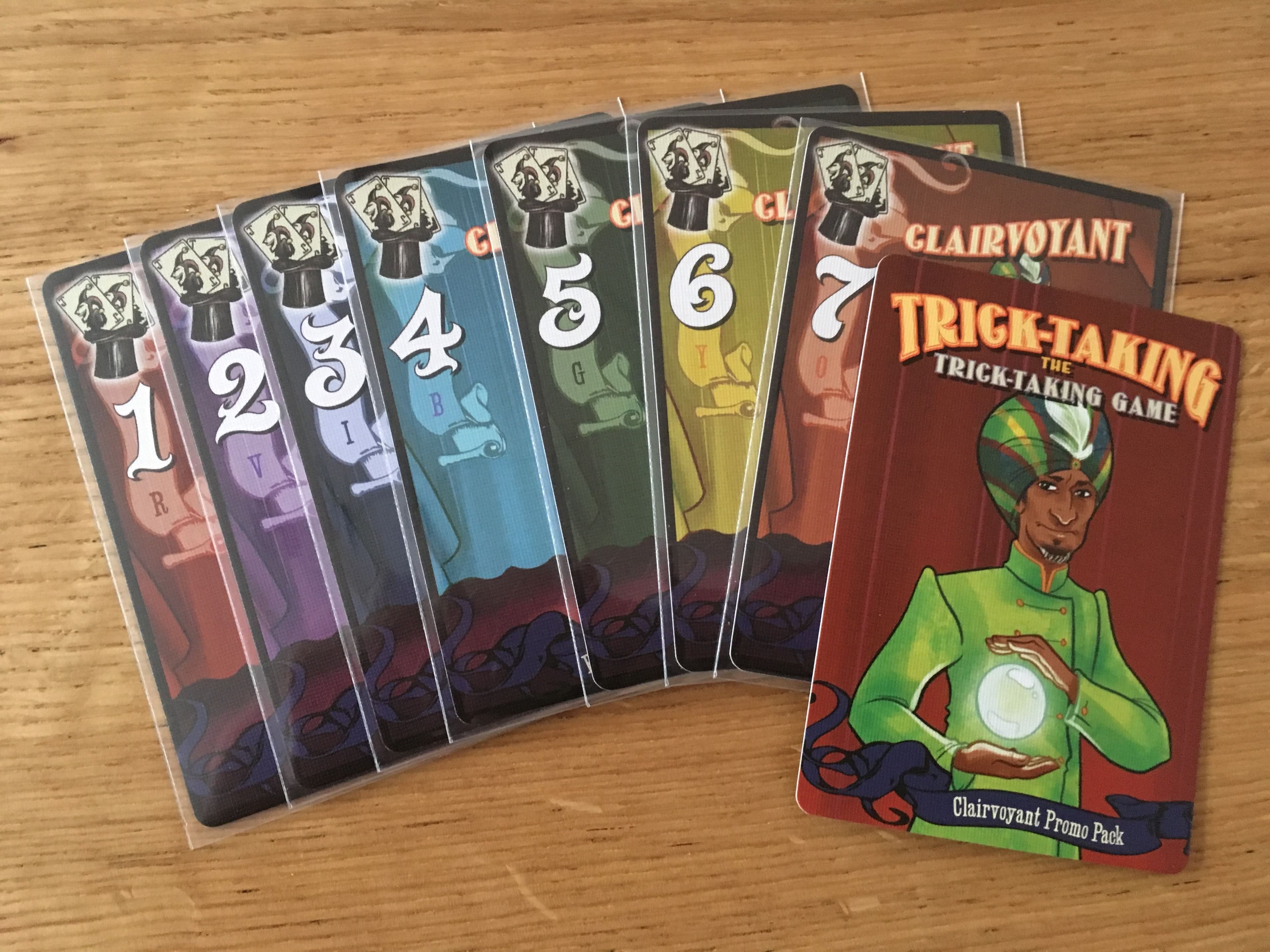
Trick-Taking: The Trick-Taking Game – Clairvoyant promo
Promo pack of 7 Clairvoyant cards for Trick-Taking that were included as part of the Meta Games II Kickstarter. These should be put in the deck at the start of the game and 7 random cards removed after shuffling. When played, the Clairvoyant card effect allows the player to look at three random cards from another players hand.
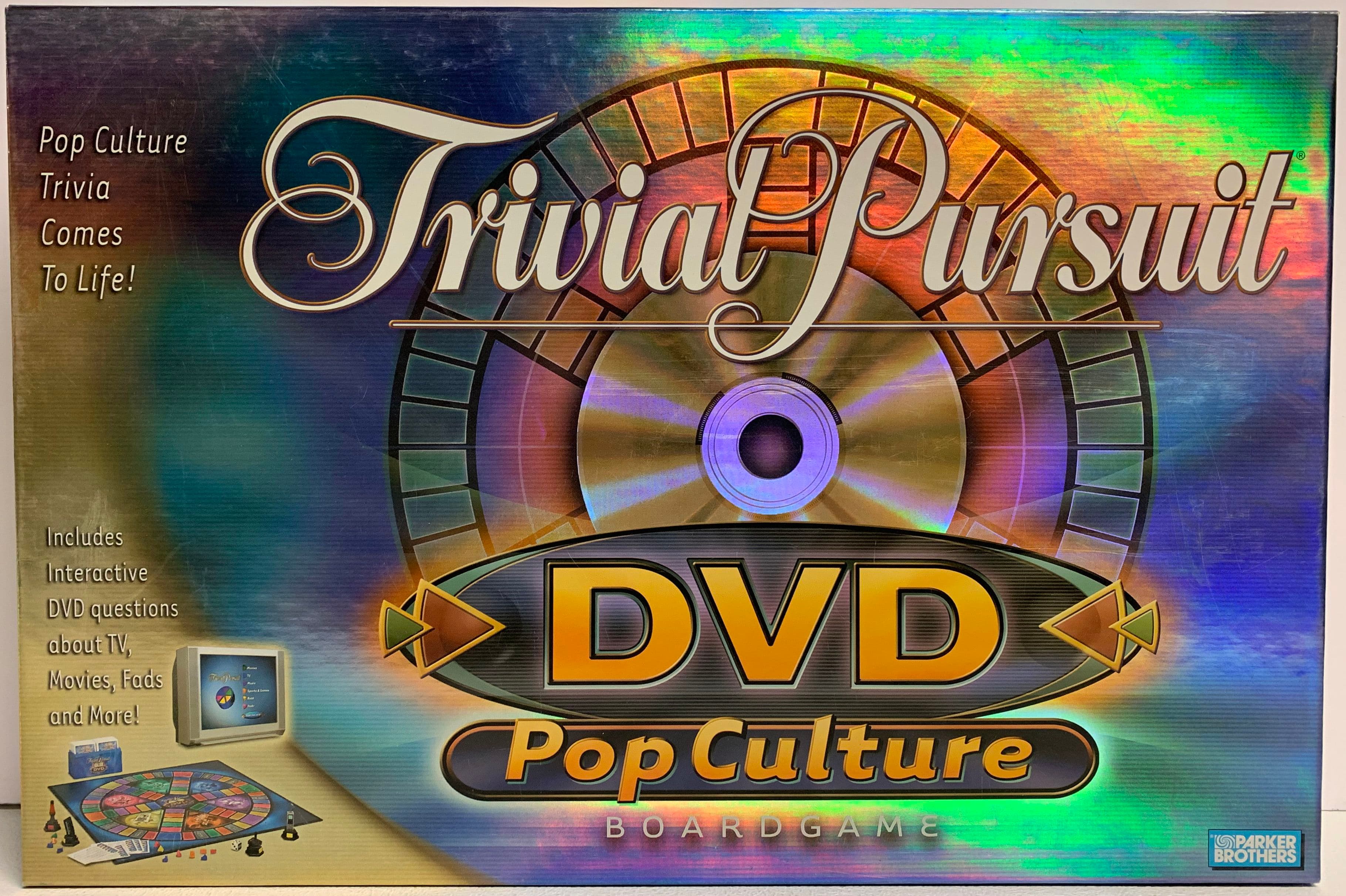
Trivial Pursuit: DVD – Pop Culture Game
All-new multi-media version of America's favorite trivia game. Includes 2,400 card questions and a DVD with 600 DVD questions. Features 6 categories: Television, Movies, Music, Sports/Games, Buzz, and Fads.
Trivial Pursuit: Marvel Studios The Infinity Saga – Ultimate Edition
MCU superfans, assemble! Take on opponents with your vast knowledge of the Marvel Cinematic Universe in this trivia game for the best and biggest Marvel movie fans. Test your mastery of the multiverse with 1800 questions spanning films from Phase 1-3. Have the upper hand and seize all six coveted category wedges (Power, Reality, Space, Soul, Mind, and Time) to win! Includes full game board and custom Marvel-related movers such as the Tesseract, Loki’s Scepter, Aether Casket, Orb, Vormir’s Gate, and Eye of Agamotto. Conquer the Marvel Cinematic Universe with Knowledge: Join forces with fellow MCU enthusiasts in this trivia showdown! Show off your expertise as you answer 1,800 questions spanning MCU Phases 1-3 films, aiming to secure all six infinity category wedges like Power and Space to claim victory. Marvel-Themed Strategy: Dive into the immersive world of the Marvel Cinematic Universe with custom movers like the Tesseract and Loki's Scepter. Test your knowledge, outwit opponents, and master the multiverse as you journey through the full game board. For True Marvel Devotees: Calling all devoted fans! Engage in epic battles of wit and wisdom, proving your status as the ultimate Marvel movie aficionado. With iconic category wedges and exclusive Marvel-themed movers, this game is your ticket to becoming the ultimate MCU guru.

Truck Off: The Food Truck Frenzy Roll And Write
AS FOOD TRUCK TITANS… Send your food truck team to score sales at various venues throughout town. You can only visit each venue once and will need to carefully plan your route and take sales opportunities when they are arise. Drive efficiently and score bonuses, or race to the finish and hit the big-time payouts on the way. Plan your route but expect the unexpected in your path to food truck infamy! Truck Off: The Food Truck Frenzy Roll and Write is a stand alone game and follow-up to the original Truck Off: The Food Truck Frenzy. It throws navigation, risk mitigation, and press your luck into the same meal pack for you to digest. In Truck Off Roll and Write, all players are driving their food trucks around a grid system town map, and marking off venue locations in a secondary location called a route tracker for each venue they visit. All players will visit a new venue each turn and then mark the value of their corresponding venue dice directly scoring them points. If you mark three venues in one row or one column of the route tracker, you gain a bonus. Bonuses help you navigate around town, allow you to reroll your dice more, drive farther, drive faster, and promote venues to make them more valuable. Each turn, the active player rolls the set of polyhedral dice. The active player may reroll up to one die to help the sales on their route or hurt the sales on their opponents route. Then all players select one open venue to drive to if possible up to 4 spaces away following a grid movement system. Each player then marks the value of the die on the corresponding location of their route tracker always progressing their route tracker. Route Tracker: The route tracker is made up of six columns, one for each of D4, D6, D8, D10, D12, and D20 venues. However, the route must always progress forward from D4 to D20 and snake back to D4. If you skip a venue in your route, then you may not return to that venue on the route tracker. The route tracker will play a big role in your pathing around the town and also allows you push the game toward end quicker than your opponents expect. To win the game and score the most sales, you'll need to plan your efficient route, take high sales opportunities when they present themselves, and figure out how to reroute your food truck if you deviate from your plan. -description from designer
Ultra Tiny Epic Kingdoms
You are a tiny kingdom with big ambition. You want to expand your population throughout the realms, learn powerful magic, build grand towers, and have your neighbors quiver at the mention of your name. The conflict? All of the other kingdoms want the same thing and there's not enough room for everyone to succeed... In Tiny Epic Kingdoms, a 4x fantasy game in a pocket-size package, each player starts with a unique faction (which has a unique technology tree) and a small territory. Throughout the game, players collect resources, explore other territories, battle each other, research magic, and work to build a great tower to protect their realm. Ultra Tiny Epic Kingdoms (UTEK) is everything Tiny Epic Kingdoms (TEK) is — minus the exploration mini-expansion, but with added solo play — but much smaller. UTEK and TEK are virtually the same game. The only rule difference between the two versions is how units react to the Ruins region and certain faction/territory restrictions exist due to having them back to back on the cards.
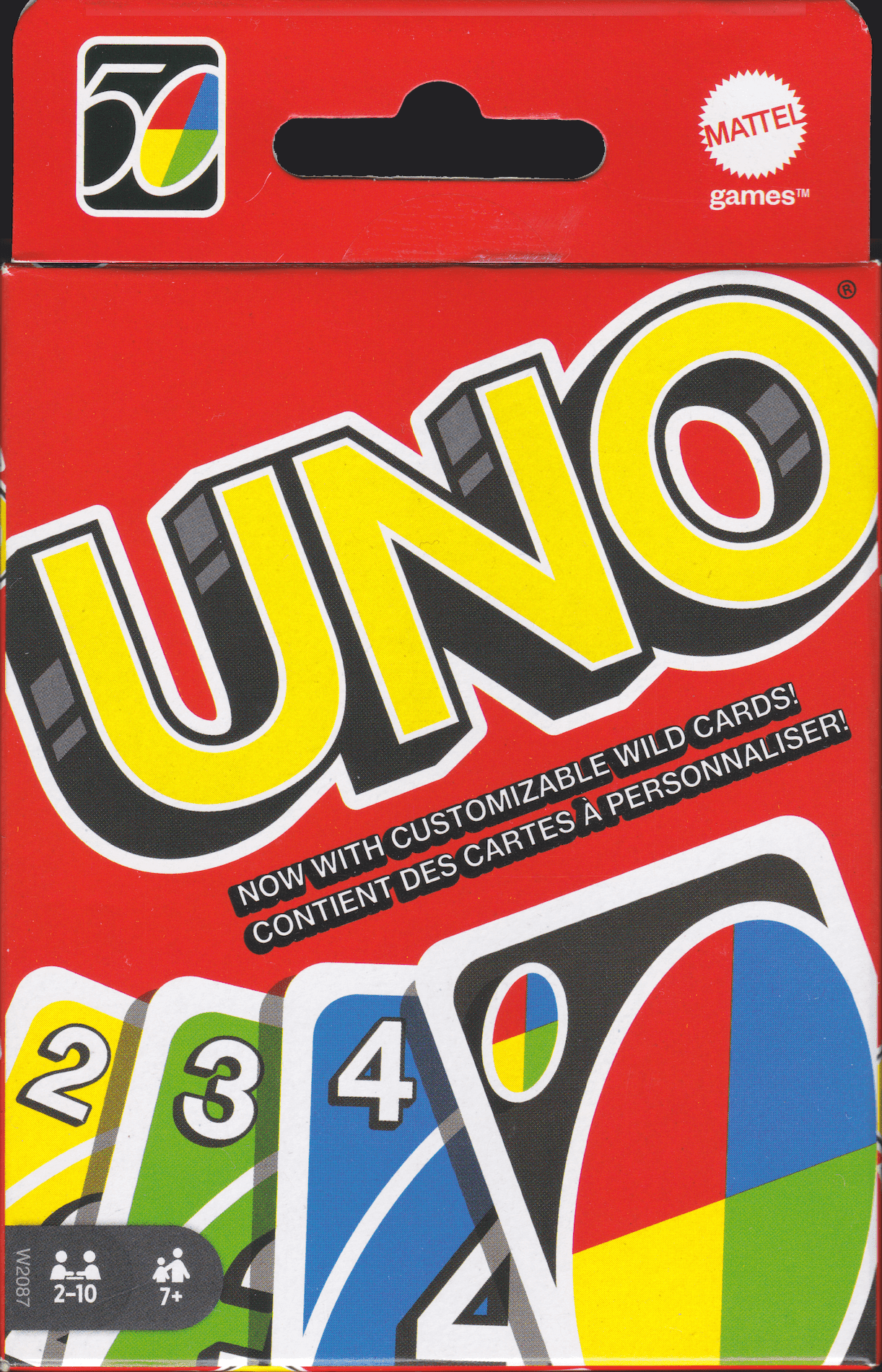
UNO
Players race to empty their hands and catch opposing players with cards left in theirs, which score points. In turns, players attempt to play a card by matching its color, number, or word to the topmost card on the discard pile. If unable to play, players draw a card from the draw pile, and if still unable to play, they pass their turn. Wild and special cards spice things up a bit. UNO is a commercial version of Crazy Eights, a public domain card game played with a standard deck of playing cards. This entry includes all themed versions of UNO that do not include new cards.

Uno Flip!
Uno Flip! is a twist on the classic Uno card game that adds a whole new layer of excitement with its double-sided deck. Each card has a “light side” and a “dark side,” and players begin the game using the light side as in traditional Uno. However, when a special Flip card is played, the entire deck—including players’ hands—must be flipped to reveal the dark side. This mechanic introduces new colors and tougher action cards, such as “Draw Five” or “Skip Everyone,” which can dramatically change the flow of the game. The flip element keeps players on their toes, ensuring that no lead is ever truly safe.
The game retains the familiar goal of being the first to play all your cards, but the added unpredictability makes Uno Flip! especially engaging for families and groups. The dark side’s harsher penalties and powerful moves create dramatic swings, while the light side offers a more forgiving pace. This balance of chaos and strategy makes the game fast, fun, and highly replayable. Uno Flip! is recommended for ages 7 and up, and like its predecessor, it thrives on laughter, surprises, and the thrill of shouting “Uno!” at just the right moment.
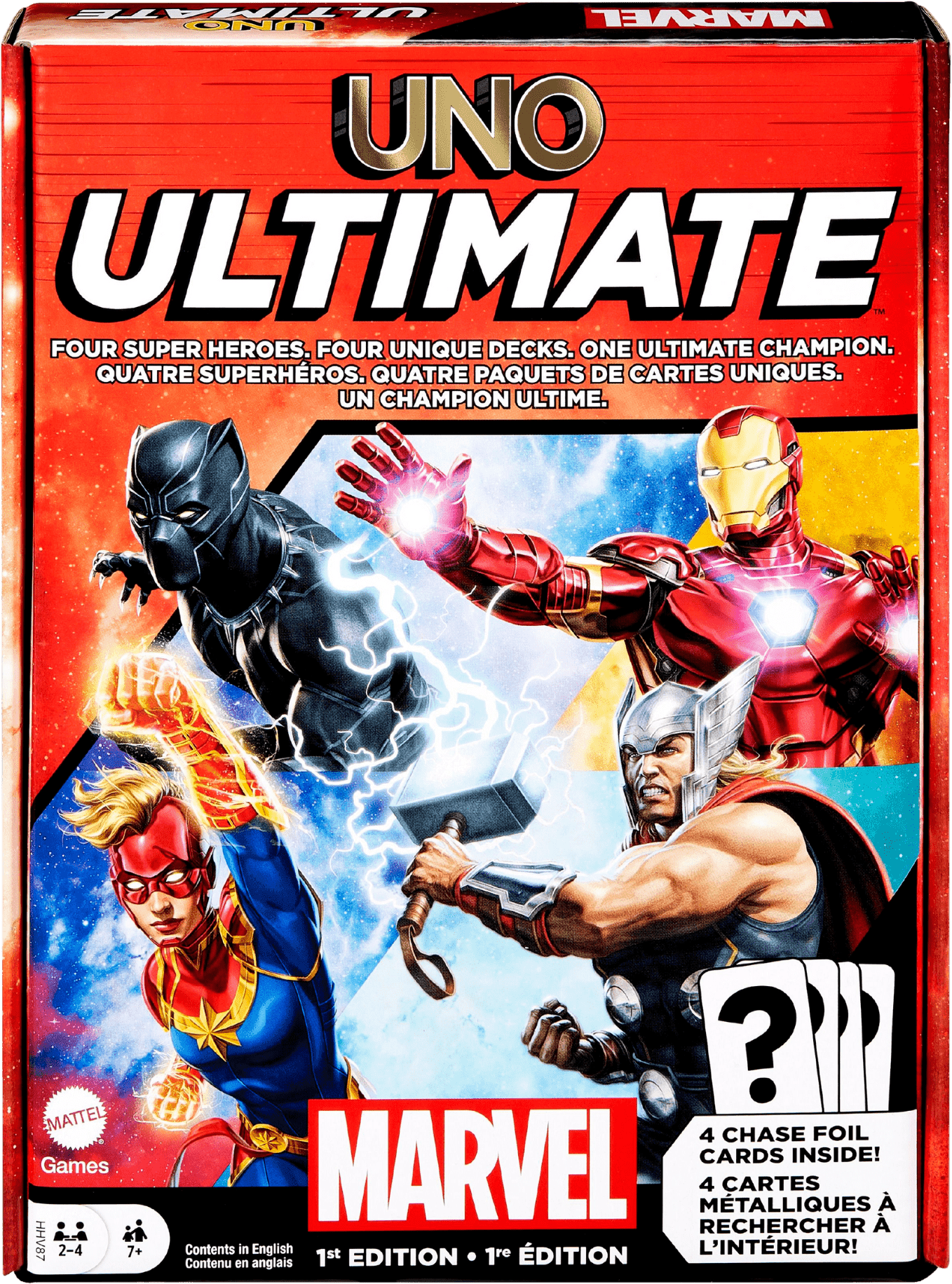
UNO Ultimate
If you can't be a Superhero at least you can play UNO like one! Each player chooses the identity of a Marvel character who has powers you can use on EVERY TURN! After you choose your character, you play the game with a corresponding Character Deck. In the UNO Ultimate card game you match colors, numbers, and symbols just like classic UNO. Each Character Deck has special power and Wild Cards designed just for that character. There's also a Danger Deck with "Event" cards and "Enemy" cards that can really change the game! Like any great superhero battle, there's gonna be a lot of powers and stuff lying around, so buckle-up and pay attention! There are also two ways to win! Get rid of all your cards in your hand or be the last player standing with cards in their character deck. Collectible foil cards in each box. Don't forget to call Uno when down to 1 card! Characters: Black Panther Black Panther is in it for the long haul by trying to stay in the game as long as possible. As Black Panther's ability comes from defeating Enemies, you will want to hold onto your Danger Icon Cards and play them when you have cards in your Burn Pile. You might not always get an Enemy when you play them but you don't want to waste the chance at recovering cards early on by defeating Enemies. Captain Marvel Captain Marvel is always looking for the right strategy to do the most damage. With her character power letting her always have the right color to play, use it to never miss your plays. Change the color when you can to prevent other players from being able to defeat their attacking Enemies. Sometimes you may want to use her power to change the color to play a powerful Action Card such as Skip or Draw Two. Iron Man Iron Man always likes to be on the attack. Iron Man wants to burn as many cards as possible from the other players decks, and try to eliminate multiple players at a time to win. So, you want to play as many Danger Icon Cards as you can to keep the pressure on. Keep in mind that every time you play a Danger Icon Card you will have to flip a Danger Card. Thor Thor is great at attacking other players and trying to eliminate them one at a time. When playing as Thor you want to decide either to focus on one player at a time or spread out your Wild Cards to affect all players. That means when you play your Wild Cards you want to make sure you are using them to change the active color o get the most effectiveness out of your character power.
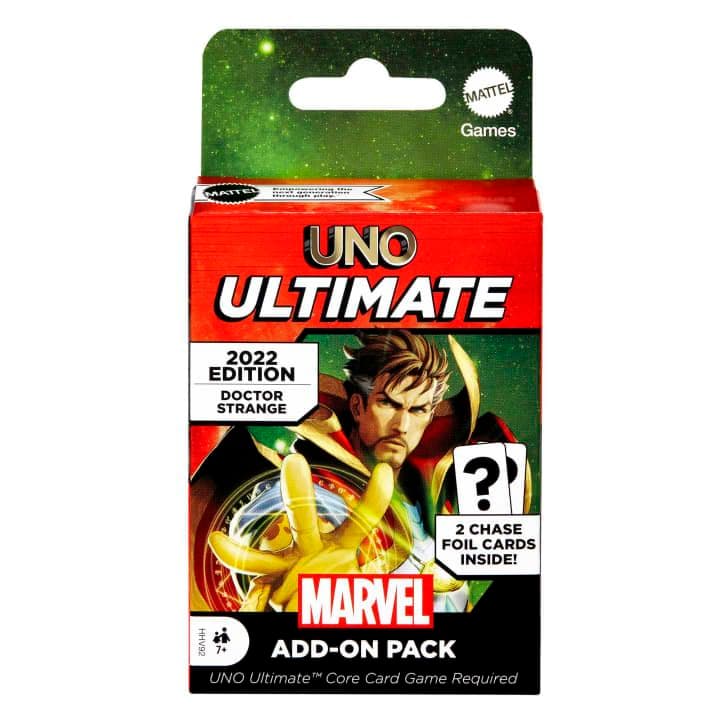
UNO Ultimate: Add-on Pack – Doctor Strange
With UNO Ultimate Marvel Add-On Dr. Strange Pack, players can swap a new character into the core UNO Ultimate Card Game (sold separately, subject to availability). The Dr. Strange Pack has an entire deck of UNO Ultimate cards, with graphics and special rules, designed specifically for this Super Hero to play as Dr. Strange! —description from the publisher Doctor Strange Being the master of the Mystic Arts lets Doctor Strange control the playing field. Try to change the active color as much as you can to maximize his character power. Use his Wild Cards for both supporting his character power and stopping players from playing certain cards. Included in this add-on pack: One Uno Ultimate Doctor Strange Deck Character specific Wild Cards Danger Deck Cards with Villains and more! 2 Chase Foil Cards
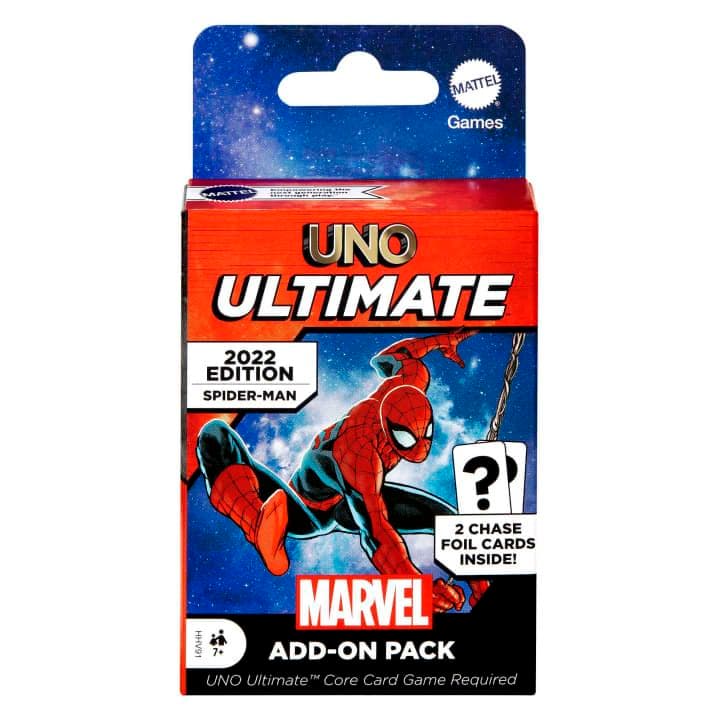
UNO Ultimate: Add-on Pack – Spider-man
With UNO Ultimate Marvel Add-On Spider-Man Pack, players can swap a new character into the core UNO Ultimate Card Game (sold separately, subject to availability). The Spider-Man Pack has an entire deck of UNO Ultimate cards, with graphics and special rules, designed specifically for this Super Hero to play as Spider-Man! —description from the publisher Spider-Man Spider-Man is always looking for danger. His power reflects his commitment to deal with Enemies. Use his Wild Cards to make players flip Danger Cards and move around Enemies. Sometimes you will want to take an Enemy from another player so that you can defeat it in order to set up your character power. Included in this add-on pack: One Uno Ultimate Spider-Man Deck Character specific Wild Cards Danger Deck Cards with Villains and more! 2 Chase Foil Cards
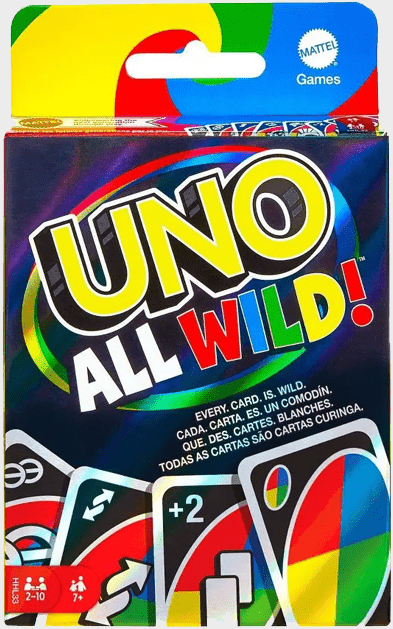
UNO: All Wild!
UNO All Wild plays just like traditional UNO except every card is wild. That means instead of having to matching color and number, you can play any card you want. The goal is the same: be the first player to get rid of all your cards. But it gets complicated thanks to the addition of new action cards that let players strategize and make sure no one goes out too soon. —description from the designer
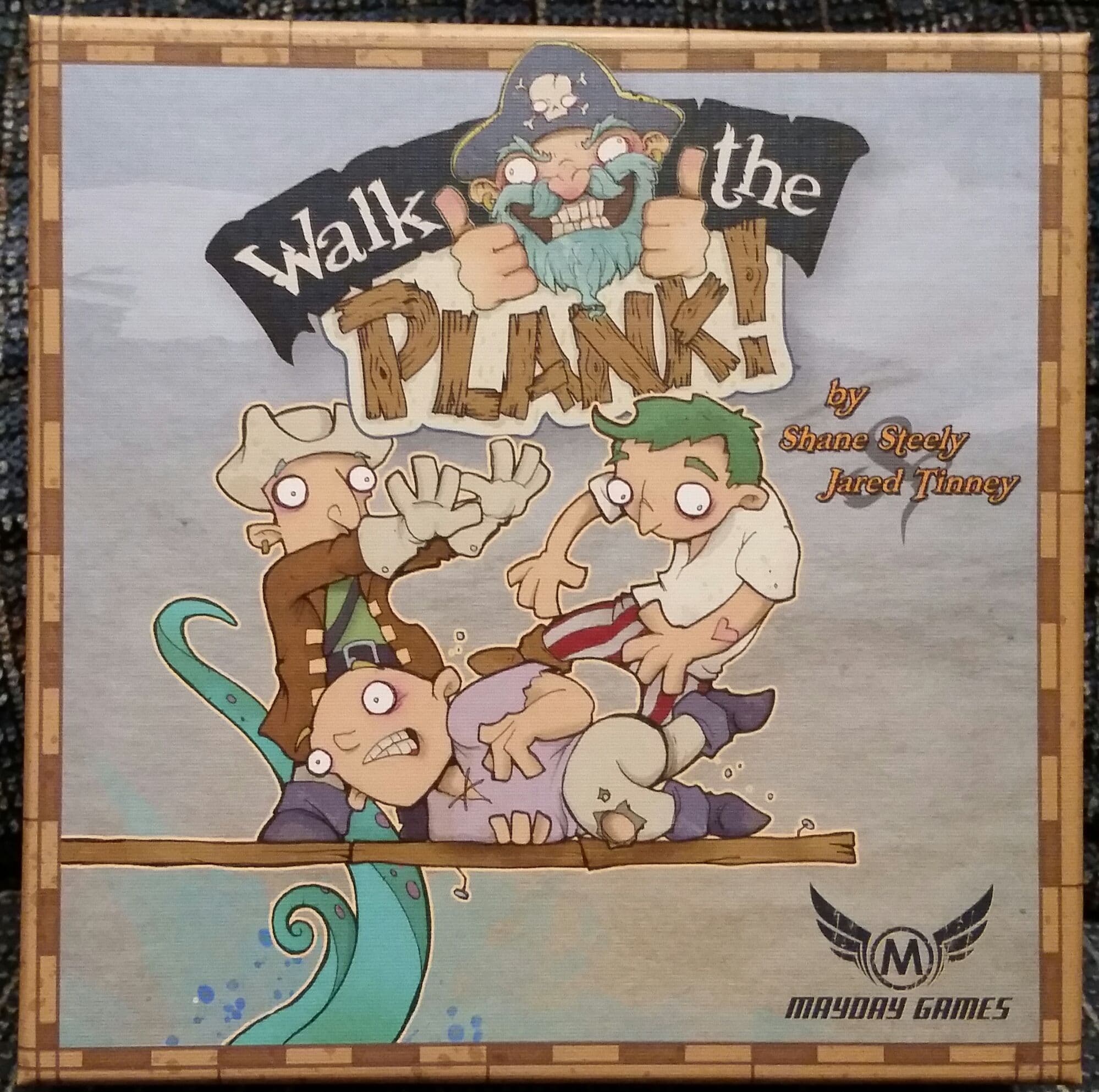
Walk the Plank!
White Elephant
Some may know the classic White Elephant gift exchange game as Yankee Swap, Dirty Santa, Thieving Secret Santa, or Parcel Pass. The White Elephant Card Game simulates this classic holiday game in a quick, light family card game. In the White Elephant Card Game you play the part of a no-good cheapskate, unwilling to spend a measly dime on the people on your gift list. However, you will be attending several White Elephant parties. You can take some junk from your attic and exchange it for treasures to give as gifts. If you “play your cards right” you could fill your gift list for free and no one will be the wiser! Each player has a Gift List Card, a list of three people for whom to acquire gifts. The Gift Cards in their hand constitute their “attic”. There is one “White Elephant Party” for each card in a player’s attic. For each “party” a player “brings a gift to the party” by placing one Gift Card from their hand facedown on the table in front of them. The first player begins by selecting one of the gifts and “opens” it by turning it face up. The next player may then select a new gift, or “steal” an opened gift by taking a face-up Gift Card from a player who has an open gift. When a player steals an open gift they hold it in their hand until a new gift is opened. This way a gift may be stolen only once until a new card is turned over. When a new card is turned over all stolen gift cards are placed face up so the next player may steal any opened gift. This continues until the last gift is opened. At this point each player keeps the gift they have and a new party begins. This continues until all of the Gift Cards have been played. At the end of the game each player counts only the one highest-numbered Gift Card they received that matches each color on their gift list. The total of these cards is the player’s final score. The player with the most points wins.
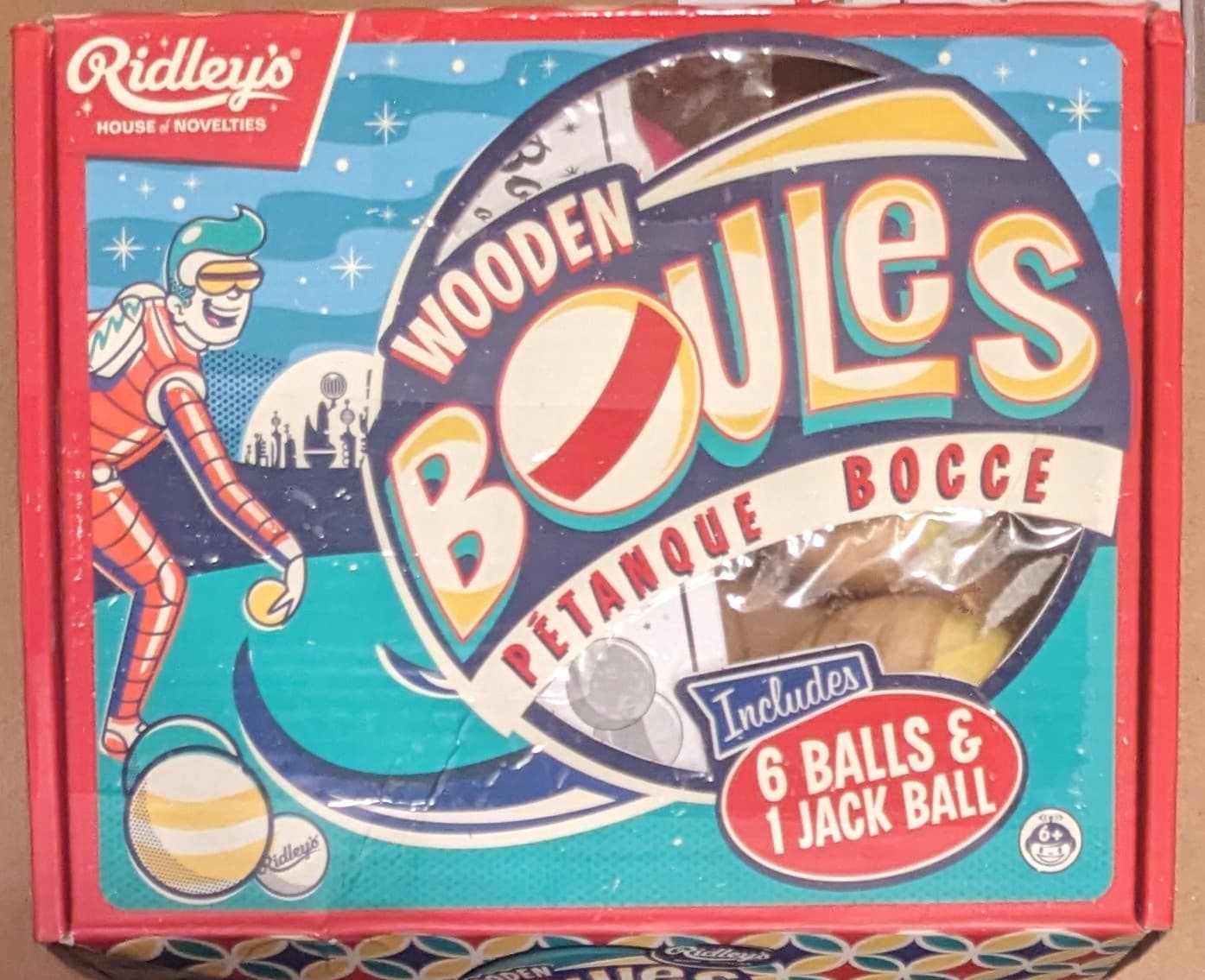
WordSmith Card Game
In WordSmith, players continuously smith together cards to build words and score points. The game will challenge your literary skills and test your reflexes. Smith off against your friends and family to see who’s the best WordSmith. All WordSmith cards contain different 2-lettered combinations. Players use a WordSmith Card from their hand with a WordSmith Card from the center play area (Workshop) to build words. Once a word is smithed, that player replaces the Workshop card with the WordSmith card used from their hand and keeps the Workshop card for points. A new WordSmith card is drawn to replenish the WordSmith card used from that player's hand.
You Are a Liar (or maybe not)
Life is unpredictable - sometimes it's hard to tell the difference between truth and lies. Here is your chance to practice! In You Are a Liar players take turns being the reader and guesser. The guesser has to determine who is lying in the stories being told by the readers. There is always at least one liar in the group. Guess the most lies and win the game!
Zombie Dice
Eat brains. Don't get shotgunned. In Zombie Dice, you are a zombie. You want braaains – more brains than any of your zombie buddies. The 13 custom dice are your victims. Push your luck to eat their brains, but stop rolling before the shotgun blasts end your turn! Whoever collects 13 brains first wins. Each game takes 10 to 20 minutes and can be taught in a single round. Each turn, you take three dice from the box and roll them. A brain symbol is worth one point at the end of the round, while footsteps allow you to reroll this particular dice. Shotgun blasts on the other hand are rather bad, cause if you collect three shotgun blasts during your turn, it is over for you and you get no points. After rolling three dice, you may decide if you want to score your current brain collection or if you want to push your luck by grabbing new dice so you have three again and roll once more.
Zoodlums
In Zooligans card game players take on the role of zookeepers trying to find animals to complete their exhibits. In so doing, they attract visitors to make the best zoo. The game is set up with a three exhibit goals, such as "4 or more reptiles" or "3 or more rainforest animals" that are central to all players. In addition, players have a secret continental theme, scoring them bonus visitors for animals from their continent. When the game begins, players start with a hand of three animal cards. Each turn, players can bid on a worldwide animal in the auction. Then they play a card adding it to their zoo. When a player has all the animals to complete an exhibit goal, they can form the exhibit, attracting a number of visitors. At the end of the game, the points are tallied, and the player with the most visitors wins.