
Category: Math
2 games in this category
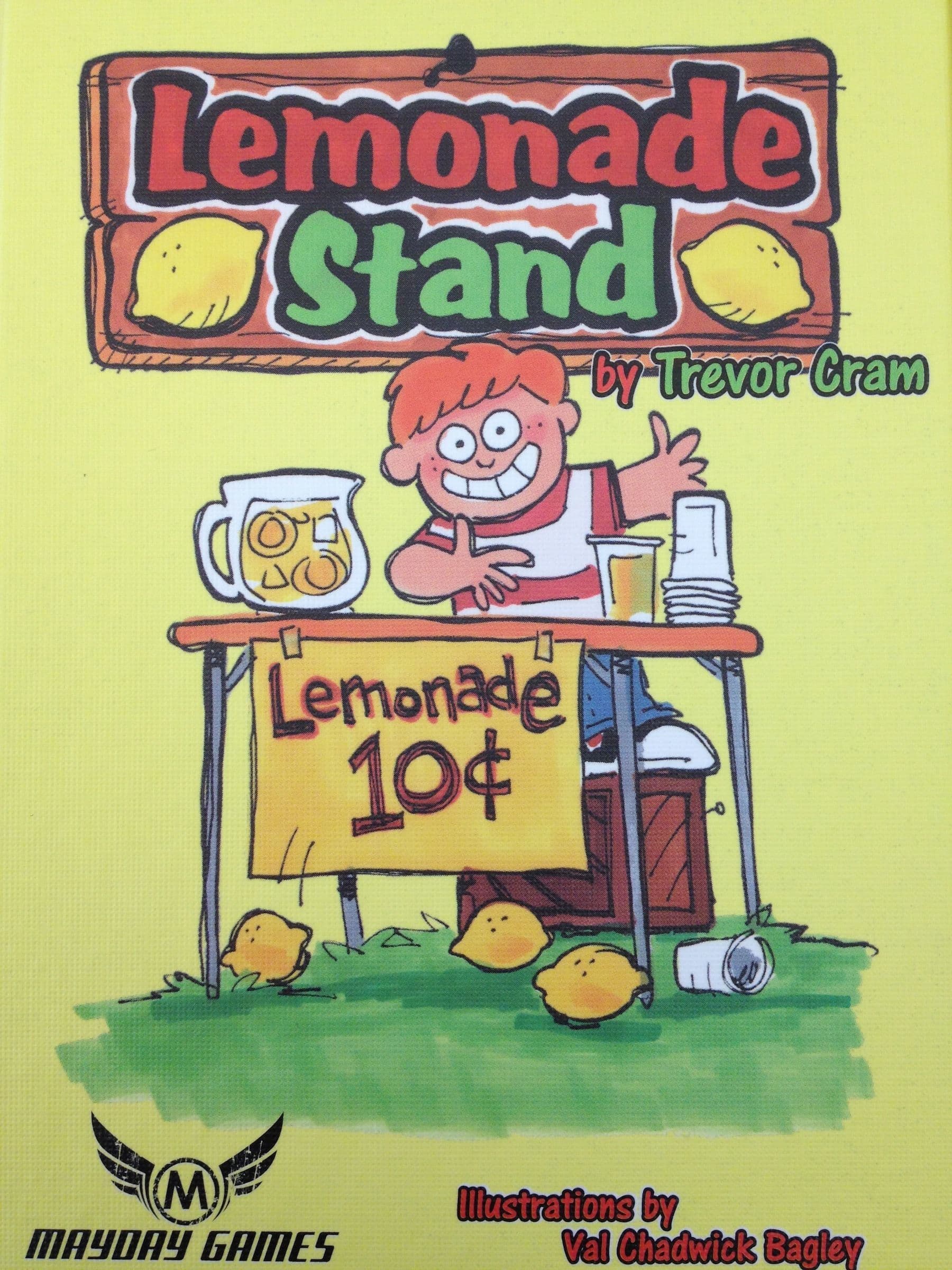
Lemonade Stand
Ahhhh... it's a hot lazy summer in your little suburb of the world and you're eleven years old again! You've played with your friends and explored on your bike and you're old enough to get excited by the prospects of earning some money. You've got $0.25 burning a hole in your pocket and your mom even offers to give you a shiny silver dollar to invest in your scheme. You're starting a lemonade stand! You've got just one week until the Fourth of July and you want to earn as much as possible to blow all of your profits on smoke bombs, bottle rockets and even some M-80s this year! Of course some of your friends are copying your idea – why do they always do that? It is going to be an epic battle for bragging rights and fireworks as you compete with one another to see who will have the most money at the end of the week! Lemonade Stand is played over seven turns (days), and each turn players start by turning over a forecast card which shows the weather forecast for the day along with number of customers and the price they will be willing to pay for each possible weather outcome. Players then place a 5, 10 or 15 cent price card down along with any signs or lemonade inventory they want to put out, all face down. All players reveal their cards at the same time and then a new forecast card is revealed which has an arrow pointing to one of five spots on the old forecast card, which determines which weather event occurred. Each player then collects money based on their price and # of glasses of lemonade invested versus the actual weather that happened. Money is gained or lost, and play continues for seven rounds. Most money wins!

Qwixx
Qwixx is a quick-playing dice game in which everyone participates, no matter whose turn it is. Each player has a scoresheet with the numbers 2-12 in rows of red and yellow and the numbers 12-2 in rows of green and blue. To score points you want to mark off as many numbers as possible, but you can mark off a number only if it's to the right of all marked-off numbers in the same row. On a turn, the active player rolls six dice: two white and one of each of the four colors listed above. Each player can choose to mark off the sum of the two white dice on one of their four rows, then the active player can choose to mark off the sum of one colored die and one white die in the row that's the same color as the die. The more marks you can make in a row, the higher your score for that row. Fail to cross off a number when you're the active player, however, and you must mark one of four penalty boxes on your scoresheet. If you mark off the 2 or 12 in a row and have at least five numbers marked in that row, you get to also mark off the padlock symbol in that row, locking everyone else out of this color. When either a player has four penalty boxes marked or a second color is locked, the game ends immediately. Players then tally their points for each color, sum these values, then subtract five points for each marked penalty box. Whoever has the highest score wins.